

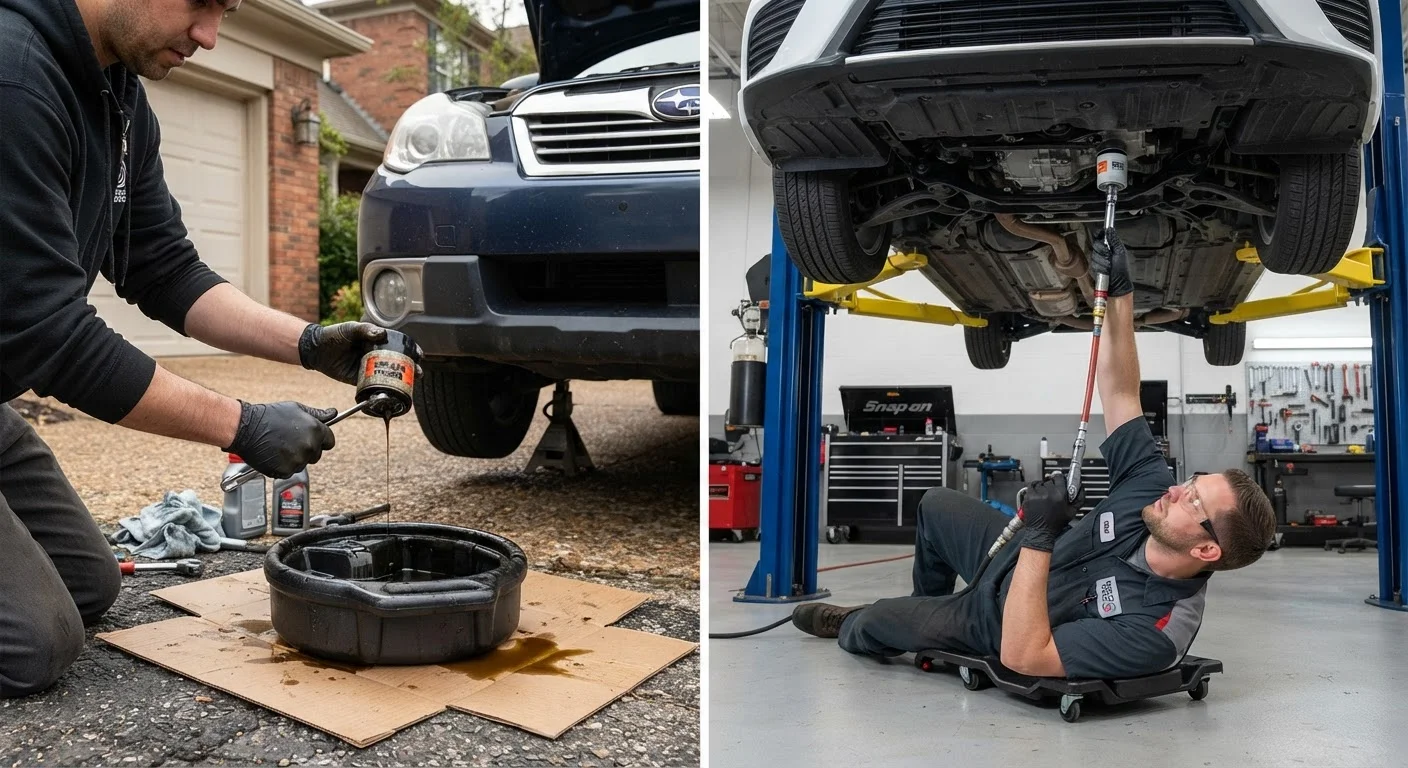
Our Verdict
DIY maintenance makes sense for routine, low-risk tasks where the tools are affordable and the margin for error is low. For anything involving safety systems, specialized diagnostics, or work that could void your warranty, a qualified shop is the right call. Most drivers benefit from a hybrid approach - handling the straightforward jobs themselves while leaning on professionals for the rest.
| Best for | Recommended |
|---|---|
| Drivers comfortable with basic tools and routine upkeep | DIY |
| Safety-critical repairs, complex diagnostics, or warranty-covered vehicles | Professional Shop |
| Drivers who want to save money on predictable, repeatable tasks | DIY |
| Anyone unfamiliar with their vehicle's systems or lacking proper tools | Professional Shop |
The Real Trade-Off: Time, Cost, and Risk
Deciding between DIY car maintenance and a shop visit isn't just about saving money - it's about understanding where the real risks lie. Labor is typically the largest line item on any shop estimate, so for simple tasks, doing the work yourself can mean meaningful savings. But for jobs where an error could affect braking, steering, or fuel systems, the calculus changes fast.
If you're new to vehicle ownership, our beginner's guide to car maintenance is a useful starting point before deciding what to tackle on your own.
The key variables to weigh for any task are: tool requirements, safety implications, skill level needed, and the cost of a mistake. A task that's cheap and reversible if you get it wrong is a good DIY candidate. One that's dangerous or expensive to redo is not.
| Task | DIY Feasibility | Typical Shop Cost (Labor) | Safety Risk if Done Wrong | Special Tools Needed | |
|---|---|---|---|---|---|
| Engine air filter | High | Low ($20-$40) | Minimal | None | |
| Wiper blade replacement | High | Low ($10-$25) | Minimal | None | |
| Oil change | Moderate | Moderate ($40-$100) | Low if done carefully | Jack stands, drain pan | |
| Brake pad replacement | Low-Moderate | High ($150-$300/axle) | High | Caliper tool, torque wrench | |
| Timing belt replacement | Not recommended | Very high ($500-$1,000+) | Severe (engine damage) | Engine-specific tools | |
| Tire rotation | Moderate | Low ($25-$50) | Low if properly supported | Jack, torque wrench |
Tasks That Are Generally Safe to DIY
Several routine maintenance items require minimal tools, carry low safety risk, and follow straightforward procedures available in your owner's manual or from the vehicle manufacturer.
- Engine air filter replacement: Usually a clip or wing-nut enclosure - no special tools, takes about five minutes.
- Cabin air filter replacement: Often behind the glove box; most vehicles require no tools at all.
- Windshield wiper blades: Universally DIY-friendly; replacement blades include instructions.
- Battery terminals: Cleaning corrosion from terminals with a wire brush is simple, though replacing the battery itself requires care to avoid short circuits.
- Checking and topping off fluids: Windshield washer fluid, coolant reservoir (when cold), and power steering fluid are typically accessible without tools.
Oil changes fall in a gray zone - they're technically doable at home, but require proper jack stands, an oil drain pan, and safe used-oil disposal. Many drivers find the convenience of a quick-lube shop outweighs the modest savings.
For seasonal maintenance tasks like checking battery health before winter or monitoring coolant levels in summer heat, see our seasonal car care guide.
Start With Your Owner's Manual
Before attempting any maintenance task, check your vehicle's owner's manual for the manufacturer's recommended procedures and specifications. It lists fluid types, torque specs, and service intervals specific to your vehicle - and following it helps protect your warranty. Many manuals are also available as free PDFs from the manufacturer's website.
Jobs That Belong in a Professional Shop
Some maintenance and repair work requires either specialized equipment, precise calibration, or carries enough safety risk that amateur attempts can cause serious harm - to the vehicle or the driver.
- Brake system repairs: Pad replacement is sometimes DIY-accessible, but bleeding brake lines, replacing calipers, or resurfacing rotors requires proper tools and knowledge. Brake failure is life-threatening.
- Airbag and SRS components: Supplemental restraint systems involve explosive charges. Any work near airbag modules should be handled by a certified technician.
- Timing belt or chain replacement: Getting timing off by even a few degrees can destroy an engine. This is high-stakes work. Understanding whether your car has a timing belt or chain is the first step.
- Transmission service: Beyond a basic fluid check, transmission work typically requires specialized tools and expertise.
- OBDII diagnostic trouble codes: Reading a check-engine code with a basic scanner is easy; properly diagnosing and repairing the underlying cause often is not.
When you do take the car in, knowing how to read a shop estimate keeps you from overpaying. Our guide on reading a mechanic's estimate explains labor rates, parts markups, and what questions to ask.
DIY Mistakes Can Void Your Warranty
Improper repairs - especially on powertrain or emissions-related components - can void your vehicle's factory or extended warranty. If your car is still under warranty, check the terms before performing any work beyond the most basic maintenance. When in doubt, consult a dealer-authorized service center first.
Protecting Your Investment Either Way
Whether you're turning wrenches yourself or handing the keys to a technician, one habit pays off consistently: keeping a maintenance log. A documented service record supports warranty claims, aids resale value, and helps catch recurring issues early. See our guide to building a maintenance log that actually gets used for a practical approach.
It's also worth noting that deferred maintenance - whether DIY-style neglect or skipping shop visits - tends to compound costs over time. A small fluid leak ignored today can become a failed component tomorrow. The same principle applies to home ownership, as explored in our piece on why deferred maintenance is more expensive than it looks.
The smartest approach for most drivers is a hybrid one: build comfort with the genuinely low-risk tasks, know your limits honestly, and don't let cost alone push you toward work that's beyond your current skill level or equipment.
The content on this site is for informational purposes only and is not a substitute for professional advice. Always consult a qualified professional for guidance specific to your situation.