

Start here
Why Routine Maintenance Matters
Build vocabulary
Key Terms You'll Actually Encounter
Take action
The Checks You Can Do Yourself
Plan ahead
Understanding a Service Schedule
Know your limits
When to Call a Professional
Why Routine Maintenance Matters
A car is probably the second-most expensive thing most Americans own, yet many new drivers treat maintenance as optional - until something breaks. That's a costly approach. Routine upkeep prevents small problems from compounding into large ones, keeps your vehicle safer to drive, and protects its long-term value.
The good news: you don't need to be a gearhead to stay on top of it. Understanding a handful of core concepts and building a few simple habits puts you firmly in control. If you're also navigating the financial side of vehicle ownership, the Buying a Car hub covers financing and purchase decisions in plain language.
Your Owner's Manual Is Free Expertise
If your car didn't come with a physical manual, most manufacturers make the full document available as a free PDF on their website. Search for your year, make, and model alongside the word 'owner's manual.' Reading just the maintenance schedule section takes about 15 minutes and gives you a clear picture of what your car needs and when.
Key Terms You'll Actually Encounter
Shops and manuals use terminology that can feel intimidating. Knowing what these words mean makes it much easier to follow a service conversation or read a repair estimate with confidence.
Owner's manual
The booklet that came with your vehicle - or available as a PDF from the manufacturer - that contains maintenance schedules, fluid specifications, and guidance specific to your exact car.
Dipstick
A long metal rod you pull from the engine to check oil level. It has two marks - min and max - and the oil should fall between them.
Coolant
A liquid (also called antifreeze) that circulates through your engine to regulate temperature and prevent overheating or freezing.
Tire pressure (PSI)
The amount of air inside your tires, measured in pounds per square inch. Running at the wrong pressure affects safety, handling, and tire wear.
Service interval
How often a particular maintenance task should be performed, typically expressed as a mileage figure, a time period, or both - whichever comes first.
ASE certification
A credential issued by the National Institute for Automotive Service Excellence that indicates a technician has passed standardized knowledge tests in specific repair areas.
Encountering a claim about car care that sounds off? Check our guide on car maintenance myths that could cost you before acting on advice that might be outdated.
The Checks You Can Do Yourself
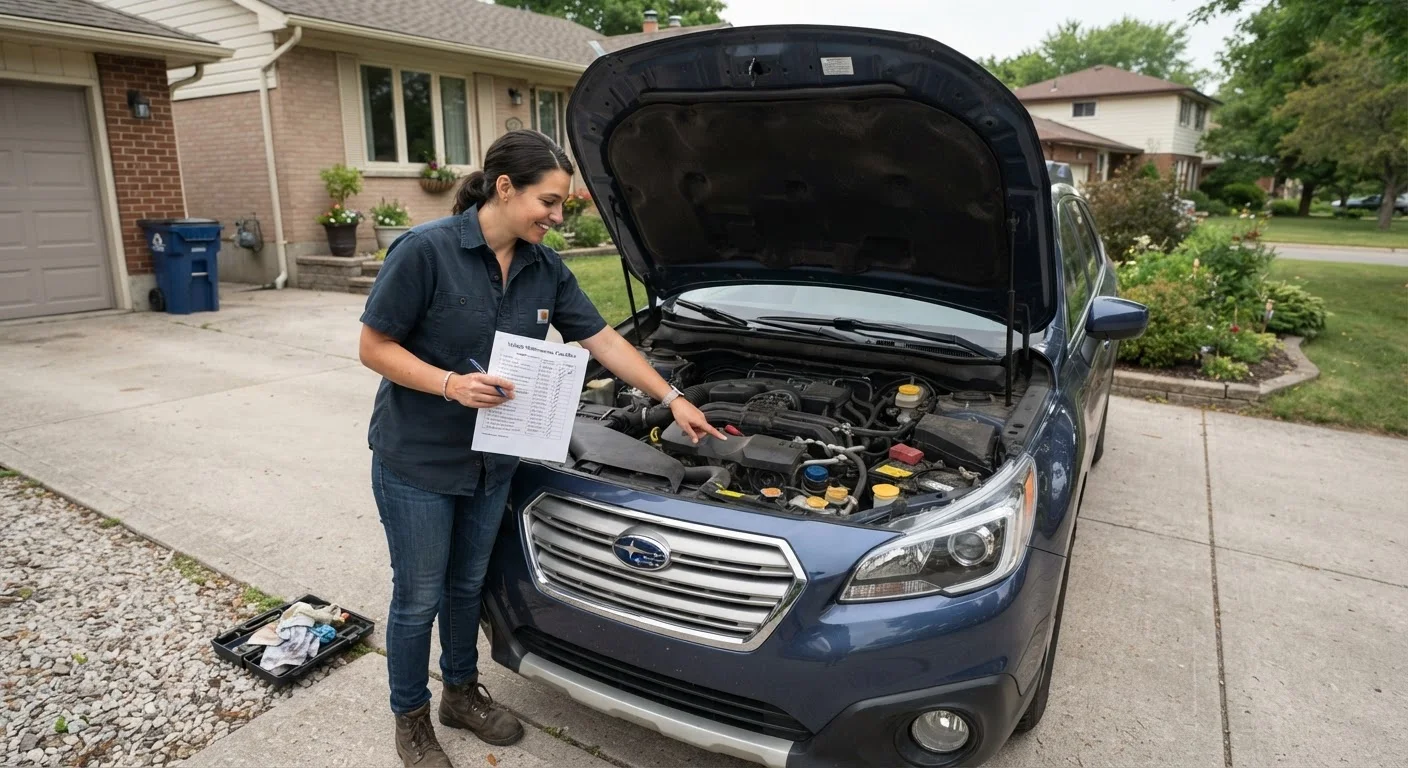
Several important maintenance tasks require no mechanical skill or special tools. Making these part of your routine is the fastest way to build confidence and catch problems early.
- Tire pressure: Under-inflated tires wear unevenly, reduce fuel efficiency, and can fail unexpectedly. Check pressure monthly when the tires are cold, using a basic gauge. Your owner's manual and a sticker inside the driver's door jamb list the correct PSI for your vehicle.
- Engine oil: Pull the dipstick, wipe it clean, reinsert it, and check the level against the min/max markers. If oil looks very dark or gritty, it's overdue for a change. For a deeper look at this topic, see our article on what every driver needs to know about oil changes.
- Coolant level: Check the translucent reservoir under the hood when the engine is cold. It should fall between the min and max lines.
- Lights: Walk around the car periodically and confirm headlights, taillights, and turn signals are all working. A failed bulb is cheap to fix and illegal to ignore.
- Windshield washer fluid: Low visibility is a safety issue. This reservoir is easy to locate and refill.
It's also worth keeping your car prepared for the unexpected. Our guide on the roadside emergency kit every car should carry explains what to keep in your trunk.
Understanding a Service Schedule
Your owner's manual contains a maintenance schedule specific to your vehicle - this is the most reliable reference you have. Service intervals are typically expressed in miles, months, or both, and they cover items like oil changes, air filters, brake inspections, and tire rotations.
Many people rely on the generic "every 3,000 miles" oil change rule, but that number is outdated for most modern vehicles. Consult your manual for the correct interval. If your car has a built-in maintenance reminder, that system accounts for your actual driving conditions - pay attention to it.
Keeping a running record of every service you receive makes it easier to spot gaps, maintain warranty compliance, and demonstrate upkeep history if you ever sell the vehicle. Our article on keeping a vehicle maintenance log that actually gets used offers practical guidance on building that habit.
Severe vs. Normal Driving Conditions
Most owner's manuals list two service schedules: one for 'normal' driving and one for 'severe' conditions. Severe conditions include frequent short trips under 5 miles, stop-and-go urban traffic, towing, or driving in extreme temperatures. Many everyday drivers actually fall under the severe category - check your manual's definition to know which schedule applies to you.
When to Call a Professional
Knowing your limits is genuinely useful knowledge - not a weakness. Some tasks are well within a careful beginner's ability; others involve safety systems or require specialized equipment and should be left to a qualified mechanic.
Leave brake work, suspension repairs, and anything involving your vehicle's electrical or emissions systems to a professional unless you have verified experience. Warning lights, unusual noises, fluid leaks, or a car that handles differently than normal are all reasons to schedule a shop visit promptly rather than waiting to see if the issue resolves itself.
If you're weighing which jobs to attempt at home versus which to hand off, our piece on DIY car maintenance vs. taking it to a shop walks through the trade-offs task by task. For an in-depth look at one of the most common professional services, see battery, alternator, and starter: what drains your car's power.
Frequently Asked Questions
Follow your owner's manual rather than generic rules, since intervals vary by vehicle and driving conditions. Many modern cars have a service reminder system built into the dashboard. At minimum, have the car inspected by a qualified mechanic at least once a year.
A quick monthly check should cover tire pressure, engine oil level, coolant level, and all exterior lights. These take about five minutes and can prevent breakdowns or safety hazards. Check your owner's manual for the correct fluid levels and tire pressures for your specific vehicle.
No - engine wear from old oil often isn't noticeable until serious damage has occurred. Oil degrades over time regardless of how the car feels to drive. Sticking to the interval in your owner's manual is one of the highest-value maintenance habits you can build.
Most beginner-level checks - fluids, tires, lights - require no tools at all. A tire pressure gauge is the one inexpensive item worth keeping in your glove box. More involved tasks like oil changes or brake work require specific tools and some experience.
Warning lights vary by vehicle and indicate everything from a loose gas cap to a serious engine issue. Your owner's manual lists every light and its meaning. Don't ignore a warning light, especially one that's red - if in doubt, have a mechanic diagnose it promptly.
Word-of-mouth referrals from people you trust are a reliable starting point. Look for shops that employ ASE-certified technicians, provide written estimates before any work begins, and are willing to explain what they found and why a repair is needed.
The content on this site is for informational purposes only and is not a substitute for professional advice. Always consult a qualified professional for guidance specific to your situation.