

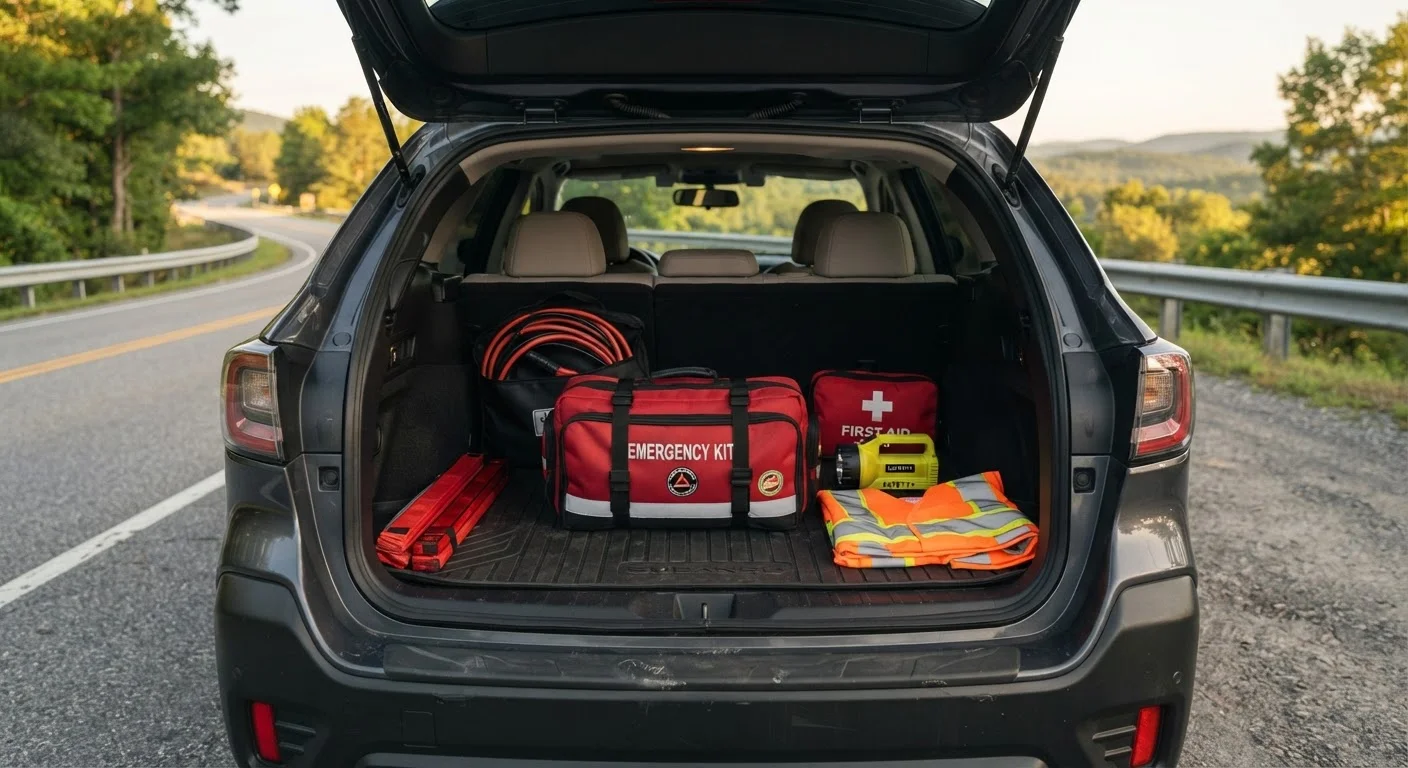
Why Every Driver Needs a Kit - Before They Need It
Breakdowns rarely announce themselves. A flat tire, dead battery, or overheated engine can happen on a familiar commute just as easily as on a remote highway. The difference between a stressful ordeal and a manageable inconvenience often comes down to preparation.
A roadside emergency kit doesn't require mechanical expertise to use - most of the items below are designed for anyone to deploy quickly and safely. Think of it as a seatbelt for the unexpected: you hope you never need it, but you'll be glad it's there. If you're newer to vehicle ownership and want to build broader car-care habits, our beginner's guide to car maintenance is a good starting point.
Reflective warning triangles or road flares
When your car is stopped on or near traffic, making yourself visible to other drivers is the single most important thing you can do. Reflective triangles (or LED alternatives) should be placed well behind your vehicle - typically 100 to 300 feet back, depending on road speed - to give approaching drivers adequate warning time.
Road flares are another option and can be seen from farther away, though they require careful handling and should be kept away from fuel spills. Many drivers carry both. Either way, this is not an item to skip.
Visibility at a breakdown scene isn't optional - it's the first line of defense.
Jumper cables or a portable jump starter
A dead battery is one of the most common reasons drivers get stranded. Traditional jumper cables work well, but they require a second vehicle with a cooperative driver. A portable lithium jump starter - roughly the size of a thick paperback book - lets you start your car independently, no second vehicle needed.
Whichever you choose, confirm it's rated for your engine size. Many portable units handle standard 4- and 6-cylinder engines easily; larger V8 engines may need a higher-capacity unit. Check the charge on a portable jump starter every few months, as lithium batteries slowly self-discharge.
A portable jump starter lets you restart a dead battery without waiting for another driver.
A working flashlight with spare batteries
Breakdowns don't follow a schedule, and plenty happen after dark. A reliable flashlight lets you assess the situation safely, flag down help, and work under the hood or around a tire without relying on your phone - which you'll want to conserve for calls.
LED flashlights tend to be more durable and battery-efficient than older incandescent models. Keep an extra set of batteries in the kit rather than assuming the ones in the flashlight are fresh. Headlamps are also worth considering, since they free up both hands.
Keeping a flashlight with spare batteries means darkness won't compound an already stressful situation.
A basic first aid kit
Minor injuries - cuts from broken glass, scrapes from changing a tire on gravel - are a realistic possibility at a breakdown scene. A compact first aid kit with adhesive bandages, gauze, antiseptic wipes, and medical tape handles most of these without a trip to urgent care.
Pre-assembled kits are widely available and typically include 50 to 100 items in a compact case. Check expiration dates when you inspect your kit; adhesives and antiseptics do degrade over time. If anyone in your household has specific medical needs, consider supplementing the standard kit accordingly - and consult a healthcare provider about what to include.
A compact first aid kit handles the minor injuries that commonly happen at breakdown scenes.
Tire-changing tools and a functioning spare
Most vehicles come with a jack, lug wrench, and compact spare tire from the factory - but drivers are often surprised to discover a flat spare when they need it most. Check your spare tire's pressure a few times a year; compact spares typically require higher pressure than regular tires (often around 60 psi, though consult your owner's manual for the correct spec).
If you're not comfortable changing a tire yourself - or if a roadside change would be unsafe due to location or traffic - stay in your vehicle with your seatbelt on and call for assistance. Tire-changing tasks on a highway shoulder carry real safety risks, and it's always acceptable to wait for professional help. For a broader look at which tasks are safe to do yourself, see our article on DIY car maintenance vs. taking it to a shop.
A spare tire is only useful if it's properly inflated - check it regularly, not just when you need it.
Reflective safety vest
If you must exit your vehicle on a roadway, a high-visibility safety vest makes you far more visible to passing traffic - particularly in low-light conditions or in rain. These are inexpensive, fold flat, and take up almost no space in a kit.
Many professional roadside workers wear them as a matter of course. For drivers, having one available is a low-cost, high-impact decision. Some drivers also keep a brightly colored cloth or bag to hang from their door or antenna as an additional distress signal.
A reflective safety vest is inexpensive and dramatically improves your visibility outside the vehicle.
Basic supplies: water, snacks, and a blanket
Comfort items might seem secondary, but in extreme weather - a summer heat wave or a winter storm - they become safety items. A few bottles of water, some shelf-stable snacks, and a compact emergency blanket can sustain you while you wait for help, especially if cell service is limited.
Emergency mylar blankets are extremely compact, retain body heat effectively, and cost very little. In cold-weather states especially, keeping a proper blanket in the car during winter months is a straightforward precaution. A charged portable battery pack for your phone rounds out this category and ensures you can communicate even if your car battery is dead.
In extreme weather, water, snacks, and a blanket shift from comfort items to genuine safety essentials.
Keeping Your Kit Current and Complete
Assembling a kit is only half the job - maintaining it matters equally. Batteries in flashlights drain over time, first aid supplies expire, and a flat spare tire is no help at all. A good rule of thumb is to inspect your kit every six months. Tying this review to your seasonal vehicle prep makes it easy to remember. Our guide on seasonal car care walks through what to check when temperatures shift, and many of those checks pair naturally with a kit audit.
Schedule a Kit Check With Seasonal Maintenance
Twice-yearly kit inspections pair naturally with your spring and fall vehicle checks. When you're already checking fluid levels, tire pressure, and battery condition, add five minutes to verify flashlight batteries, check first aid supplies for expiration, and confirm your spare tire is properly inflated. It's a habit that takes almost no time and pays off when it matters.
Store everything in a durable bag or plastic bin that stays put in your trunk. Loose items rattling around tend to get lost or damaged - and when you need them, you won't have time to hunt. Building this habit into your routine is the kind of small step that can prevent a far bigger headache down the road.
The content on this site is for informational purposes only and is not a substitute for professional advice. Always consult a qualified professional for guidance specific to your situation.