

Summary
18 items · 45-90 minutes
Why Seasonal Preparation Matters
Most vehicle problems don't appear without warning - they build quietly until an extreme temperature tips them into failure. A battery that holds a marginal charge in mild weather can leave you stranded the first cold morning of the year. Tires that look fine in October may be dangerously under-inflated by February because air pressure drops roughly 1 PSI for every 10°F of temperature decrease.
Running through a seasonal checklist twice a year - once before winter sets in, once before summer heat peaks - is one of the most efficient ways to catch developing problems early. Most of the items below take only minutes to check. For the ones that require tools or expertise, our DIY vs. shop guide can help you decide the right approach.
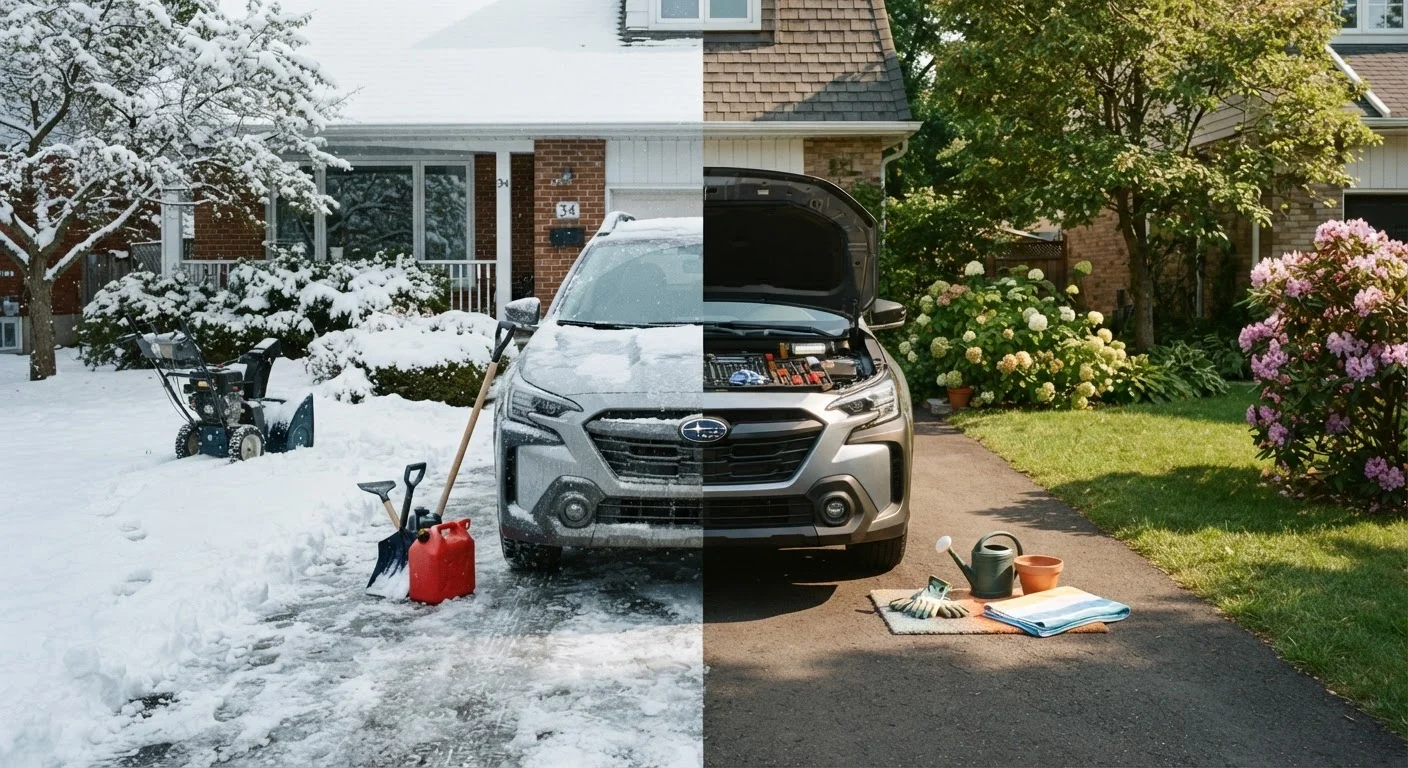
Use the checklist groups below as a seasonal audit. Check off each item before temperatures swing, and note anything that warrants a follow-up with a qualified mechanic.
Winter Preparation
Summer Preparation
Year-Round Safety Checks
Tools and Resources to Have Ready
You don't need a full garage to work through most of these checks. A basic set of supplies makes the process faster and more accurate. For fluid-level monitoring specifically, our fluid levels guide walks through exactly what to look for with each reservoir.
Tire pressure gauge
Accurately measure PSI in all four tires before each seasonal transition.
Battery load tester
Assess whether your battery holds adequate charge under simulated load conditions.
Coolant test strips or refractometer
Verify your antifreeze mixture is rated for expected temperature extremes.
Flashlight or work light
Illuminate engine bay components, tires, and undercarriage areas during inspection.
Tread depth gauge
Measure remaining tire tread to determine whether replacement is needed before winter.
Microfiber cloths and gloves
Keep hands clean and surfaces protected when handling fluids or inspecting components.
After you've completed your seasonal checks, it's also worth reviewing what you carry in your trunk. A well-stocked emergency kit complements seasonal prep - see what to keep in your roadside emergency kit for a practical rundown.
Don't Skip the Battery Check Before Winter
Cold weather can reduce a battery's effective output by 30-60%, meaning a battery that starts your car fine in October may not have enough power in January. Battery testing is quick, inexpensive, and available at many auto parts stores. If your battery is more than three to four years old, a proactive test is especially worthwhile before the cold season begins.
Heat-Related Blowouts Are Preventable
Tire blowouts spike in summer partly because under-inflated tires flex more under load, generating heat that can cause sudden failure. Always check tire pressure when tires are cold - not after driving - and follow the pressure specification on the door jamb sticker, not the maximum listed on the tire sidewall. An overinflated tire in summer heat also poses risk, so precision matters.
The content on this site is for informational purposes only and is not a substitute for professional advice. Always consult a qualified professional for guidance specific to your situation.