

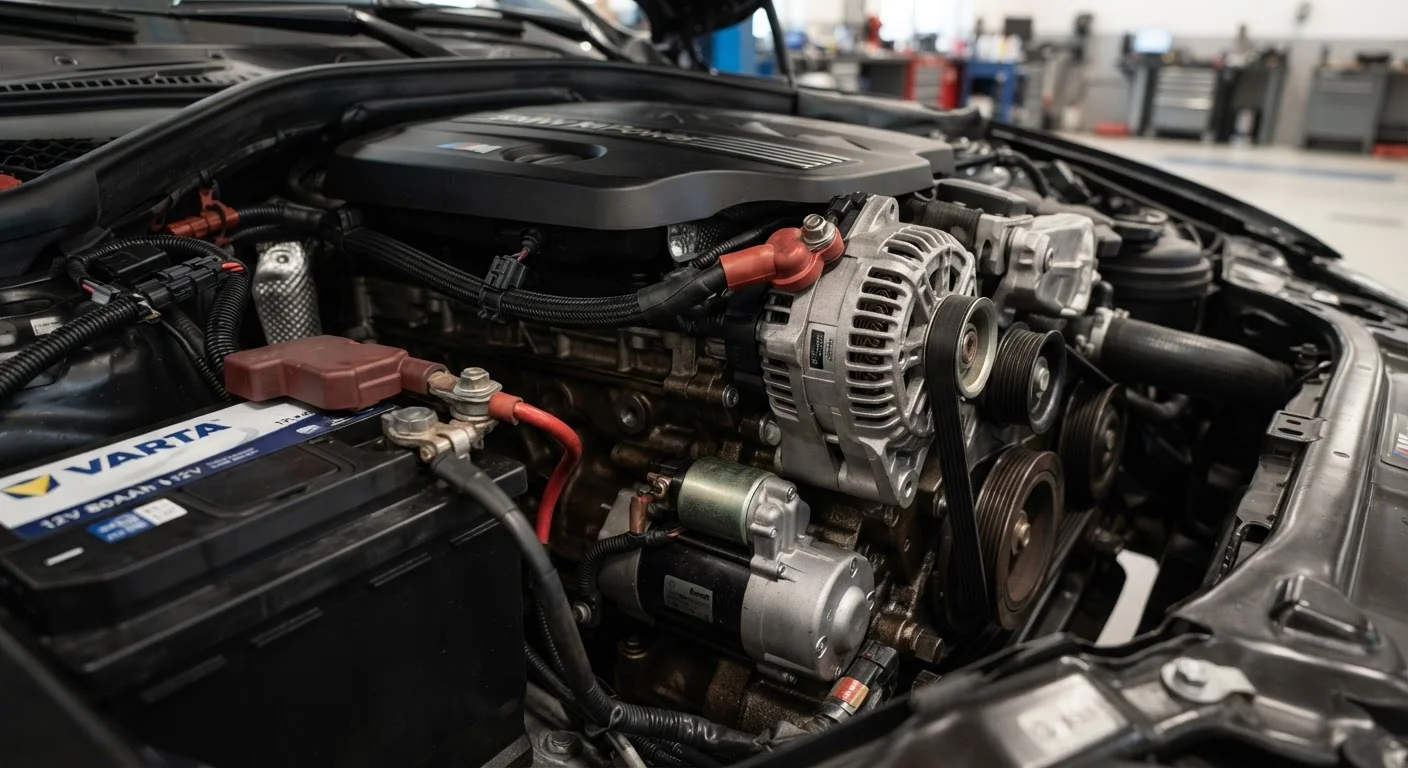
What Each Component Actually Does
Think of these three parts as a relay team. Each one hands off to the next, and a weak link anywhere stops the whole chain.
The battery is your car's portable power bank. It delivers the large burst of electricity needed to start the engine and powers accessories - lights, radio, climate controls - when the engine is off. Lead-acid batteries store charge chemically; over time that chemistry degrades, and capacity shrinks.
The starter motor takes electrical current from the battery and converts it into the mechanical rotation that cranks the engine to life. It only operates for a few seconds at startup, but it draws enormous current - typically 100 to 200 amps - during that brief window.
The alternator takes over once the engine is running. It converts mechanical energy from the engine's rotation into electricity, recharging the battery and powering the car's electrical systems simultaneously. Without a functioning alternator, every mile you drive is draining the battery without replenishing it.
If you're new to car ownership, the car maintenance basics guide covers how these systems fit into your overall service routine.
How Each Component Fails - and What It Looks Like
Knowing the symptoms of each failure saves you from misdiagnosis - and from replacing an expensive part you didn't actually need.
Battery Failure
Batteries degrade gradually. Early signs include sluggish engine cranking on cold mornings, headlights that dim noticeably when idling, and a battery that repeatedly needs jump-starting. Most batteries last 3-5 years, though heat-heavy climates tend to shorten that window. A corroded or loose terminal connection can mimic a failing battery, so that's always worth checking first.
3-5 years
Typical car battery lifespan
Industry estimates consistently place average battery life in this range, with heat-heavy climates like the American Southwest often seeing shorter life spans.
~70%
No-start calls involving the battery
According to AAA roadside assistance data, battery-related issues account for the largest share of no-start service calls each year.
100-200 A
Current a starter draws at cranking
This high amperage draw is why even a partially degraded battery may fail to provide enough power to start the engine reliably.
Alternator Failure
A failing alternator often announces itself through the dashboard's battery warning light - despite the name, this light monitors the entire charging system, not just the battery. Other signs include flickering interior lights, a whining or grinding noise from the engine bay, and electronics behaving erratically. Because the battery is being slowly drained, a car with a bad alternator may run for a while before stalling completely.
Starter Failure
A dead starter produces a distinctive click - usually one solid click or rapid repeated clicks - when you turn the key, with no engine cranking at all. Intermittent starting problems, where the car sometimes starts and sometimes doesn't, are a classic starter symptom. A starter can also fail silently: you turn the key and nothing happens, not even a click.
Test Before You Replace
Before spending money on a new battery, alternator, or starter, ask for a diagnostic test on the specific component. Many auto parts retailers will test your battery and alternator for free. Confirming the faulty part first prevents the frustration - and expense - of replacing the wrong component.
What Accelerates Wear on All Three
These components don't wear out randomly - certain conditions and habits push them toward failure faster.
- Extreme temperatures: Cold weather thickens engine oil, forcing the starter to work harder and increasing the current draw on the battery. Heat degrades battery chemistry and stresses alternator windings. For a full seasonal maintenance picture, see seasonal car care tips.
- Short trips: Frequent short drives don't give the alternator enough run time to fully recharge the battery, slowly drawing it down over days and weeks.
- High electrical loads: Running heated seats, high-powered audio systems, phone chargers, and auxiliary lighting simultaneously puts sustained demand on the alternator.
- Deferred maintenance: Loose belts reduce alternator output; corroded terminals restrict current flow. Small issues compound. The habits that quietly wear out your car article explores how small oversights add up to big repair bills.
Getting a Diagnosis You Can Trust
All three components can be tested with equipment most repair shops and auto parts stores carry. A battery load test checks whether the battery can actually hold a charge under demand - not just whether it shows voltage. An alternator output test confirms whether the alternator is producing the correct voltage (typically 13.5-14.5 volts) while the engine runs. Starter draw tests measure the current the starter pulls to identify whether it's within spec.
These tests are quick, usually taking less than 30 minutes, and many shops offer them at low or no cost. Getting a proper diagnosis before authorizing a replacement is worth it - swapping parts without testing is how repair bills grow unnecessarily.
If a shop recommends replacing all three at once without clear evidence each has failed, it's reasonable to ask for the individual test results. Replacing parts preemptively has a place in fleet maintenance, but for most personal vehicles, replacing only what's confirmed faulty is the more practical approach.
Frequently Asked Questions
If your car starts fine but dies while driving, a failing alternator is a likely culprit since it can no longer recharge the battery. If the car won't start at all but jump-starting works temporarily, the battery is often to blame. A mechanic can test both components with a simple electrical load test to confirm which is failing.
Yes. A failing alternator that undercharges - or overcharges - a battery can shorten its life significantly, even if the battery is brand new. If you replace a battery and it drains quickly, have the alternator tested before buying another battery.
A failing starter often produces a single loud click or a series of rapid clicks when you turn the key, with no engine cranking. A grinding noise during startup can also indicate worn starter gear teeth. These sounds warrant a professional inspection promptly.
Alternators generally last between 80,000 and 150,000 miles, though this varies by vehicle and driving conditions. Frequent short trips, extreme heat, and high electrical loads from accessories can shorten alternator life.
No - the battery warning light usually signals that the alternator isn't charging the battery properly. Continuing to drive will deplete the battery, and the car may stall unexpectedly, potentially in an unsafe location. Pull over safely and arrange for a tow or inspection.
A single deep discharge from leaving lights on can weaken a battery, but most healthy batteries will recover after a proper recharge. Repeated deep discharges, however, do cause lasting damage. If a battery has been drained multiple times, have it load-tested to assess its remaining capacity.
The content on this site is for informational purposes only and is not a substitute for professional advice. Always consult a qualified professional for guidance specific to your situation.