

Why Engine Oil Matters More Than You Might Think
Engine oil does several jobs simultaneously. It lubricates dozens of moving metal parts so they don't grind against each other, absorbs and disperses heat, and suspends microscopic particles of dirt and combustion byproducts so they get trapped in the filter rather than scoring your engine. Fresh oil does all of this well. Old, degraded oil does it poorly - and the consequences compound over time.
Neglected oil doesn't just get dirty; it breaks down chemically. The additives that protect metal surfaces deplete, and the base oil oxidizes and thickens. Left long enough, it can form sludge - a sticky, tar-like substance that clogs oil passages and starves parts of the lubrication they need. Engine repairs from sludge damage are rarely cheap.
For a broader look at what's flowing through your vehicle, see our guide on fluid levels every driver should monitor.
The 3,000-Mile Rule Is Outdated for Most Drivers
The 3,000-mile oil change interval became conventional wisdom decades ago, when engine tolerances were looser and conventional motor oil was the only option. It no longer reflects the reality of most modern vehicles.
Today, many manufacturers recommend oil changes at 5,000, 7,500, or even 10,000-plus miles, depending on the vehicle and oil type. Changing oil more frequently than necessary isn't dangerous, but it wastes money and generates unnecessary waste oil. Changing it less frequently than your manufacturer recommends is where real risk lies.
Always Start With Your Owner's Manual
Your owner's manual specifies the correct oil type, viscosity grade, and change interval for your exact engine. These aren't suggestions - they're engineering requirements based on how that engine was designed to operate. Following them consistently is the simplest thing you can do for long-term engine health.
The single most reliable source for your correct oil change interval is your vehicle's owner's manual. If you've lost it, most manufacturers make digital versions available through their websites. Don't rely on the sticker from a quick-lube shop - those sometimes default to shorter intervals than your car actually needs.
Conventional vs. Synthetic Oil: What's the Real Difference?
Conventional motor oil is refined directly from crude oil. Synthetic oil is engineered in a lab to have a more uniform molecular structure, which translates to more consistent performance across a wider temperature range and slower breakdown over time.
7,500-10,000 mi
Typical synthetic oil change interval
Many vehicle manufacturers specify this range for full synthetic oil under normal driving conditions, according to owner's manual guidance across major brands.
~30%
Engine wear occurs at cold startup
Industry engineering research has long held that a disproportionate share of engine wear happens in the first moments after a cold start, when oil hasn't yet fully circulated.
5W-20 or 5W-30
Most common viscosity grades in the U.S.
These grades cover the majority of passenger vehicles sold in North America; the correct choice depends entirely on the manufacturer's specification for each engine.
The practical difference matters in a few scenarios: very cold winters (synthetic flows better at low temperatures, reducing startup wear), high-performance or turbocharged engines (which run hotter), and extended oil change intervals (synthetic holds up longer). Some vehicles specifically require synthetic - again, the owner's manual is definitive here.
There's also a middle option: synthetic-blend oil, which mixes both types and typically falls between the two in terms of cost and performance. Switching from conventional to synthetic in an older, high-mileage engine is generally safe, though it's worth discussing with a qualified mechanic if your vehicle has significant age or wear.
Understanding Oil Viscosity Grades
Motor oil packaging displays a grade like 5W-30 or 0W-20. This isn't arbitrary - it describes how the oil behaves at different temperatures. The number before the "W" (which stands for winter) indicates cold-weather flow; the number after describes viscosity at normal operating temperature.
Using the grade your manufacturer specifies ensures the oil reaches critical engine components quickly at startup and maintains adequate film thickness when the engine is hot. Using the wrong grade - especially a heavier one than specified - can actually reduce fuel efficiency and, in some cases, restrict oil flow to parts that need it most.
If you're new to managing your own vehicle upkeep, our broader primer on getting started with car maintenance covers this and other fundamentals in accessible terms.
Oil Life Monitors Are Helpful, But Not Infallible
Many vehicles manufactured in the past decade include an oil life monitoring system that estimates remaining oil life based on engine conditions and driving patterns. These systems are generally reliable, but they don't physically test the oil - they calculate. Checking your dipstick periodically between changes is still good practice, particularly if you frequently tow, drive in dusty conditions, or make a lot of short trips.
Oil Changes and Vehicle Value
Consistent oil change records have real-world value beyond engine health. When you're selling a used vehicle - or buying one - a documented service history signals that the engine has been cared for. Gaps in oil change records are a yellow flag for any informed buyer.
If you're evaluating a used vehicle, asking about oil change history is one of the most useful questions you can ask. Our article on questions worth asking before a test drive walks through the full list of service record questions that can protect you from surprises.
Keeping your own records is simple: note the date, mileage, oil type, and filter brand each time. A glove compartment log or a phone note works fine.
Frequently Asked Questions
It depends on your vehicle, driving habits, and the type of oil used. Many modern vehicles with synthetic oil have intervals of 7,500 to 10,000 miles or more. Your owner's manual is the most reliable source for the correct interval for your specific engine.
Synthetic oil offers superior performance in temperature extremes, resists breakdown longer, and generally provides better engine protection over time. However, not every vehicle requires it - your owner's manual will specify what's appropriate.
Degraded oil loses its lubricating properties and can turn into a thick, sludgy deposit inside your engine. This increases friction, raises operating temperatures, and can cause serious - sometimes irreversible - engine damage over time.
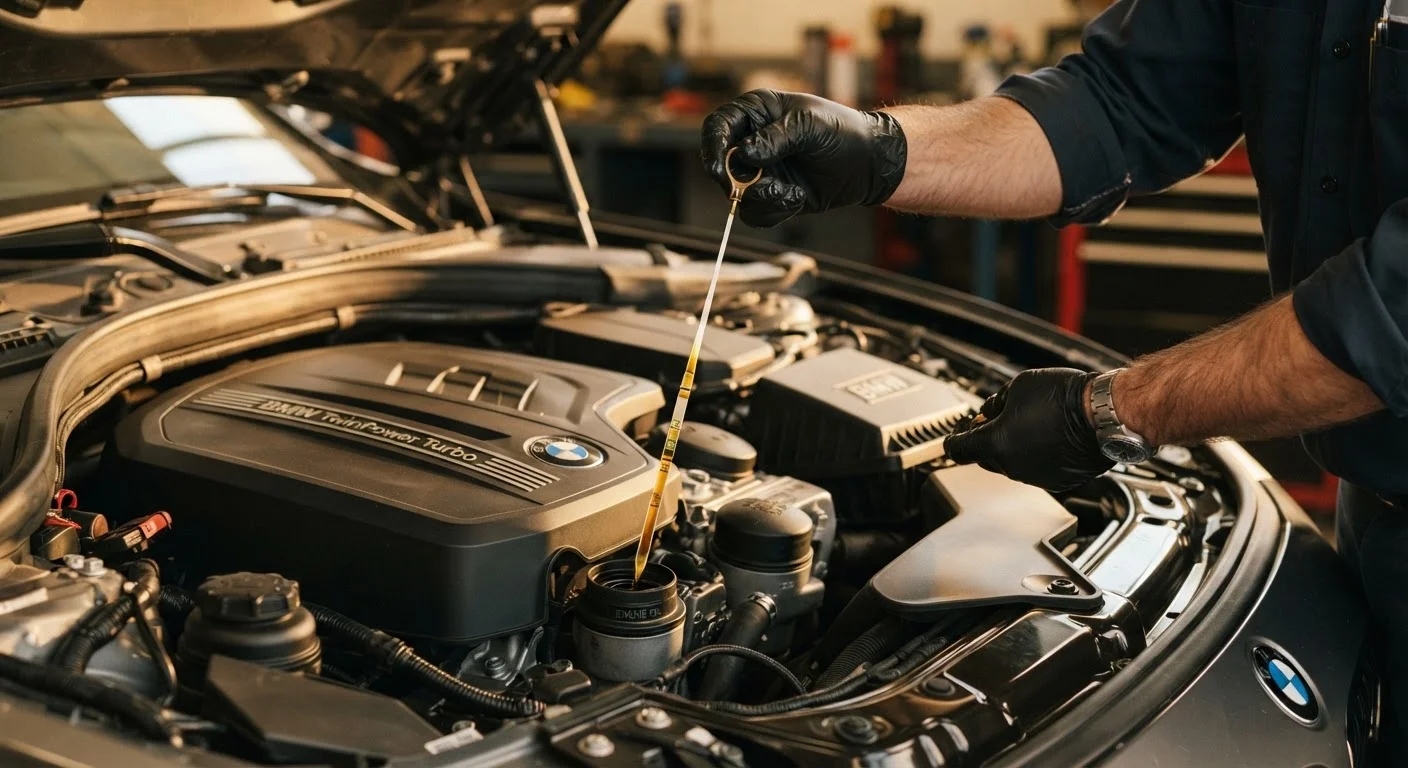
Yes, and it's a good habit. With the engine off and cooled down, pull the dipstick, wipe it clean, reinsert it fully, and pull it out again to read the level. If it's low or the oil looks very dark and gritty, have your vehicle inspected.
Yes. Viscosity - indicated by grades like 5W-30 or 0W-20 - determines how the oil flows at different temperatures. Using the grade specified by your manufacturer ensures proper lubrication throughout the engine's operating range.
Yes. Frequent short trips where the engine never fully warms up are considered 'severe' driving conditions and can degrade oil faster. Some manufacturers recommend shorter intervals for this type of use - check the severe-duty schedule in your owner's manual.
The content on this site is for informational purposes only and is not a substitute for professional advice. Always consult a qualified professional for guidance specific to your situation.