

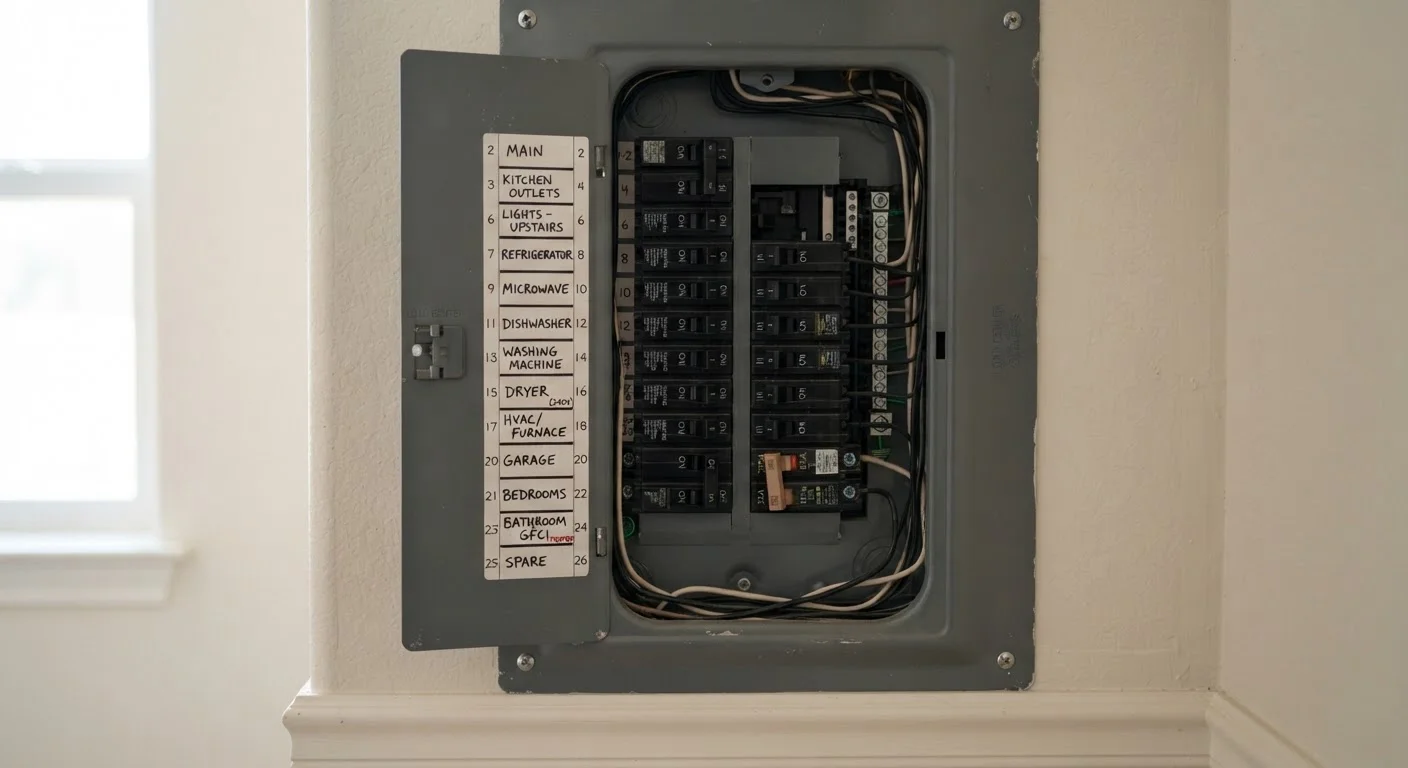
What You're Actually Looking At Inside the Panel
Open the door to your breaker panel and you'll see a column - or two columns - of switches, a large main breaker at the top, and ideally a directory card listing what each breaker controls. That main breaker governs all power entering the panel; flipping it off cuts electricity to every circuit in the home while the utility lines feeding into the top of the panel remain live. Never touch the wires above the main breaker.
Each smaller switch below is an individual breaker protecting one circuit. Breakers are rated in amperes (amps): 15-amp breakers typically serve lighting and outlet circuits, 20-amp breakers cover kitchens, bathrooms, and garage outlets where higher loads are expected. You'll also see physically wider double-pole breakers - these occupy two slots and deliver 240 volts to heavy appliances like electric dryers or central air conditioners.
The total amperage on all your breakers will likely exceed your panel's service rating, and that's normal. Your household doesn't run everything simultaneously, so the panel is designed with that diversity in mind.
Panel Locations and Access Vary
Breaker panels are typically located in utility rooms, garages, basements, or hallways. In some older homes, a separate subpanel may serve a detached garage, workshop, or addition - that subpanel feeds from the main panel and has its own set of breakers. If your home was built before the 1960s, it may have an older fuse box rather than a breaker panel; fuse systems operate differently and have distinct maintenance considerations.
How to Read a Tripped Breaker - and Why It Happened
A breaker has three possible positions: fully ON, fully OFF, and a middle position indicating it has tripped. That middle position is easy to miss - the switch may look on but sits about halfway between the two extremes. When a circuit loses power unexpectedly, check the panel for any switch in that ambiguous middle zone.
Before resetting, it's worth understanding why it tripped. The three most common causes are:
- Overload: Too many devices drawing current at once exceeded the circuit's rated capacity.
- Short circuit: A hot wire touched a neutral wire, causing a sudden surge of current. This can happen inside a damaged appliance or frayed cord.
- Ground fault: Current took an unintended path to ground - often through a person or a wet surface. Dedicated GFCI protection handles this scenario in kitchens, bathrooms, and outdoor outlets. See our guide on GFCI and AFCI differences for a deeper look.
To reset: turn off or unplug devices on the affected circuit, push the breaker firmly to OFF until it clicks, then flip it to ON. If it trips again immediately, stop resetting it and call a licensed electrician.
Keep a Flashlight Near Your Panel
A tripped breaker often means the lights in that area of your home go out at the same time. Storing a reliable flashlight near your panel - or knowing where the nearest one is - means you won't be fumbling in the dark when you need to read breaker positions. Some homeowners also keep a small notepad there to log recurring trips with dates, which is useful information for an electrician.
The Value of an Accurate Panel Directory
The paper directory inside your panel door is one of the most underused safety tools in the house. A well-labeled panel tells you exactly which breaker to switch off before working on an outlet, which circuits serve which rooms, and which dedicated circuits power large appliances. Many panels - especially in older homes - have inaccurate or blank directories.
Mapping your panel is a safe, low-skill task. With a helper and a simple plug-in outlet tester (or even a lamp), you can methodically switch breakers one at a time, note what loses power, and record it on the directory. Label dedicated circuits for the refrigerator, washer, microwave, and HVAC equipment clearly.
An accurate directory also helps if you need to describe your system to a professional. If you're preparing for a formal inspection, our article on what to prepare before an electrical inspection outlines the documentation that can save time and money.
Warning Signs That Mean You Should Call a Professional
Understanding your panel's normal operation makes it easier to recognize when something is genuinely wrong. Contact a licensed electrician if you observe any of the following:
- A burning or melting smell near the panel
- Scorch marks or discoloration around breakers or wiring
- A panel that feels warm or hot to the touch
- Buzzing, crackling, or humming sounds from inside the box
- Breakers that trip repeatedly without an obvious overload cause
- Breakers that won't stay reset
These are not situations to troubleshoot yourself. Our companion article on signs your electrical wiring deserves a professional look covers related symptoms you might notice elsewhere in the home - flickering lights, warm outlets, and unexplained outages - that can point to the same underlying problems.
Knowing your panel's layout and normal behavior is genuinely valuable. But the panel is also the point where home electrical work intersects most directly with serious risk. For a clear picture of which tasks are appropriate for homeowners versus licensed professionals, see our overview of electrical projects that require a licensed electrician. And if an emergency ever requires you to shut power down quickly, how to shut off utilities safely walks through the correct process.
Frequently Asked Questions
Repeated tripping on one circuit usually signals that the combined load of devices on that circuit regularly exceeds the breaker's rating. It can also indicate a failing appliance, a wiring fault, or a breaker that's worn out. If unplugging devices doesn't resolve it, consult a licensed electrician to investigate.
First, unplug or turn off devices on the affected circuit. Then push the breaker switch firmly to the OFF position until it clicks, then flip it back to ON. If it trips immediately again, do not keep resetting it - the circuit may have a fault that needs professional diagnosis.
A double-pole breaker occupies two adjacent slots in the panel and supplies 240 volts to large appliances such as electric dryers, ranges, water heaters, and central air conditioning units. The two poles are mechanically linked so both trip together.
A 100-amp panel was considered adequate for decades, but modern homes with multiple large appliances, EV chargers, or home offices may outgrow that capacity. An electrician can assess whether your panel's service size meets your current demand and whether an upgrade is warranted.
Call a professional if you notice a burning smell, scorch marks, a panel that feels warm to the touch, buzzing sounds, breakers that won't reset, or breakers that trip frequently without a clear cause. These signs may indicate a hazard that requires immediate expert evaluation.
Adding a breaker involves direct exposure to the panel's main lugs, which remain live even when the main breaker is off. This work is regulated, typically requires a permit, and should only be performed by a licensed electrician. See our guide on <a href="/home-garden/home-improvement/home-improvement-projects-that-often-require-a-licensed-electrician">projects that require a licensed electrician</a> for clarity on scope.
The content on this site is for informational purposes only and is not a substitute for professional advice. Always consult a qualified professional for guidance specific to your situation.