

Why This Knowledge Belongs in Every Household
A burst pipe, gas odor, or electrical fire can escalate in minutes. The difference between a contained incident and catastrophic damage often comes down to one thing: knowing where your utility controls are and how to operate them without hesitation. As we explain in our guide to how your home's core systems work together, water, gas, and electricity are deeply interconnected - and so are the risks when something goes wrong.
This guide walks you through locating each shut-off point, what tools you need on hand, and the safest sequence to follow in common emergency scenarios. Think of it as a drill you run once so you never have to improvise when it counts.
What you will need
What You'll Need Before an Emergency Strikes
Preparation is the entire point. Walk through your home now - ideally with every adult member of your household - and confirm that everyone knows where each control is located and can operate it independently.
Adjustable wrench or gas shut-off tool
Required to turn the gas meter's quarter-turn ball valve, which is typically too stiff to operate by hand.
Flashlight or headlamp
Many shut-off valves are in basements, crawl spaces, or utility closets where lighting is poor.
Waterproof marker or adhesive labels
Used to clearly mark each shut-off valve and breaker so household members can identify them at a glance.
Work gloves
Protects hands when operating valves near water damage, sharp edges, or in tight utility spaces.
Step-by-Step: Shutting Off Each Utility System
The general rule in most home emergencies: shut off electricity first, water second, and gas only if you smell it or suspect a leak. Gas shut-off triggers a service interruption that requires your utility provider to restore - so reserve it for genuine gas emergencies. Follow the steps below for each system.
Locate and label all three shut-off points in advance
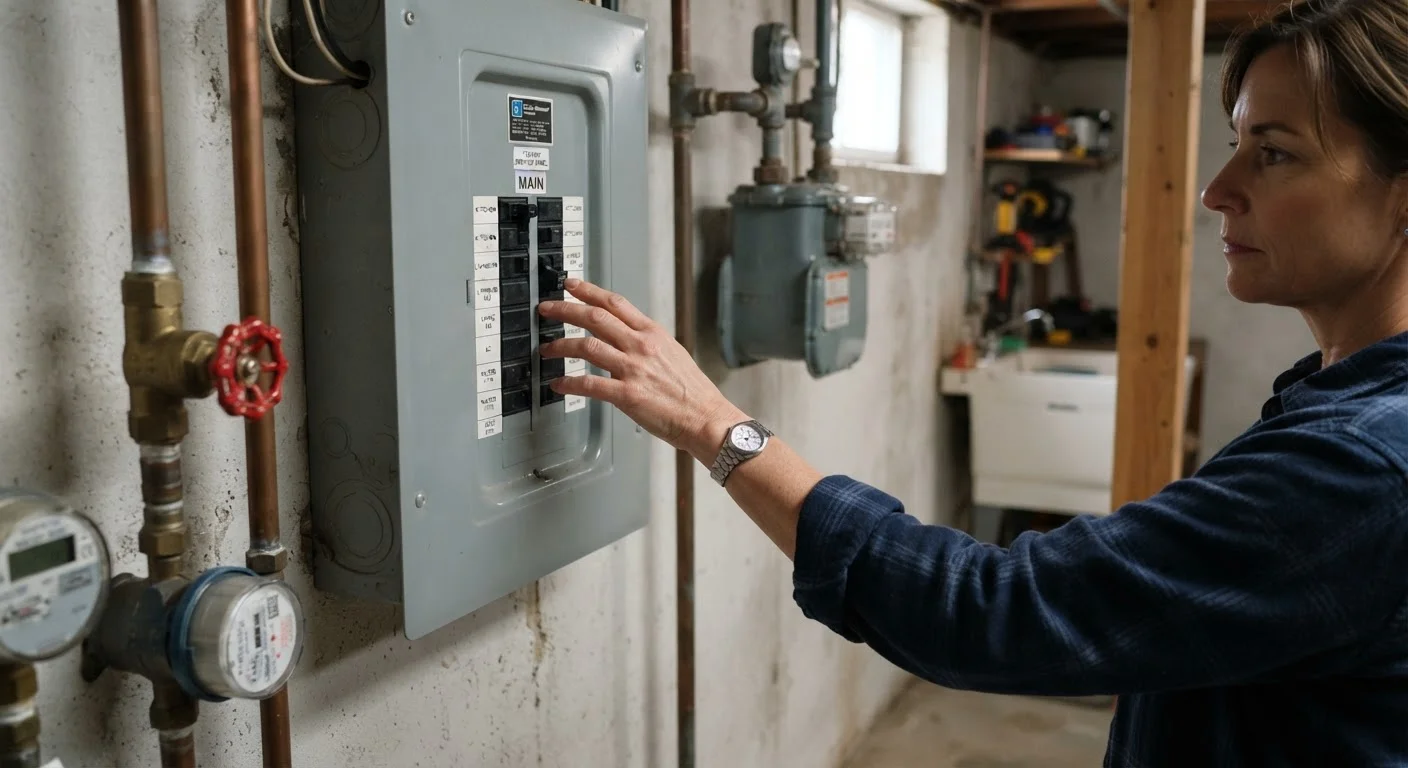
Find your main electrical panel (usually a gray metal box in a basement, garage, or hallway), your main water shut-off valve (typically where the supply line enters the home - near the foundation, under a sink, or in a utility room), and your gas meter shut-off valve (on the exterior gas meter itself). Label each one clearly with a waterproof marker or adhesive tag.
Shut off electricity at the main breaker
Open your electrical panel door and locate the main breaker - it's typically the large double-pole breaker at the top of the panel, rated at 100-200 amps. Flip it firmly to the OFF position. This cuts power to your entire home. If you need to shut off only specific circuits (such as a flooded area), flip those individual breakers instead.
Never touch your panel if it is wet, damaged, or if you smell burning. In that case, leave the home and call 911 and your electric utility from outside.
Shut off the main water supply
Turn the main water shut-off valve clockwise until it stops (for a traditional gate or globe valve) or rotate a quarter-turn so the handle is perpendicular to the pipe (for a ball valve). This stops water flow to the entire home. Open a faucet nearby to confirm pressure has dropped and water is no longer flowing.
Shut off gas only if you smell it or suspect a leak
Go to your exterior gas meter. The shut-off valve is a small rectangular tab on the pipe entering the meter. Using an adjustable wrench, turn the valve a quarter-turn so it sits perpendicular to the pipe - this means gas is off. Do not use any electronic devices, light switches, or open flames while doing this. Evacuate everyone from the building immediately if the odor is strong.
Evacuate and call for help
After shutting off utilities, move everyone - including pets - to a safe distance from the home. Call 911 if there is fire, injury, structural collapse, or a confirmed gas leak. Contact your utility providers to report the situation. Do not re-enter the building until emergency services and utility professionals have declared it safe.
Never Restore Gas Service Yourself
Turning the gas back on after a shut-off - even if you turned it off yourself - must be done by a licensed gas technician or your utility company. Improper restoration can result in gas accumulation, explosion risk, or appliance damage. This is not a DIY step under any circumstances.
After You've Shut Off Utilities
Once utilities are off, do not re-enter a home that has visible structural damage, standing water near electrical panels, or any lingering gas odor. Call 911 and your utility providers from outside or from a neighbor's home. Do not attempt to restore gas service yourself - this must be done by a licensed technician.
For electrical systems, understanding your panel layout helps you restore individual circuits safely once the emergency has passed. Our guide to reading your circuit breaker panel explains what each breaker label and amperage rating means so you're not guessing.
Document any damage with photos before cleanup begins, and contact your homeowner's insurance provider promptly. Keep records of any utility shut-off events - your provider may ask for them.
This article is for general informational purposes only. Utility systems vary by home age, region, and configuration. Always consult a licensed plumber, electrician, or gas technician for work beyond basic shut-off procedures, and follow all local codes and safety regulations.
The content on this site is for informational purposes only and is not a substitute for professional advice. Always consult a qualified professional for guidance specific to your situation.