

Start here
Why These Three Systems Matter
Build knowledge
How HVAC Works
Go deeper
Where the Systems Overlap
Take action
What Homeowners Can Do
Why These Three Systems Matter
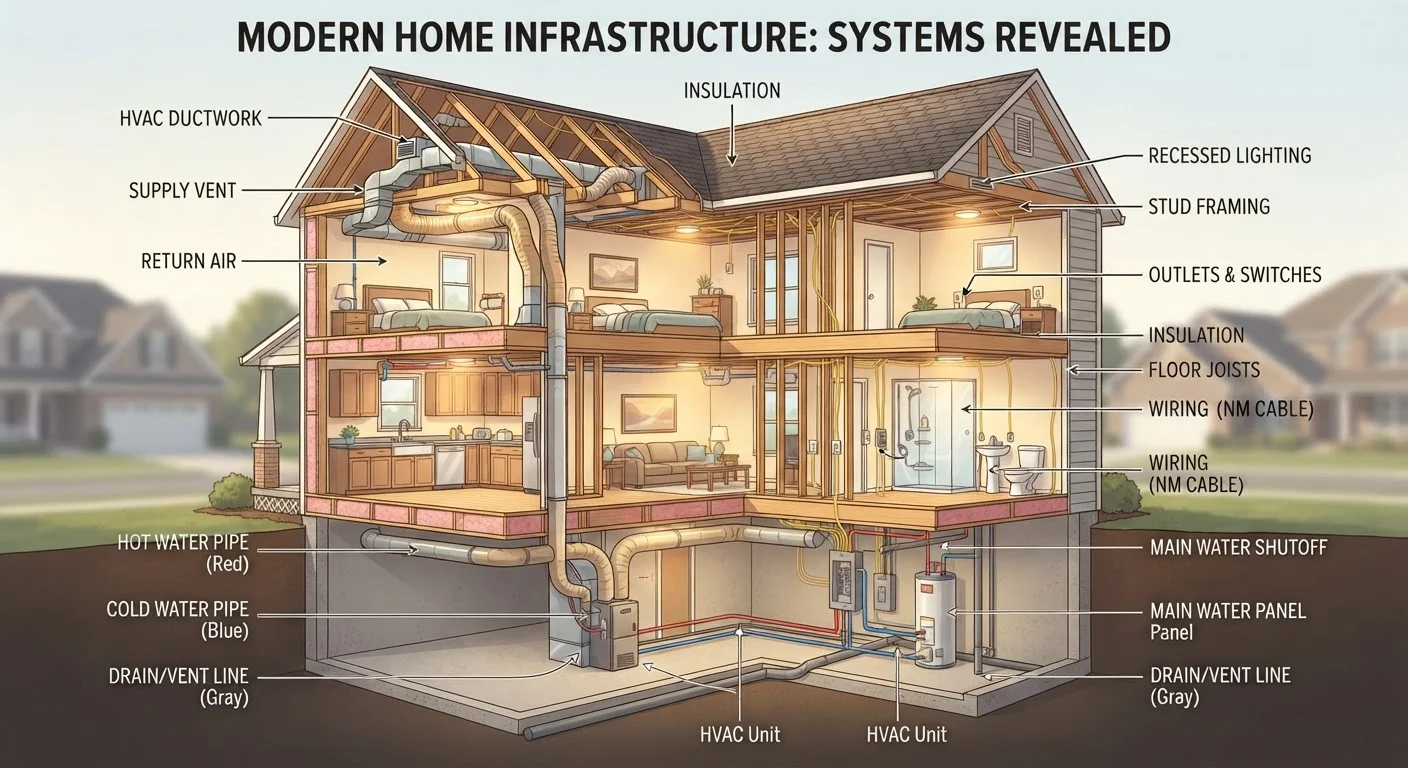
Behind your home's drywall, under its floors, and above its ceilings runs a network of systems you rarely see but depend on every hour of the day. HVAC (heating, ventilation, and air conditioning), plumbing, and electrical are your home's core mechanical infrastructure. When they function well, they're invisible. When they don't, they can disrupt daily life - and repairs can become expensive quickly.
Most homeowners interact with these systems only when something goes wrong. But a basic understanding of how each one works, and how they relate to each other, puts you in a much stronger position - whether you're troubleshooting a problem, talking to a contractor, or planning a renovation. This guide offers that foundation. For a broader look at how structural issues intersect with mechanical systems, see our article on common structural problems.
HVAC
Short for Heating, Ventilation, and Air Conditioning - the system that controls your home's temperature and air circulation.
Circuit breaker
A safety device in your electrical panel that automatically cuts power to a circuit when it detects an overload, preventing overheating or fire.
Drain-waste-vent (DWV)
The side of your plumbing system that carries used water and waste away from the home and vents sewer gases safely to the outside.
Condensate line
A small drain pipe that removes water produced when an air conditioner or heat pump removes humidity from indoor air.
GFCI outlet
A type of electrical outlet that instantly cuts power if it detects a fault - required near sinks, tubs, and other water sources to reduce shock risk.
Main water shutoff
A valve - usually near where the water line enters the home - that stops all water flow into the house when closed. Knowing its location is essential in a leak emergency.
How HVAC Works
Your HVAC system regulates temperature and air quality throughout the home. In most American homes, this involves a furnace or heat pump for heating, a central air conditioner or heat pump for cooling, and a network of ducts that distribute conditioned air through supply and return vents.
The system works in a cycle: your thermostat signals the equipment to run, air is conditioned (heated or cooled), pushed through ducts, delivered to living spaces, and then drawn back through return vents to be conditioned again. Air filters - typically located at the return vent or inside the equipment - capture dust and particles during this cycle.
One often-overlooked component is the ductwork itself. Leaky or poorly insulated ducts can undermine even a well-maintained unit. Our guide on ductwork and why it matters explains what to look for. Changing your filter regularly (typically every one to three months, depending on filter type and household conditions) is the single most accessible maintenance task a homeowner can perform.
Set a Filter Replacement Reminder
Write the replacement date on the edge of each new filter with a marker when you install it. Most one-inch filters need changing every 30-90 days; thicker filters may last up to 12 months. Check the manufacturer's recommendation and adjust for pets or allergy sufferers in the home.
How Plumbing Works
Residential plumbing has two distinct sides: the supply system, which delivers clean, pressurized water to fixtures, and the drain-waste-vent (DWV) system, which carries used water and waste out of the home. These two sides never mix - that separation is fundamental to safe, sanitary water delivery.
Cold water enters through a main supply line connected to a municipal water main or private well. A water heater branches off to supply hot water to fixtures throughout the house. Every drain connects to a series of drain pipes that slope toward a main stack, which leads to the sewer or septic system. Vent pipes - often rising through the roof - allow sewer gases to escape safely and maintain the pressure balance that keeps drains flowing. For a full breakdown of each component, see the anatomy of a home plumbing system.
How Electrical Works
Electricity enters your home through a service entrance - typically a weatherhead or underground conduit - and passes through a utility meter before reaching your main electrical panel (also called the breaker box). There, it's divided into individual circuits, each protected by a circuit breaker that trips if the circuit is overloaded, cutting power to prevent overheating or fire.
Circuits run through the walls in insulated wires and terminate at outlets, switches, and hard-wired fixtures. Most modern homes use a grounded three-wire system - hot, neutral, and ground - that provides a safe return path for electricity in a fault situation. GFCI (ground fault circuit interrupter) outlets, required near water sources, add an extra layer of protection by cutting power the instant they detect an imbalance.
Electrical Panel Work Requires a Licensed Professional
Never open or modify your main electrical panel yourself unless you are a licensed electrician. Working inside a live panel carries a serious risk of electrocution and fire. Even replacing a breaker - which may seem straightforward - typically requires a permit and professional installation in most jurisdictions.
Understanding your breaker panel - which breakers control which areas of the home - is one of the most practical things a homeowner can learn. Label each breaker if they aren't already marked.
Where the Systems Overlap
These three systems are more interdependent than most homeowners realize. Consider a few examples:
- Water heaters require both a water supply connection and an energy source - electric elements or a gas burner - plus proper venting for gas models.
- HVAC equipment often produces condensate (water from humidity removal) that drains through a condensate line tied into your plumbing system. A clogged condensate line can cause water damage or trigger a system shutoff.
- Sump pumps protect basements from flooding but depend on a working electrical connection - making both systems critical during heavy rain.
- Bathroom exhaust fans are part of both the electrical system (powered) and the ventilation strategy (moving moist air out of the home).
This overlap means that diagnosing a problem sometimes requires looking beyond the obvious system. A wet spot near your furnace might not be a plumbing leak - it could be a condensate drain issue. Thinking in terms of how systems connect helps you describe problems more accurately to a service professional.
What Homeowners Can Do
You don't need to be an expert to keep your home's systems in good shape - but consistent attention makes a real difference. Here are practical, low-barrier habits that pay off over time:
- Change HVAC filters on a regular schedule. A clogged filter forces your equipment to work harder and reduces air quality.
- Know where your shutoffs are. Every homeowner should be able to locate the main water shutoff, the gas shutoff, and the main electrical breaker before an emergency makes it urgent.
- Watch for early warning signs: unusual sounds, unexplained spikes in utility bills, slow drains, flickering lights, or inconsistent temperatures. These are invitations to investigate, not ignore.
- Keep records. Log service dates, equipment model numbers, and any repairs. This information is valuable to future contractors and to buyers if you ever sell.
For a structured approach, our seasonal home systems maintenance checklist walks through specific tasks by season. And for habits that support long-term reliability, see practices that keep home systems running well.
For any work involving gas lines, the main panel, supply plumbing connections, or structural changes, always engage a licensed professional and verify whether a permit is required in your municipality. These aren't just formalities - they're safeguards for your family and your investment.
Frequently Asked Questions
General guidance suggests a professional HVAC tune-up once a year (ideally before heating or cooling season), a plumbing inspection every two years, and an electrical inspection whenever you buy a home or add major appliances. See <a href="/home-garden/home-systems/what-homeowners-should-know-before-scheduling-an-hvac-plumbing-or-electrical-inspection">what to expect from each inspection</a> for details. Your local codes or specific equipment age may call for more frequent checks.
Many surface-level tasks - changing HVAC filters, clearing slow drains, replacing outlet covers - are safe DIY work. However, any task involving gas lines, the main electrical panel, supply line connections, or structural ductwork modifications typically requires a licensed professional and often a permit. When in doubt, consult a qualified contractor before starting.
Unusual sounds, unexplained increases in utility bills, inconsistent temperatures, slow drains, or flickering lights are all early warning signals. None of these guarantees a specific problem, but each warrants a closer look. Catching issues early almost always costs less than waiting for a full failure.
Yes. A water heater needs both a water supply and an electrical or gas connection to function. Your HVAC system may rely on condensate drain lines tied into your plumbing. An overloaded electrical circuit can affect any appliance connected to it. Thinking of the three systems as interconnected - not isolated - helps you diagnose problems more accurately.
Permit requirements vary by municipality, but most jurisdictions require permits for new wiring, panel upgrades, gas line work, significant plumbing changes, and HVAC equipment replacement. Working without required permits can create safety risks and complicate home sales. Always verify local requirements with your building department before starting a project.
The content on this site is for informational purposes only and is not a substitute for professional advice. Always consult a qualified professional for guidance specific to your situation.