

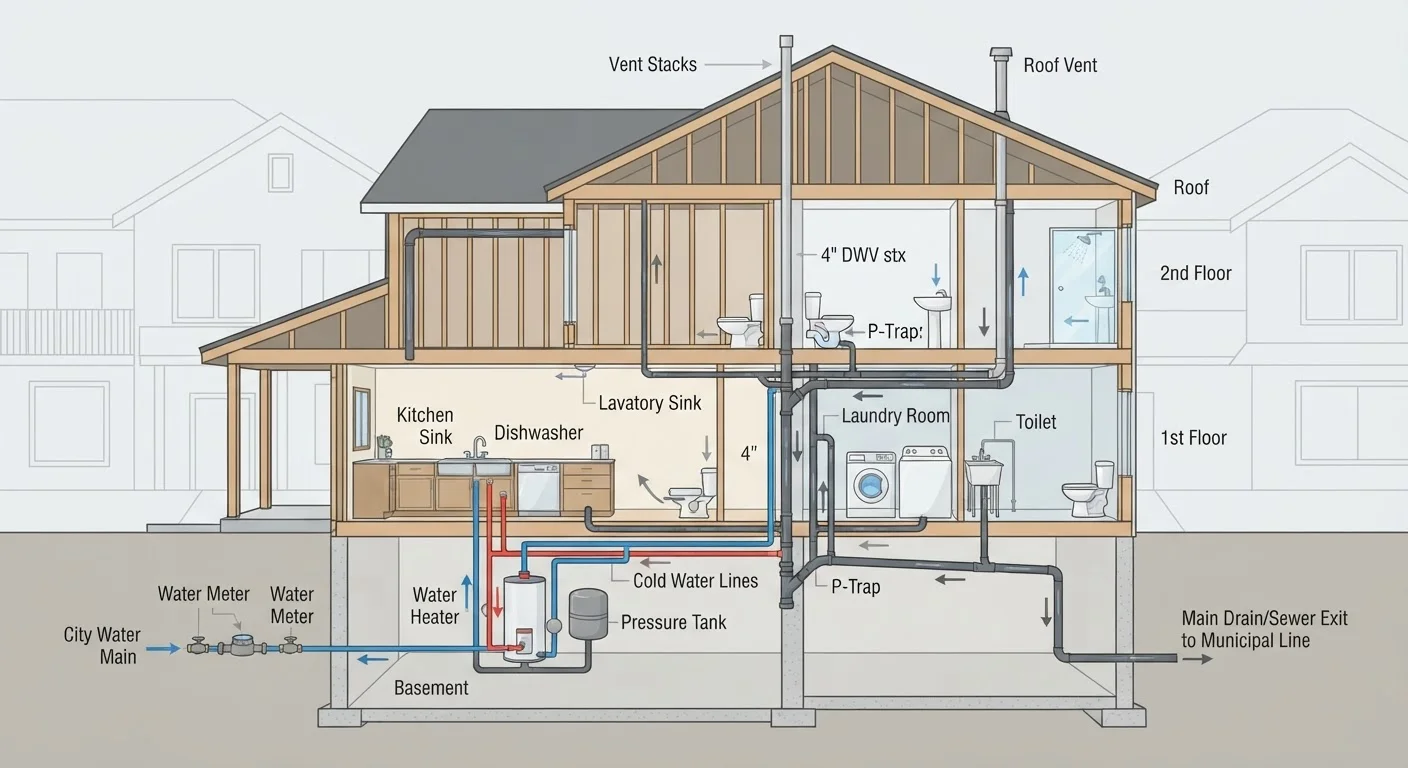
The Water Supply System: Getting Clean Water Where It Needs to Go
Fresh water enters your home under pressure through a single main supply line connected to either a municipal water main or a private well. That pressure - generally between 40 and 80 psi - is what pushes water through every pipe in the house instantly when you open a tap.
The first major component on that line is the main shut-off valve. Knowing its location is essential: in any plumbing emergency, turning this valve off stops water flow to the entire house within seconds. From there, the supply line typically branches into two paths - one feeding cold water directly to fixtures and appliances, and one passing through the water heater to supply hot water throughout the home.
Individual fixture shut-off valves (sometimes called stop valves) sit beneath sinks and behind toilets, letting you isolate a single fixture without cutting water to the whole house. The supply lines themselves are most commonly made from copper, CPVC, or PEX - a flexible plastic tubing that has become widely used in modern construction and retrofits.
Water pressure issues are among the most common homeowner complaints, and they almost always trace back to a supply system component - a partially closed valve, a failing pressure regulator, or mineral buildup in older pipes.
The Drain-Waste System: Moving Water Out by Gravity
Unlike the supply side, the drain-waste system relies entirely on gravity rather than pressure. Waste and used water flow downward through a series of sloped pipes toward the main drain stack - a large vertical pipe (typically 3-4 inches in diameter) that runs from the basement or crawl space up through the roof.
Every fixture connects to this network through smaller branch drains. A critical component at each fixture is the P-trap: that U-shaped curve of pipe beneath every sink and shower. The P-trap stays filled with water, creating a liquid seal that prevents sewer gases from traveling back up into your home. If you notice a foul odor from a seldom-used drain, the P-trap has likely dried out - running water briefly usually solves it.
The main stack eventually connects underground to your home's sewer lateral, which routes wastewater either to the municipal sewer system or a private septic tank. This underground section is outside the home's foundation and is worth understanding - tree root intrusion and pipe deterioration in the lateral are among the more costly plumbing repairs homeowners face.
~14%
Share of home water use lost to leaks
According to the U.S. Environmental Protection Agency, the average household's leaks can account for nearly 10,000 gallons of wasted water per year.
40-80 psi
Normal residential water pressure range
Most plumbing codes and fixture manufacturers recommend keeping household water pressure within this range to protect pipes and appliances from damage.
3-4 inches
Typical main drain stack diameter
Residential main stacks are sized to handle combined drainage from all fixtures; undersized stacks are a common issue in older homes that have had bathrooms added.
The Vent System: The Part Most Homeowners Forget
Venting is the most overlooked subsystem - invisible from inside the home but critical to how drains work. Vent pipes extend upward from the drain-waste system and exit through the roof. Their job is to introduce air into the drainpipes, equalizing pressure so that water can flow freely and the P-trap seals aren't siphoned dry.
Without adequate venting, you'll notice symptoms: slow drains, gurgling sounds when water is released elsewhere in the house, or recurring sewer smells. These are signs the system is struggling to breathe. Roof vent openings can occasionally become blocked by debris, birds' nests, or ice in cold climates - a relatively straightforward issue for a professional to inspect and clear.
Locate Your Shut-Off Valve Today
Don't wait for a leak to find your main shut-off valve. Walk through your basement, utility room, or crawl space now and confirm its location. Label it clearly and make sure every adult in the household knows where it is and how to operate it. This single step can prevent thousands of dollars in water damage.
Understanding all three subsystems together gives you a much clearer picture of what's happening when something goes wrong. For a deeper look at specific components like backflow preventers, pressure regulators, and sump pumps, see the homeowner's plumbing component glossary. And if you're planning a professional inspection, knowing what inspectors look for will help you prepare and understand the results.
Frequently Asked Questions
The three subsystems are the water supply system (which brings fresh water in under pressure), the drain-waste system (which removes used water by gravity), and the vent system (which allows air into drainpipes to keep water flowing freely and prevents sewer gas buildup).
In most homes, the main shut-off valve is near where the water line enters the house - often in the basement, crawl space, utility room, or near the foundation. In warmer climates, it may be outside near the water meter. Every adult in the household should know where it is.
A P-trap is the curved section of pipe beneath a sink, tub, or shower drain. It holds a small reservoir of water that acts as a seal, blocking sewer gases from rising up through the drain into your living space. If a drain smells bad, a dried-out P-trap is often the cause.
Vent pipes allow air to enter the drain system, which prevents the vacuum effect that would otherwise slow or stop water flow. Without proper venting, drains gurgle, drain slowly, and water can be siphoned out of P-traps - allowing sewer gases into the home.
Any work involving the main supply line, drain-waste-vent stack, water heater connections, or anything requiring a permit should be handled by a licensed plumber. DIY is generally appropriate only for minor tasks like replacing a faucet aerator or fixing a running toilet with a simple flapper replacement.
The content on this site is for informational purposes only and is not a substitute for professional advice. Always consult a qualified professional for guidance specific to your situation.