

Why Water Pressure Confuses So Many Homeowners
Water pressure is one of those home systems that most people only notice when something goes wrong - a trickle from the showerhead, a shuddering pipe, or a washing machine that takes forever to fill. But because pressure problems can have several different causes, homeowners often misdiagnose them and either ignore the real issue or attempt the wrong fix.
Understanding a few basic facts about how residential water pressure works - and what can go wrong - puts you in a much stronger position. For a broader look at how plumbing connects with your home's other core systems, see our guide on how HVAC, plumbing, and electrical work together.
Myth
Low water pressure just means the city isn't supplying enough - there's nothing I can do about it.
Fact
Low pressure inside your home is usually caused by something on your side of the meter, such as a partially closed valve, clogged aerator, or corroded pipes.
Municipal supply pressure typically arrives at residential properties between 60 and 80 psi, which is more than adequate. When pressure feels weak indoors, the problem is almost always internal. Common culprits include a main shut-off valve that wasn't fully reopened after a repair, mineral-clogged aerators on faucets, or older galvanized steel pipes that have corroded and narrowed from the inside. Start by checking that your main shut-off is fully open, then clean or replace aerators on low-flow fixtures before assuming the issue lies with your utility.
Myth
Higher water pressure is always better - more pressure means better showers and faster fill times.
Fact
Pressure above 80 psi accelerates wear on seals, joints, and appliances, and can void manufacturer warranties on washing machines and dishwashers.
Excessively high pressure is one of the leading causes of premature plumbing failures. It stresses pipe joints, degrades washing machine hoses, causes faucet washers to wear out quickly, and can damage the internal valves of water heaters. In severe cases, it contributes to pinhole leaks. Most plumbing codes in the U.S. cap safe residential pressure at 80 psi. If your home consistently runs above that level, a pressure-reducing valve (PRV) - a bell-shaped device typically installed where the supply line enters the home - can bring it into a safe range.
Myth
A banging or knocking pipe is just an annoyance - it doesn't mean anything is wrong with pressure.
Fact
Banging pipes, often called "water hammer," are caused by pressure surges and can gradually loosen fittings and damage pipe joints over time.
Water hammer happens when a fast-closing valve - like those in a washing machine or dishwasher - abruptly stops flowing water, creating a shockwave through the pipes. It's a pressure phenomenon, not a structural one, and repeated hammer events can loosen pipe straps, crack solder joints, and stress appliance connections. Mitigation options include installing water hammer arrestors (small devices that absorb the shock) and verifying that overall system pressure isn't too high. This is not a noise to simply get used to.
Myth
If pressure is fine at the kitchen sink, it must be fine everywhere in the house.
Fact
Pressure can vary significantly between fixtures depending on pipe diameter, distance from the main, and localized clogs or partially closed valves.
Plumbing systems aren't uniform. A fixture close to the main supply line on a large-diameter branch will generally see better pressure than one at the far end of a narrow run. A single partially closed angle-stop valve under a bathroom sink can starve that fixture while leaving every other tap unaffected. If you notice pressure differences between rooms or floors, the investigation should focus on the supply path to the underperforming fixture rather than the system as a whole.
Myth
Pressure that fluctuates throughout the day is always a sign of serious pipe damage.
Fact
Daily pressure fluctuations are often caused by peak demand on the municipal supply or a failing pressure-reducing valve - both of which are manageable issues.
Many homeowners panic when they notice that morning showers feel stronger than evening ones. In municipal water systems, pressure naturally varies with demand - it tends to be highest late at night and lowest during morning and evening peak-use windows. That's normal. However, erratic fluctuations - pressure that surges and drops unpredictably - can indicate a PRV that's worn out and no longer regulating properly. PRVs have a typical service life of 10 to 15 years. Replacing a failing PRV is one of the more cost-effective plumbing repairs available, but it should be performed by a licensed plumber.
The Fixes: What You Can Do Versus When to Call a Pro
Once you've correctly identified a pressure problem, the next question is whether it's safe to address it yourself. A few tasks are genuinely DIY-friendly; others touch pressurized supply lines or require permits and should be left to a licensed plumber.
Don't Adjust a PRV Without a Pressure Gauge
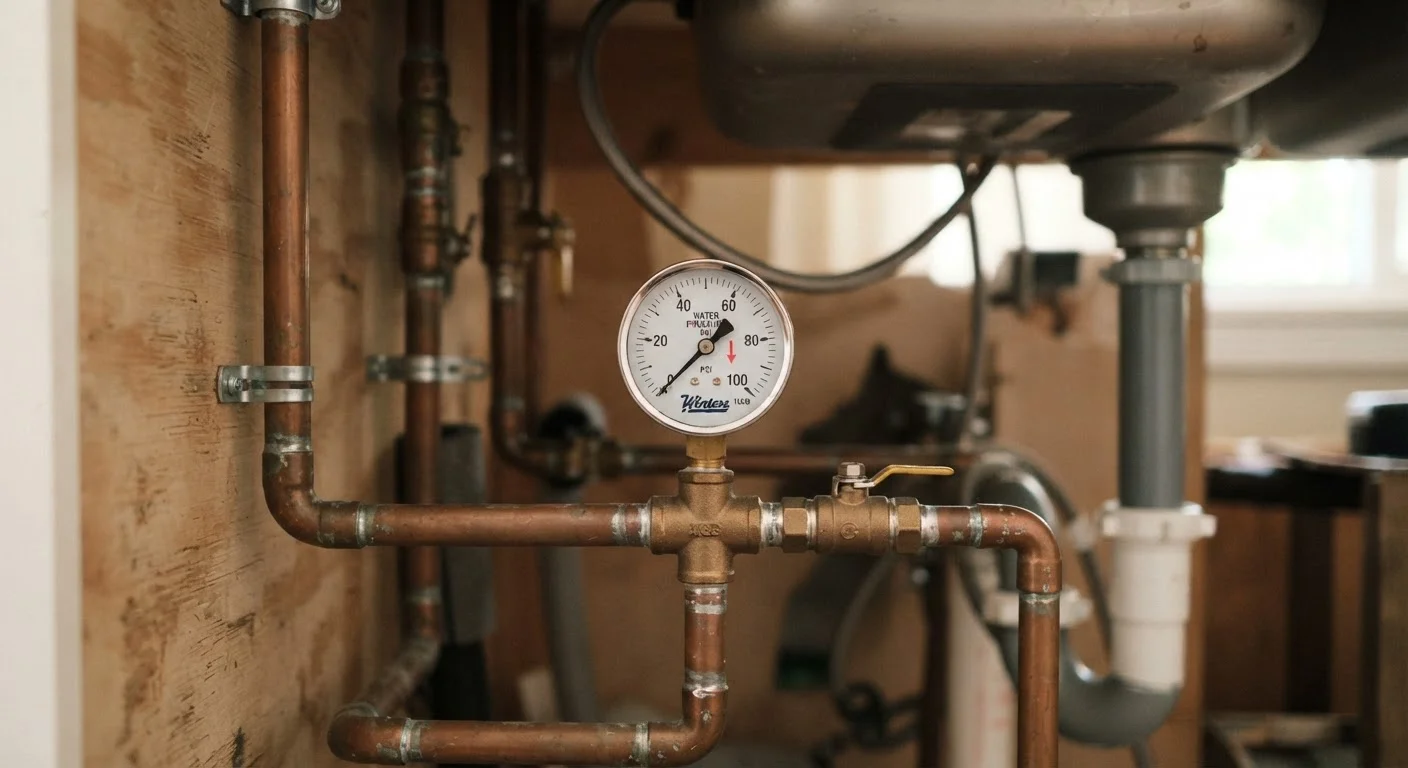
Pressure-reducing valves have an adjustment screw, but turning it without first measuring your actual psi with a gauge can push your system outside the safe range in either direction. Over-pressurizing your system creates real risk of appliance damage and pipe failure. Always measure first, and if you're uncertain, have a licensed plumber handle the adjustment.
Safe for most homeowners:
- Cleaning or replacing a clogged aerator or showerhead
- Checking and slowly opening a partially closed shut-off valve
- Attaching a simple hose-bib gauge to measure your current psi
Leave to a licensed plumber:
- Installing or adjusting a pressure-reducing valve (PRV)
- Replacing corroded or failing supply pipes
- Diagnosing pressure loss that involves the water meter or municipal connection
For a practical framework on drawing that line, see when to DIY and when to hire a pro for home repairs. And if your pressure fluctuations seem tied to hot water only, the culprit may be your water heater - a topic covered in depth in our comparison of tank versus tankless water heaters.
High Pressure Can Void Appliance Warranties
Many washing machine and dishwasher manufacturers specify a maximum incoming water pressure - often 80 psi - in their warranty terms. If supply pressure exceeds that limit and causes internal damage, the repair may not be covered. Check your appliance documentation and measure your home's pressure if you haven't recently done so.
For plain-language definitions of components like PRVs, expansion tanks, and backflow preventers, our homeowner's plumbing glossary is a useful companion. Understanding the anatomy of your home's plumbing system also helps you ask the right questions when a plumber visits.
The content on this site is for informational purposes only and is not a substitute for professional advice. Always consult a qualified professional for guidance specific to your situation.