

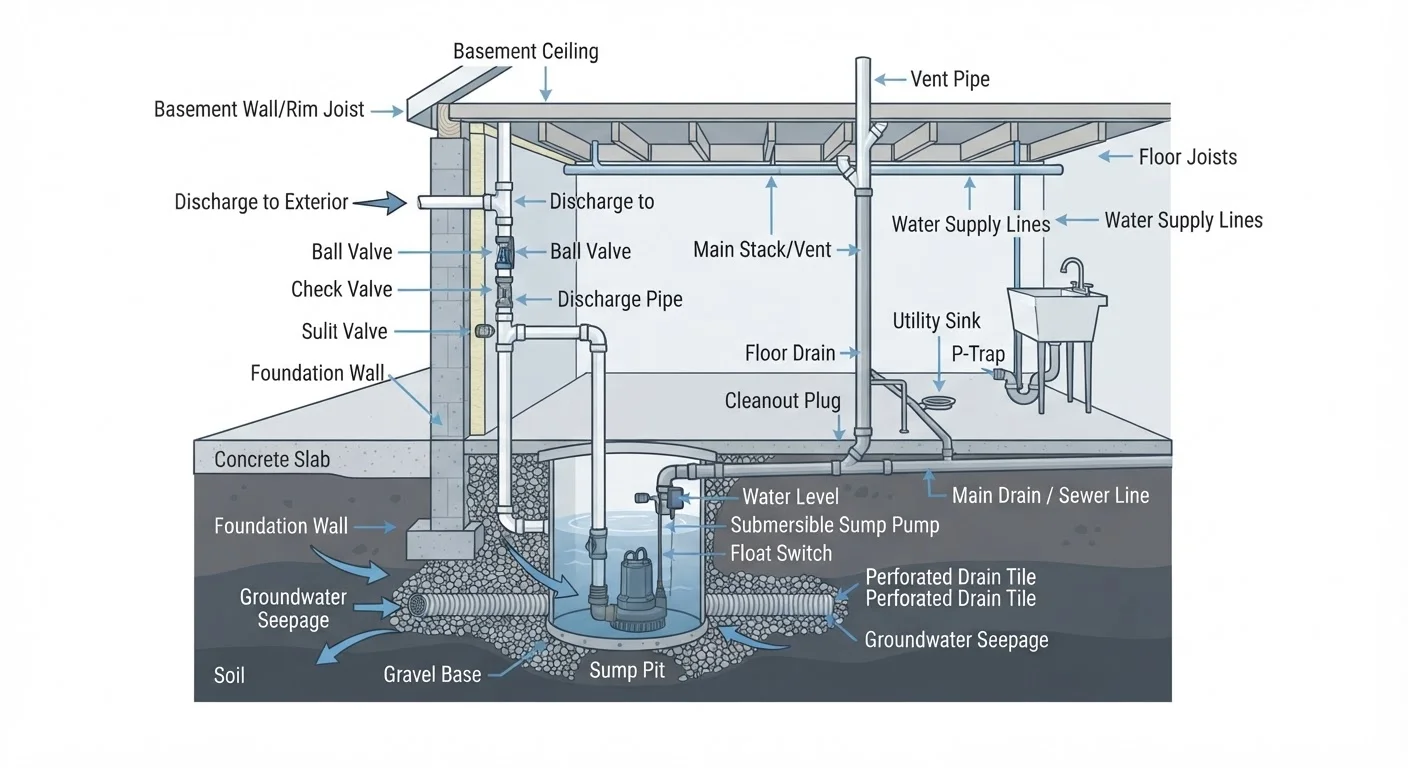
Why These Terms Matter
A plumber mentions a backflow preventer during an inspection. An insurance adjuster asks whether your basement has a sump pump. A home inspector flags high static pressure and recommends a pressure regulator. If those terms feel unfamiliar, you're not alone-and you're not expected to be an expert.
What you are expected to do is make informed decisions about your home. This glossary covers the plumbing components homeowners most commonly encounter, defined in plain language so you can ask better questions, understand service quotes, and recognize when something genuinely needs professional attention.
For a broader look at how plumbing fits alongside your HVAC and electrical systems, see how your home's core systems work together. And if water pressure is the specific issue you're investigating, what homeowners get wrong about water pressure goes deeper on causes and fixes.
Sump Pump
A pump installed in a basement or crawl space pit that removes accumulated groundwater and routes it away from the foundation via a discharge pipe.
Backflow Preventer
A valve assembly that stops water from reversing direction and contaminating the public water supply. Often required by code on irrigation and fire suppression systems.
Pressure Reducing Valve (PRV)
A device installed on the main water supply line that reduces incoming municipal water pressure to a safe, consistent level for household plumbing and appliances.
Expansion Tank
A small pressurized tank that absorbs the extra volume created when water expands as it's heated, preventing dangerous pressure spikes in closed plumbing systems.
Sump Basin
The pit dug into the lowest point of a basement or crawl space where groundwater collects before the sump pump moves it out.
Static Water Pressure
The baseline pressure of water in your supply lines when no fixtures are running, typically measured in PSI (pounds per square inch).
Shut-Off Valve
A valve that stops water flow-either to the entire house (main shut-off) or to a single fixture. Ball valves and gate valves are the two most common types in residential plumbing.
Closed Plumbing System
A plumbing configuration where water cannot flow back toward the municipal supply, typically created when a backflow preventer or PRV is installed on the main line. Expansion tanks are often required in this setup.
Key Components Explained
The terms below cover the components you're most likely to hear about during inspections, maintenance visits, or repairs. Each one plays a specific role in keeping water flowing safely-and in the right direction.
| Safe household water pressure range | 40-80 PSI (General plumbing industry standard) |
| Sump pump average lifespan | 7-10 years (General contractor and manufacturer guidance) |
| Where backflow preventers are commonly required | Irrigation systems, fire suppression lines, chemical feed connections (Varies by local code and water authority) |
| PRV location in most homes | Where the main water supply line enters the house |
| When expansion tanks are typically required | Any home with a closed plumbing system (PRV or backflow preventer installed) (Most modern plumbing codes; verify locally) |
Sump Pumps
A sump pump sits in a pit (called a sump basin) at the lowest point of your basement or crawl space. When groundwater accumulates-from rain, snowmelt, or a high water table-the pump activates and routes that water away from your foundation through a discharge pipe. Most residential units are either pedestal style (motor above the water) or submersible (motor sits in the pit). A battery backup unit is a worthwhile consideration in areas prone to power outages during storms, since that's exactly when you need the pump most.
Backflow Preventers
Backflow is what happens when water flows in the wrong direction-back from your home's plumbing or irrigation system into the public water supply. A backflow preventer is a valve assembly that physically stops this reversal. They're commonly required on irrigation systems, fire suppression lines, and anywhere chemicals or fertilizers might enter a water line. Many municipalities require inspected, certified backflow preventers on certain connections. Check with your local water authority or a licensed plumber to understand what applies to your property.
Pressure Regulators
Municipal water often enters a home at pressures higher than household plumbing and appliances are designed to handle. A pressure reducing valve (PRV)-sometimes called a pressure regulator-steps that pressure down to a safe, consistent level, typically between 40 and 80 PSI (pounds per square inch). Without one, high pressure can damage appliances, shorten the life of supply lines, and cause persistent leaks. PRVs are typically installed where the main water line enters the home and have a limited service life; a licensed plumber should inspect or replace them when pressure problems arise.
Expansion Tanks
When water is heated in a closed plumbing system, it expands. An expansion tank absorbs that extra volume so pressure doesn't spike dangerously inside your water heater or supply lines. Homes with a backflow preventer or pressure regulator on the main line effectively create a closed system, making an expansion tank either required by code or strongly recommended. If your water heater is making banging sounds or the pressure relief valve is frequently venting, an undersized or missing expansion tank may be a contributing factor-consult a plumber.
Shut-Off Valves
Every homeowner should know where their main shut-off valve is located. This valve controls the flow of water into the entire house and is the first thing to close in a plumbing emergency. Individual fixture shut-offs (under sinks, behind toilets) let you isolate repairs without cutting water to the whole house. Ball valves (lever handle) are generally preferred over gate valves (round handle) because they're faster to operate and more reliable over time. See our guide to your home's plumbing anatomy for a fuller picture of how these valves fit into your overall system.
The content on this site is for informational purposes only and is not a substitute for professional advice. Always consult a qualified professional for guidance specific to your situation.