

Summary
24 items · 45-90 minutes per seasonal review
Why a Room-by-Room Seasonal Approach Works
Home systems don't fail all at once - they degrade gradually, and the signs are easy to miss when you're not looking systematically. An HVAC filter clogged with months of dust forces the blower motor to work harder. A slow drip under a bathroom sink goes unnoticed until the cabinet floor warps. A corroded anode rod in a water heater quietly allows tank corrosion until the unit fails.
Organizing inspections by system - and by season - turns an overwhelming task into a manageable routine. You don't need to be a technician. You need to know what to look for, when to look, and when to call someone licensed to handle the rest. For a broader view of how these systems interact, see how HVAC, plumbing, and electrical work together.
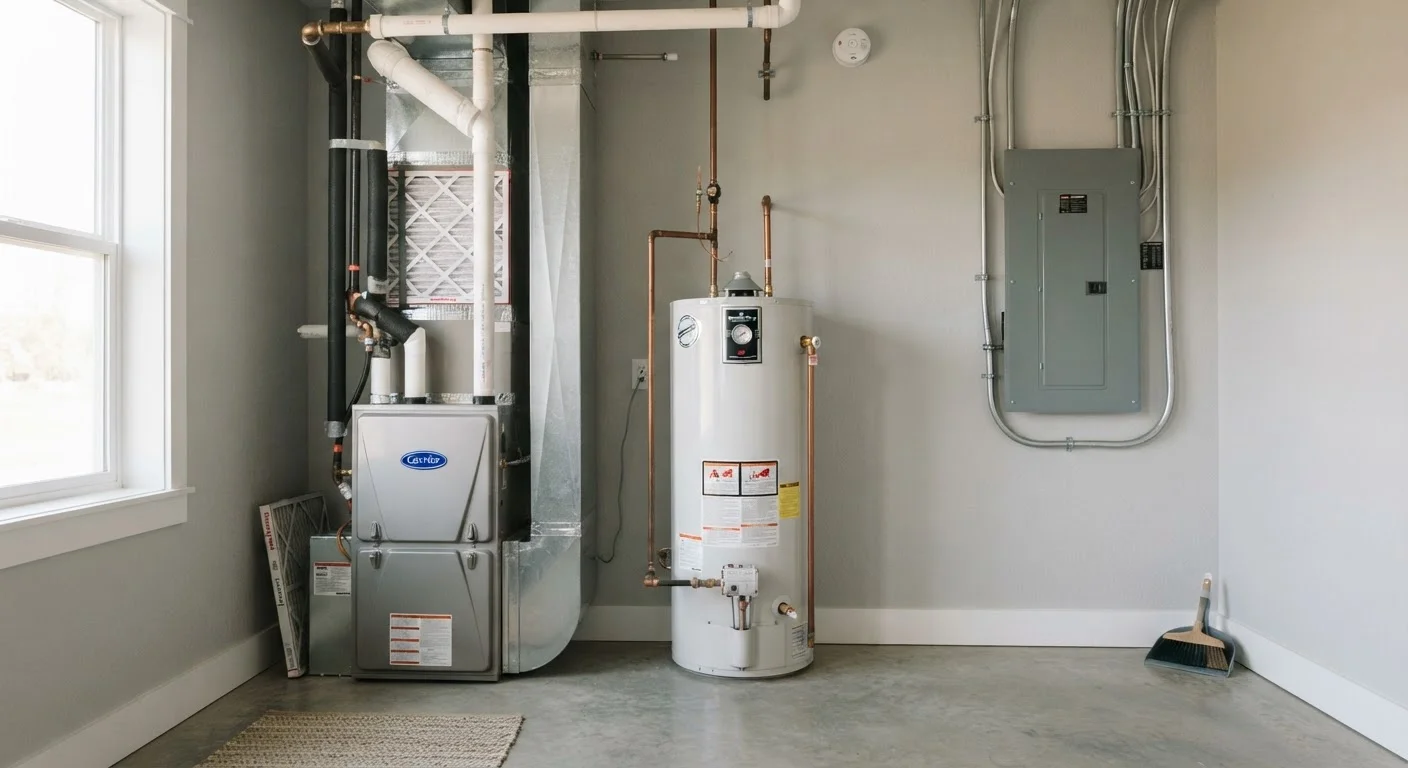
This checklist is organized into four categories - HVAC, plumbing and water heater, electrical, and seasonal transitions - so you can move through your home logically without doubling back. Use it twice a year at minimum: once in fall before heating season, and once in spring before cooling season ramps up.
Electrical Work Requires a Licensed Professional
This checklist covers visual inspections only - never open electrical panels, replace wiring, or work inside outlets yourself unless you are a licensed electrician. Unpermitted or improperly performed electrical work is a leading cause of house fires and may void homeowner's insurance coverage. Always contact a licensed electrician for any repairs or concerns you identify.
Check Local Permit Requirements Before DIY Repairs
Some maintenance tasks - including water heater replacement, ductwork modification, and certain plumbing work - may require a permit and inspection in your municipality. Requirements vary significantly by location. Verify with your local building department before starting any work beyond simple cleaning and filter replacement.
What to Gather Before You Start
A little preparation makes the walk-through faster and more useful. Pull together your home's maintenance history - receipts from past HVAC tune-ups, the water heater installation date (usually on the label), and any notes from previous inspections. If you don't have a log started yet, now is the time. The habits that keep home systems running well article covers why consistent record-keeping pays off over the long run.
Have your tools on hand before you start walking the house. You'll want replacement HVAC filters sized for your specific unit, a flashlight for dark utility areas, and pipe insulation foam if you haven't already addressed unheated runs. Check the tool list below before beginning.
HVAC Filter (appropriate MERV rating for your system)
Replaces dirty filters to restore proper airflow through your heating and cooling equipment.
Garden hose with spray nozzle
Used to flush water heater sediment and rinse outdoor condenser unit fins.
Noncontact voltage tester
Allows safe preliminary checking of whether outlets are live before a licensed electrician investigates.
Pipe insulation foam sleeves
Wraps exposed pipes in unheated areas to prevent freezing during cold months.
Smoke and CO alarm tester spray
Verifies alarm sensors are functioning correctly during routine monthly tests.
Home maintenance logbook or digital folder
Tracks service dates, receipts, and noted issues across all home systems over time.
If your inspection uncovers anything beyond a routine filter swap or visual concern, review what to expect when scheduling a professional inspection so you're prepared for the process.
The Full Maintenance Checklist
Work through each category below at your own pace. Items marked must are non-negotiable for basic system health and safety. Should items are strongly recommended and contribute meaningfully to efficiency and longevity. Nice-to-have items round out a thorough inspection and are worth doing when time allows.
HVAC System
Plumbing & Water Heater
Electrical System
Seasonal Transitions
Gas Appliance Concerns: Call a Pro Immediately
If you smell gas near your furnace, water heater, or any gas-connected appliance, do not attempt to inspect or troubleshoot it yourself. Leave the home immediately, avoid using light switches or phones inside, and contact your gas utility and emergency services from a safe distance. Gas leaks are life-threatening and require immediate professional response.
For homeowners heading into fall, pairing this checklist with outdoor preparation is worthwhile - the fall yard prep checklist covers irrigation shutoff, tool storage, and other tasks that complement your indoor systems work. If air conditioning maintenance is a priority, understanding how central AC systems work is a useful companion reference.
This article is for general informational and educational purposes only. It is not a substitute for advice from a licensed HVAC technician, plumber, or electrician. Always consult qualified professionals for repairs, permit guidance, and any situation involving gas, electrical hazards, or structural concerns.
The content on this site is for informational purposes only and is not a substitute for professional advice. Always consult a qualified professional for guidance specific to your situation.