

Why Consistent Habits Outlast One-Time Fixes
Most homeowners think about their HVAC, plumbing, and electrical systems only when something goes wrong. That reactive approach almost always costs more - in repair bills, emergency service fees, and shortened equipment lifespans - than a handful of simple habits practiced throughout the year.
The good news is that keeping major home systems in sound condition doesn't require technical expertise. It requires consistency. Understanding how your systems work together is a meaningful first step. Our guide on how HVAC, plumbing, and electrical work together explains the connections in plain language.
The practices below reflect what experienced home inspectors and trade professionals consistently recommend. None of them are complicated, but all of them compound over time.
Change HVAC filters on a consistent schedule, not just when you notice reduced airflow.
A clogged filter forces your system to work harder, increasing energy use and accelerating wear on the blower motor and heat exchanger. Most manufacturers recommend replacement every one to three months depending on filter type and household conditions. Skipping changes is one of the most common causes of avoidable HVAC failures.
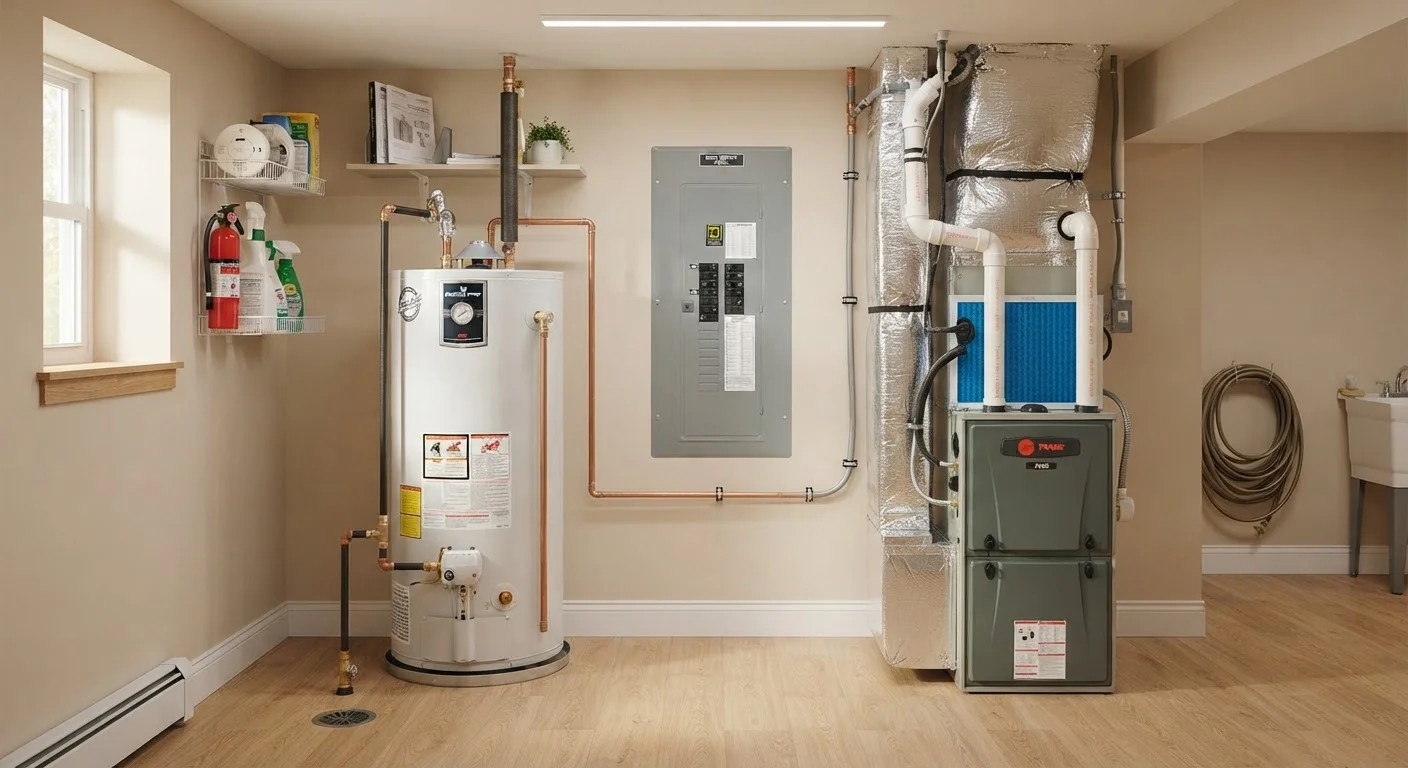
Keep at least two feet of clear space around water heaters, furnaces, and electrical panels.
Equipment needs adequate clearance for safe operation, proper airflow, and emergency access. Storing items around a furnace or water heater can create fire hazards and may also violate local building codes. Electrical panels need clear access so breakers can be reached quickly during an emergency.
Test smoke detectors, carbon monoxide alarms, and GFCI outlets at least twice a year.
These safety devices exist as the last line of defense against house fires, gas leaks, and electrocution. They can fail silently - a dead battery or a worn test button gives no obvious warning. Regular testing confirms they're functional when you actually need them.
Run water through infrequently used drains and flush rarely used toilets monthly.
P-traps - the curved pipe sections under sinks and behind toilets - hold a small amount of water that blocks sewer gas from entering your home. In fixtures that go unused for weeks, that water evaporates, allowing unpleasant and potentially harmful gases through. Regular flushing maintains the barrier.
Inspect visible pipe connections and appliance hoses annually for signs of wear or moisture.
Slow leaks under sinks, behind washing machines, and at refrigerator ice-maker connections are responsible for a significant share of home water damage claims. Catching a damp supply hose or a small drip before it becomes a flood is one of the most cost-effective maintenance habits available.
Log every service visit, repair, and system change with the date and technician's name.
A maintenance record turns a collection of receipts into a useful history. Patterns become visible - if your HVAC technician has serviced the same capacitor twice in three years, that's meaningful information. Records also support warranty claims and make it easier for future owners (or a home inspector) to assess the property.
Building a Maintenance Log That Actually Works
One of the highest-leverage habits a homeowner can develop is keeping a running record of every service date, filter change, inspection, and repair. This doesn't need to be elaborate - a shared note on your phone or a simple folder of receipts and handwritten dates does the job.
Make Your Log Easy to Update
The best maintenance log is the one you'll actually use. A simple note-taking app shared with everyone in your household works well because it's accessible from anywhere and easy to update immediately after a service visit. Include the date, what was done, who did it, and any follow-up items the technician mentioned. Reviewing it once a year takes less than ten minutes and can prevent expensive surprises.
A maintenance log serves several practical purposes: it tells you when something is due, helps a technician diagnose recurring issues faster, and can support warranty claims if a system fails prematurely. It also helps you plan ahead financially - if your water heater was installed twelve years ago, you know to start budgeting for a replacement rather than facing an unexpected expense. The same logic that makes a vehicle maintenance log valuable applies directly to your home.
Pair your log with a seasonal checklist. Our annual home maintenance calendar gives you a month-by-month framework to build from.
~50%
Home water damage traced to plumbing failures
Industry estimates from home insurance data consistently show plumbing-related leaks account for roughly half of all residential water damage claims.
5-15 years
Lifespan gained through regular HVAC maintenance
HVAC industry guidance generally holds that well-maintained systems last significantly longer than neglected ones, with some estimates putting the difference at five to fifteen years of additional service life.
When to Handle It Yourself - and When to Call a Pro
Many homeowners either over-rely on professionals for tasks they could safely handle, or - more dangerously - attempt work that genuinely requires a licensed trade. Knowing the difference protects your safety and keeps your home code-compliant.
Tasks like replacing HVAC filters, cleaning dryer vents, testing GFCI outlets, and flushing a water heater (per manufacturer instructions) are generally within reach for most homeowners. Tasks involving gas lines, main electrical panels, structural plumbing, or any work that requires a permit in your jurisdiction should always be handled by a licensed professional. Unpermitted work can create liability issues and may affect your homeowner's insurance coverage - always verify local requirements before starting any significant project.
When in doubt, the cost of a professional consultation is almost always less than the cost of undoing a mistake.
The content on this site is for informational purposes only and is not a substitute for professional advice. Always consult a qualified professional for guidance specific to your situation.