

Why Electrical Work Isn't All Created Equal
Electrical work exists on a wide spectrum. Swapping out a worn light switch or installing a ceiling fan on an existing circuit is well within reach for a careful, informed homeowner. But other tasks - the kind that involve your home's main panel, new wiring runs, or service connections - carry serious risks if performed by anyone other than a licensed electrician.
The consequences of getting it wrong go beyond a tripped breaker. Faulty wiring is one of the leading causes of residential fires in the U.S. Unpermitted work can void homeowner's insurance claims, complicate a future home sale, and result in costly tear-out-and-redo orders from building inspectors. Understanding where the line sits between a reasonable DIY task and a job for a licensed professional isn't just smart - it's a safety and financial priority.
Learn which home projects typically require a permit before picking up a tool - the rules apply to electrical work more strictly than almost any other trade.
Electrical Panel Upgrades or Replacements
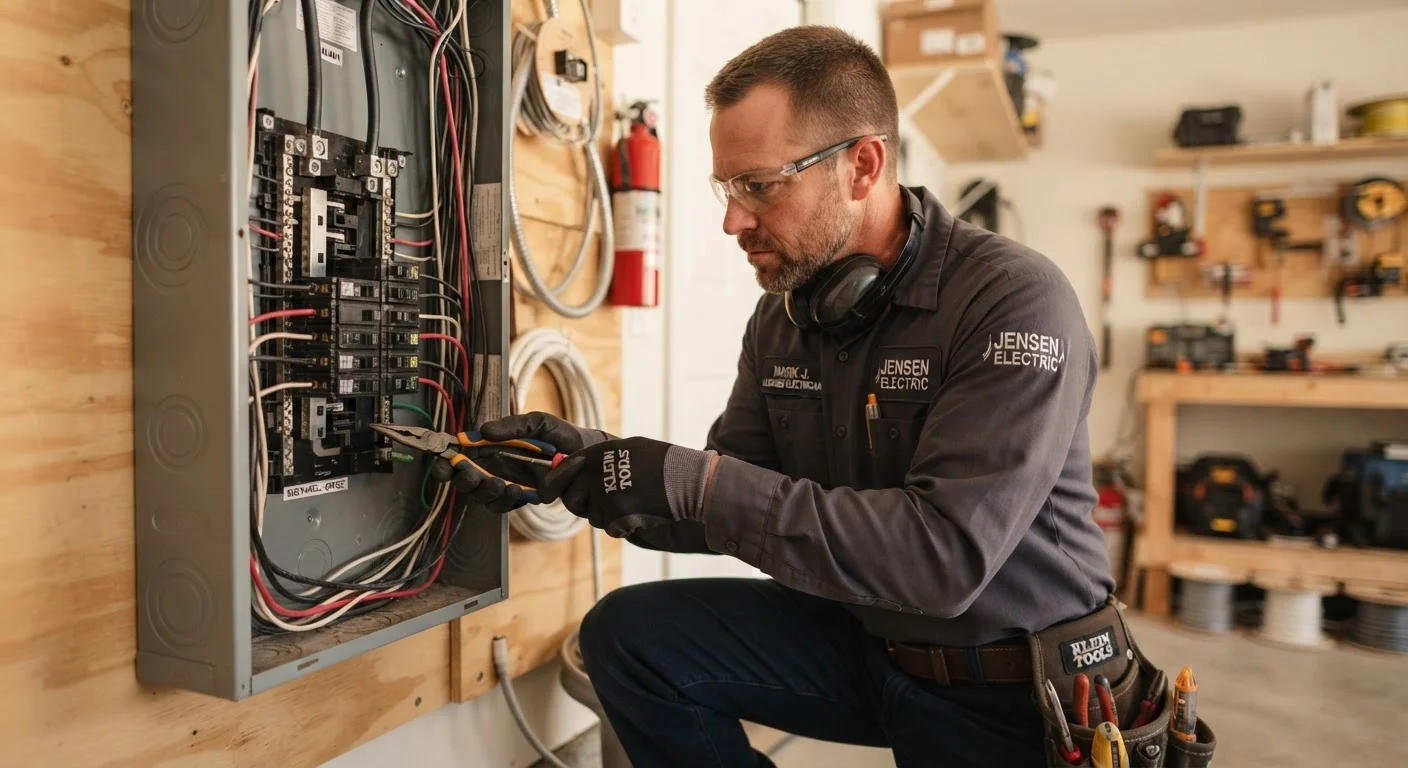
Your main electrical panel is the hub of your entire home's power supply. Replacing an outdated panel, upgrading from 100-amp to 200-amp service, or installing a sub-panel are jobs that touch the utility connection and require working around live conductors carrying potentially lethal voltage.
In virtually every U.S. jurisdiction, panel work requires both a licensed electrician and a permit, followed by an inspection before the work is approved. Beyond legality, the stakes are simply too high for amateur work - a wiring error here can energize metal parts throughout your home or create conditions for an arc flash.
Panel work is legally permitted in nearly every jurisdiction and must be inspected before approval.
Adding New Circuits to Existing Panel
Need a dedicated circuit for a new home office, a basement workshop, or an EV charger? Adding a circuit means running new wire from the panel to the destination outlet or fixture - and making a new connection inside the panel itself.
This work requires sizing the wire correctly for the load, selecting the right breaker, and making safe connections in the panel. Errors in wire gauge or breaker amperage can cause overheating and fire risk. A licensed electrician ensures the circuit is properly sized, grounded, and code-compliant. Understanding your breaker panel can help you have a more informed conversation with the electrician you hire.
Sizing errors on new circuits - wrong wire gauge or breaker amperage - are a common cause of electrical fires.
Whole-Home Rewiring
Homes built before the 1970s may still contain aluminum wiring or knob-and-tube wiring, both of which present elevated fire risks and are often flagged by insurers. Rewiring a home means replacing conductors throughout walls, ceilings, and floors - work that typically requires permits, inspections, and in some cases coordination with the utility company.
This is one of the most complex residential electrical projects and should only be handled by a licensed electrician. The scope, cost, and disruption are significant, but the safety improvement and insurance implications make it a necessary investment for affected homes.
Outdated aluminum or knob-and-tube wiring is a known insurance and fire-safety risk that requires licensed remediation.
Installing or Relocating Outlets and Switches in Walls
Adding a new outlet where none exists - or moving an existing one - involves fishing wire through walls and making connections to the home's wiring system. While replacing an existing outlet on the same circuit is often considered DIY-friendly, running new wiring through finished walls to reach a new location is a different job entirely.
Many municipalities classify this as permitted work. Doing it incorrectly can create improperly grounded or reverse-polarity outlets, which may not be immediately apparent but can damage electronics or create shock hazards over time.
Running new wire through finished walls is permitted work in many areas - not a simple swap-and-done task.
Outdoor Electrical Work and Landscape Lighting Circuits
Outdoor electrical installations - exterior outlets, floodlights hardwired to your home's system, outdoor kitchen circuits, or landscape lighting connected to the panel - are governed by specific code requirements around weatherproofing, GFCI protection, conduit burial depth, and fixture ratings.
Low-voltage landscape lighting systems (12-volt plug-in transformers) are generally DIY-friendly. But any outdoor work that ties into your home's main wiring system or panel requires proper permitting and installation by a licensed electrician in most jurisdictions. Moisture and electricity are a dangerous combination, and the margin for error outdoors is even thinner.
Any outdoor circuit wired into your home's panel requires weatherproof-rated components and typically a permit.
Service Entry and Meter Work
The service entry is where utility power connects to your home - the wires running from the street or pole to your meter and then to your main panel. This portion of your electrical system is almost exclusively handled by the utility company and licensed electricians working in coordination with them.
No DIY work should ever be attempted near the service entry or meter enclosure. These conductors are not controlled by your main breaker and remain energized even when your panel is shut off. Contacting them is immediately and potentially fatally dangerous. Any work in this area requires coordination with your utility provider and a licensed professional.
Service entry conductors stay live even with your main breaker off - this zone is strictly off-limits for DIY.
Working Safely Within Your Home's Electrical Limits
Even after hiring a licensed electrician for the big work, homeowners benefit from understanding their own electrical system. Being able to read your panel, identify overloaded circuits, and recognize warning signs puts you in a much stronger position when communicating with a contractor or troubleshooting minor issues.
Ask for License and Permit Verification
Before hiring any electrician, ask to see their state license number and confirm it's current through your state's licensing board website. For permitted work, request that the electrician pull the permit - not you - since they're legally responsible for the work meeting code. Once the job is done, keep copies of the permit and final inspection approval with your home records.
When in doubt about whether a specific project requires a license or a permit in your area, contact your local building department directly. Requirements vary meaningfully by state, county, and municipality. The preparation steps before an electrical inspection are also worth reviewing - especially if a licensed electrician has flagged items that may need official review.
This article is for general informational purposes only and does not constitute electrical, legal, or professional contracting advice. Always consult a licensed electrician and your local building authority before beginning any electrical project in your home.
The content on this site is for informational purposes only and is not a substitute for professional advice. Always consult a qualified professional for guidance specific to your situation.