

When Your Home Is Trying to Tell You Something
Electrical problems rarely announce themselves all at once. More often, they surface as small, easy-to-dismiss annoyances - a light that flickers now and then, a breaker that trips occasionally, an outlet that feels slightly warm. The challenge for homeowners is knowing which quirks are minor and which ones deserve a closer look from a licensed electrician.
Understanding your home's electrical system doesn't require a technical background, but it does help to know what the warning signs look like. Your home's wiring is part of a larger network of interconnected systems - as explored in our guide to how HVAC, plumbing, and electrical work together - and stress in one area can show up in unexpected ways. The list below covers the signs most commonly associated with wiring that deserves professional evaluation.
Lights that flicker or dim unexpectedly
Occasional flickering during a storm or when a large appliance kicks on is generally normal. But if lights dim or flicker frequently - especially when no large load is running - it can point to a loose connection, a failing circuit, or wiring that's struggling to carry its load. Flickering that occurs across multiple rooms or throughout the house is a more serious signal than a single bulb behaving oddly.
Flickering across multiple rooms suggests a circuit or connection issue, not just a bad bulb.
Circuit breakers that trip repeatedly
A breaker tripping once after you run too many appliances simultaneously is doing its job. But a breaker that trips repeatedly on the same circuit - even under normal household load - may indicate that the circuit is undersized for current demand, that there's a wiring fault, or that the breaker itself is failing. Rather than simply resetting the breaker and moving on, repeated trips are a reason to have that circuit inspected. Learn more about what your panel is communicating in our circuit breaker panel guide.
A breaker that trips repeatedly on the same circuit deserves professional evaluation, not just a reset.
Outlets or switch plates that feel warm
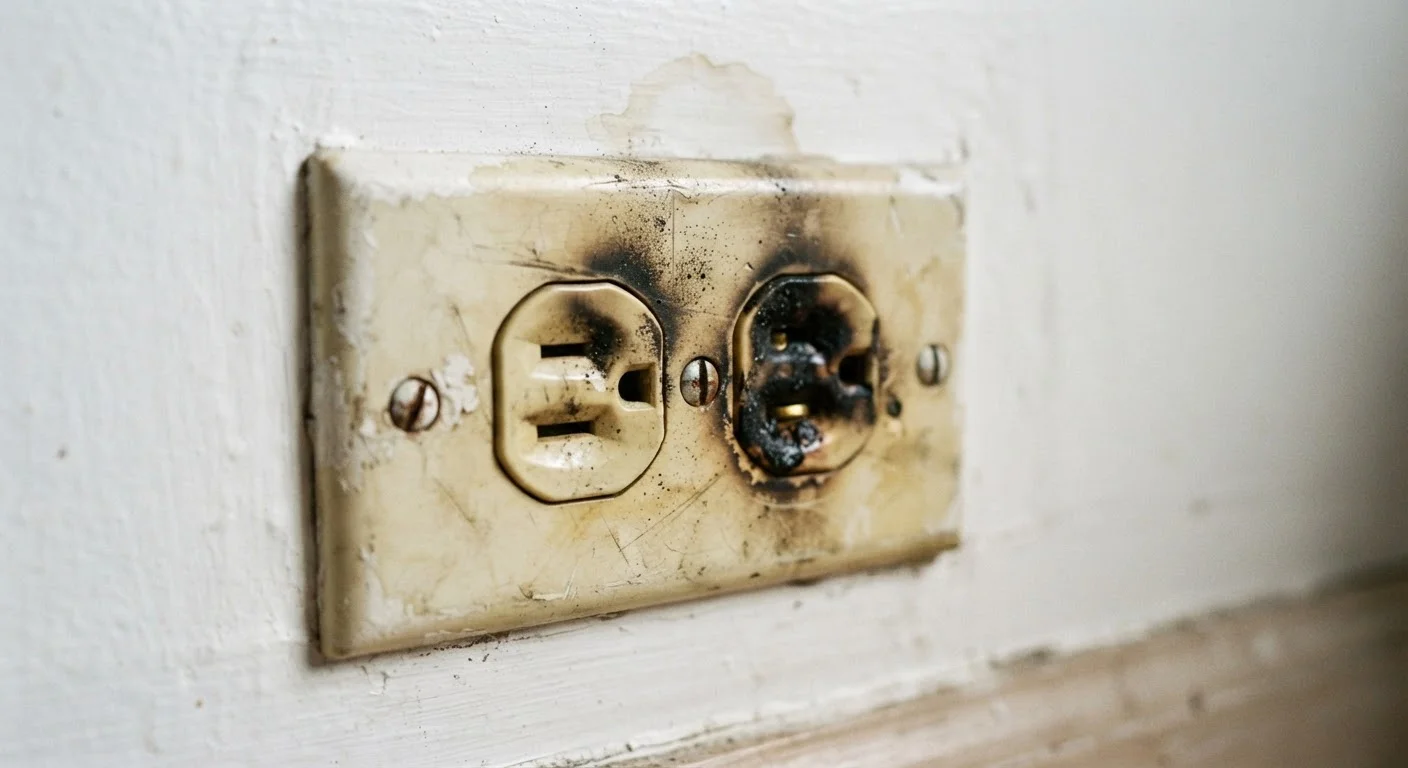
Outlets and switch plates should be at or near room temperature. If they feel warm or hot to the touch - without a device actively drawing heavy power - that warmth can indicate faulty wiring, an overloaded circuit, or a loose connection creating resistance and generating heat. Discoloration or scorch marks around an outlet are an even more urgent sign. Do not use a warm or discolored outlet until it has been evaluated by a licensed electrician.
Warm or discolored outlets should not be used until a licensed electrician has evaluated them.
A persistent burning smell with no obvious source
A burning or acrid odor that you can't trace to a specific appliance or food source is one of the more serious warning signs on this list. It can indicate that insulation around wiring is overheating or that a connection is arcing - generating sparks within the wall. This type of problem can exist for some time before it becomes visible. If you notice this smell and can't immediately identify the cause, treat it as urgent and contact a licensed electrician promptly.
An unexplained burning smell can signal arcing wires - treat it as urgent and call an electrician.
Outlets that spark when you plug something in
A very brief, small spark when inserting a plug is generally considered normal - a rapid draw of current as the connection is made. But a large spark, a spark accompanied by a popping sound, or sparking that happens consistently is not. Persistent sparking can indicate a wiring fault, a worn outlet, or a lack of proper arc protection. Modern electrical codes in most areas require arc fault circuit interrupters (AFCIs) in certain locations for this reason - you can learn more about how these devices work in our article on GFCI and AFCI circuit interrupters.
Large or consistent sparking at an outlet is not normal and warrants professional assessment.
Outdated wiring types in older homes
Homes built before the mid-1970s may contain wiring types - such as aluminum branch circuit wiring or knob-and-tube wiring - that present compatibility or safety considerations by today's standards. These aren't automatically dangerous, but they do require specific handling and may affect your homeowner's insurance eligibility or coverage. If you're unsure what type of wiring your home has, an electrician can identify it during an inspection. Some home improvement projects - like adding circuits or upgrading outlets - may require wiring updates at the same time.
Older wiring types may affect insurance eligibility and require specific handling during any upgrade work.
What to Do When You Spot These Signs
None of the warning signs above are worth ignoring, and several - burning smells, sparking outlets, or discoloration - call for immediate action. If you notice more than one of these issues occurring at the same time, that's a stronger signal that an underlying problem exists rather than an isolated fluke.
Document What You're Noticing
Before an electrician visits, jot down when symptoms occur, which rooms or circuits are involved, and whether you've noticed any smells or visible changes. This kind of detail helps a professional diagnose problems more efficiently and gives you a clearer record if the issue relates to a home warranty or insurance claim.
Before scheduling an inspection, it helps to learn what licensed professionals actually look for and what documentation you should have on hand. Our article on what homeowners should know before scheduling an inspection walks through that process clearly. And if you've been wondering what those labels and switches in your breaker panel actually mean, reading your circuit breaker panel is a practical place to start.
This article is for general informational purposes only and is not a substitute for advice from a licensed electrician. Electrical work involving panels, wiring, or hazardous conditions should be assessed and performed by a qualified professional. Always verify local permitting and code requirements before undertaking any electrical work.
The content on this site is for informational purposes only and is not a substitute for professional advice. Always consult a qualified professional for guidance specific to your situation.