

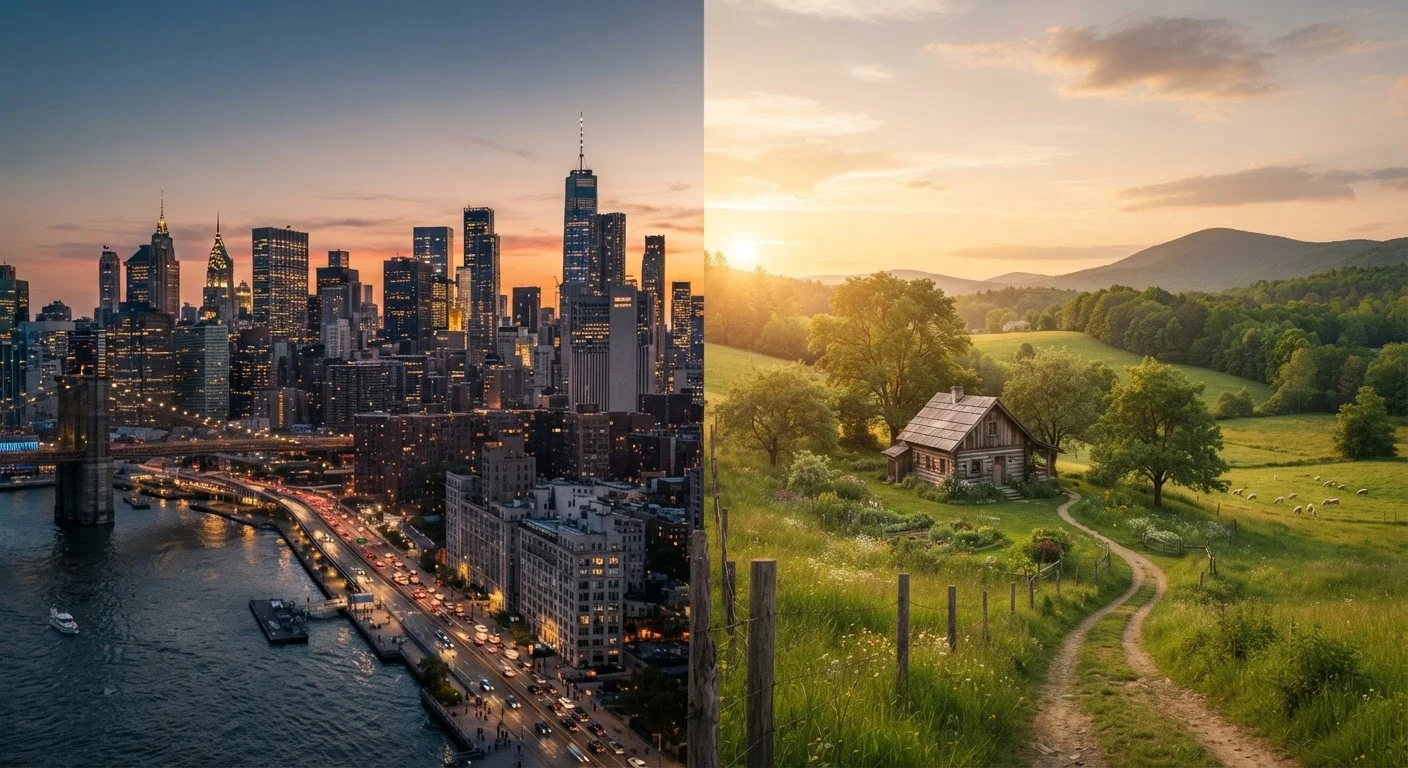
Our Verdict
Urban retreats suit travelers who recharge through activity, culture, and social energy - where the city itself is the destination. Rural getaways work best for those seeking stillness, space, and a genuine change of pace from daily life. Most travelers will find their answer in the honest question: do you want to explore or exhale?
| Best for | Recommended |
|---|---|
| Culture seekers and food lovers who thrive on stimulation | Urban Retreat |
| Those craving nature, quiet, and a slower pace of life | Rural Retreat |
| Mixed groups with varied interests and energy levels | Small City or Market Town (middle ground) |
| Budget-conscious travelers flexible on experience type | Rural Retreat |
How Setting Shapes the Entire Trip
Choosing between a city break and a rural escape isn't just about scenery - it fundamentally changes the rhythm of your trip. In an urban setting, the pace is set for you: morning coffee shops open early, museums fill by midday, and dinner reservations reward planners. In a rural setting, you largely set the pace yourself, which is either liberating or disorienting depending on your personality.
Think about how you actually feel on a typical day off. Do you feel most alive browsing a neighborhood you've never walked before, or sitting on a porch watching clouds move over a ridge? Your honest answer is a better guide than any destination ranking. For groups navigating different preferences, planning around varied interests becomes essential before you even pick a setting.
What Urban Retreats Actually Deliver
American cities - from mid-size gems like Asheville, NC, and Santa Fe, NM, to major metros like Chicago or New Orleans - offer a dense concentration of experiences in a walkable or transit-friendly footprint. You can shift from a museum to a cocktail bar to a live music venue in an afternoon. That density is the product.
Lodging in urban settings ranges from full-service downtown hotels to boutique inns tucked into historic neighborhoods. Understanding the trade-offs between those options matters: city hotels versus boutique inns serve very different traveler needs. Costs in major metros tend to run higher, and noise - street traffic, nightlife, neighboring rooms - is a real factor to plan around.
The upside: urban travelers rarely need a car, activities are abundant on short notice, and dining options accommodate almost any group preference or dietary need.
| Urban Retreat | Rural Retreat | |
|---|---|---|
| Pace | Fast, externally driven | Slow, self-directed |
| Typical lodging | Hotels, boutique inns, short-term apartments | Cabins, cottages, vacation rentals |
| Average nightly cost | Generally higher, especially in major metros | Often lower, especially when shared |
| Transportation needs | Walkable or transit-friendly | Car usually required |
| Dining and entertainment | Abundant, flexible hours | Limited options, earlier closing times |
| Noise and stimulation | High - part of the experience | Low - part of the experience |
| Best for | Culture, food, social energy | Nature, quiet, space, restoration |
What Rural Retreats Actually Deliver
Rural getaways - think lakeside cabins in the Ozarks, farmhouse rentals in Vermont's Northeast Kingdom, or high-desert properties outside Taos - trade urban convenience for something harder to manufacture: genuine quiet and physical space. The absence of city stimulation is, for many travelers, the entire point.
Lodging in rural settings skews toward vacation rentals, cabins, and cottages. Before you book, it's worth understanding what separates those categories - cabins, cottages, and vacation rentals each carry distinct trade-offs around amenities, privacy, and self-sufficiency requirements. Grocery stores may be a 30-minute drive; cell service may be limited; and restaurants often close earlier than city travelers expect.
The upside: rural stays tend to cost less per night, especially when shared among a group. Budget-minded travelers often find rural rental properties one of the stronger value options when splitting costs. And for those who find that solitude genuinely restores them - as opposed to isolates them - the payoff can be significant.
Plan for the Grocery Run
Rural rental properties often sit far from the nearest well-stocked grocery store. Before arrival, map out where you'll shop and stock up on essentials - especially if you're staying somewhere without reliable food delivery. Arriving with a cooler already packed can save a frustrating hour-long errand on your first day.
Matching the Setting to Your Travel Goals
The most common mistake travelers make is choosing a setting based on destination reputation rather than personal need. A famous city can feel overwhelming if you're depleted; a remote cabin can feel tedious if you need stimulation to relax.
Consider a few practical filters before deciding. First, how much structure do you want built in? Cities provide it automatically; rural destinations require you to bring it. Second, what's your group's tolerance for logistical friction - long drives, unpredictable weather, limited restaurant hours? Third, are you traveling to see things or to stop seeing things for a few days?
Mountain towns often represent a useful middle ground - small enough to feel unhurried, but with enough local infrastructure (coffee shops, outfitters, weekend markets) to prevent restlessness. For travelers who want the coastal version of that balance, comparing Coastal New England with the Pacific Northwest reveals how much a setting's character varies even within a single category.
Whatever you choose, go in with honest expectations. Neither setting guarantees the reset you're after - but the one that matches how you actually recharge comes closest.
55%
Americans prefer nature-based getaways
According to a 2023 Expedia Group traveler trends survey, more than half of American leisure travelers expressed preference for nature or outdoor-oriented trips over city-focused ones.
2-3×
Urban hotel rate premium over rural lodging
Industry lodging data consistently shows that city-center hotel rates in major US metros run roughly two to three times higher than comparable rural rental options, particularly off-peak.
The content on this site is for informational purposes only and is not a substitute for professional advice. Always consult a qualified professional for guidance specific to your situation.