

Our Verdict
Neither coast is objectively better - they simply deliver different things. New England's compact, history-rich shoreline suits travelers craving quaint towns, warm-water beaches, and summer seafood rituals. The Pacific Northwest rewards those drawn to raw wilderness, dramatic geology, and a slower, nature-immersed pace year-round.
| Best for | Recommended |
|---|---|
| History lovers and classic Americana seekers | Coastal New England |
| Outdoor adventurers and wilderness enthusiasts | Pacific Northwest Coast |
| Families wanting warm-water beach towns | Coastal New England |
| Travelers who prefer dramatic, uncrowded scenery | Pacific Northwest Coast |
The Lay of the Land: Two Coastlines, Two Personalities
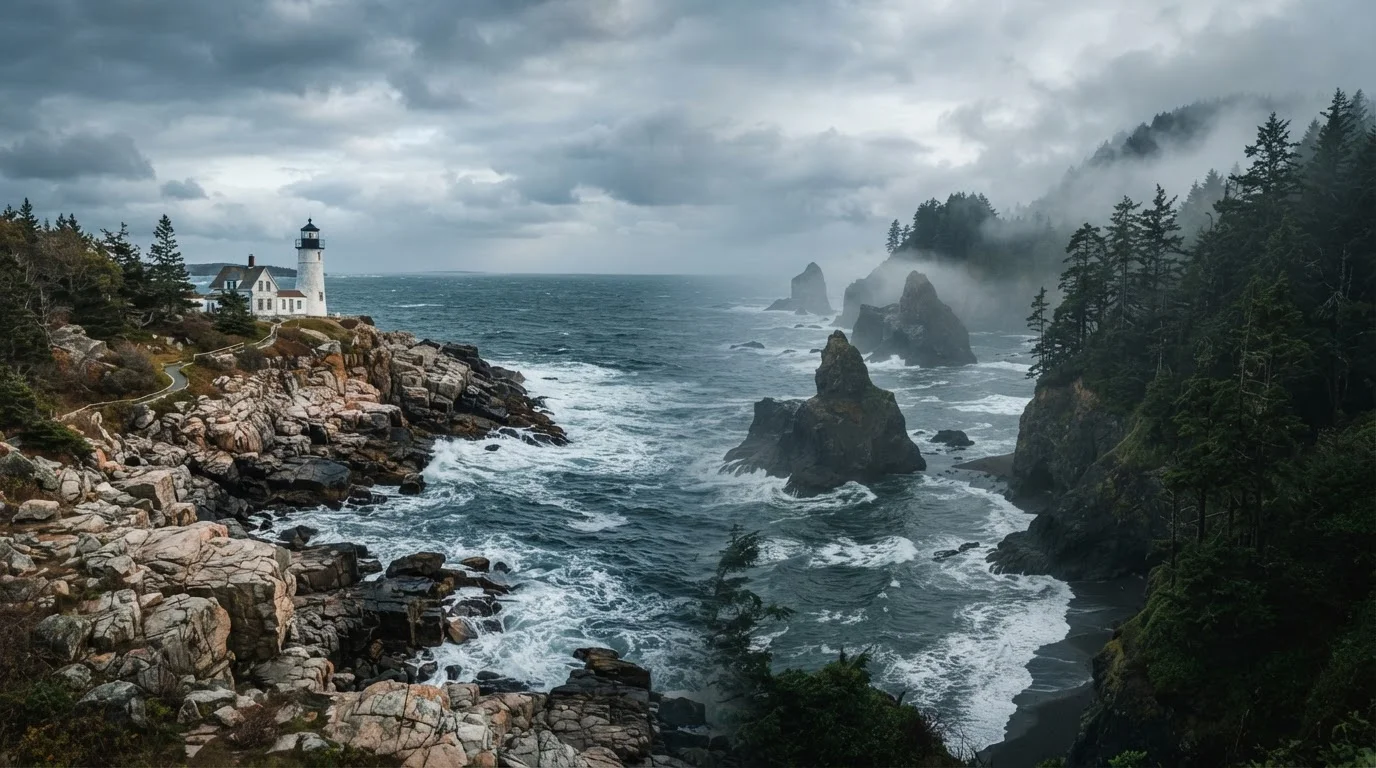
Stand on a beach in Maine and you'll feel the Atlantic's brisk energy, framed by granite ledges, lobster traps, and century-old lighthouses. Drive Oregon's Highway 101 or Washington's coast and you'll encounter something altogether wilder - sea stacks rising from the surf, Sitka spruce pressing to the cliff's edge, and a misty grandeur that feels almost prehistoric. These two regions both carry the word "coast," but they might as well be different countries.
Coastal New England spans roughly from Connecticut's shoreline north through Rhode Island, Massachusetts, New Hampshire, and Maine. It's compact, historically layered, and unmistakably shaped by four centuries of maritime culture. The Pacific Northwest coast - Oregon and Washington's oceanfront - is longer, less densely developed, and defined by its wild, geological drama. Understanding which resonates with your travel style is the whole game.
For guidance on how your mode of arrival shapes the trip, see our road trip vs. fly-and-drive comparison - it applies especially well to both of these coastal routes.
Climate and Timing: When to Go
New England's coastal season clusters tightly around summer. July and August bring warm (if not hot) weather, calm seas, and peak activity in beach towns like Ogunquit, Cape Cod, and Newport. Shoulder seasons - late May through June and September into October - offer milder crowds and often spectacular foliage framing the coast. Winter is quiet and raw; many seasonal businesses close.
The Pacific Northwest runs on a different clock. Its coast is famously cool and overcast much of the year, with the driest and mildest window typically from late June through September. But unlike New England, the region doesn't fully shut down off-season. Storm-watching on the Oregon coast in winter has its own devoted following, and coastal state parks remain accessible year-round.
Consider Shoulder Season for Both Coasts
Both coastlines are genuinely more enjoyable just outside peak summer. In New England, September brings golden light and thinner crowds without sacrificing warmth. On the Pacific Northwest coast, late September through October keeps some summer dryness while dramatically reducing visitors at popular spots like Cannon Beach and the Olympic coast.
Both coasts reward travelers who look beyond peak summer. Our guide on off-season travel in the US walks through what that actually looks like in popular destinations.
Landscape, Activities, and What You'll Actually Do
New England's coast is built for a particular rhythm: morning strolls through fishing villages, afternoon clam chowder at a harborside shack, evenings on inn porches watching sailboats drift in. Swimming is genuinely viable in summer, especially south of Boston. The region packs cultural density - Plymouth, Salem, Mystic, and Bar Harbor each carry distinct historical weight. Whale-watching out of Provincetown or Gloucester remains one of the more reliable wildlife experiences on any American coast.
The Pacific Northwest swaps that cozy village energy for something more elemental. Oregon's coast features Cannon Beach's iconic Haystack Rock, tide pools dense with sea stars and anemones, and headlands where you can watch gray whales migrate. Washington's Olympic Peninsula coast - part of Olympic National Park - is among the most remote and stunning stretches of shoreline in the country, accessible only on foot in sections. Hiking, kayaking, and beachcombing in genuine solitude are the draws here. Swimming is rarely on the agenda; the water is cold year-round and surf can be unpredictable.
| Coastal New England | Pacific Northwest Coast | |
|---|---|---|
| Landscape character | Rocky shores, harbors, lighthouses | Sea stacks, rainforest, wild headlands |
| Peak season | July-August | Late June-September |
| Ocean swimming | Viable in summer, especially south | Cold year-round, rarely practical |
| Wildlife highlights | Whale watching, seabirds | Gray whales, tide pools, bald eagles |
| Typical lodging style | Historic inns, B&Bs | Eco-lodges, rental cottages, park cabins |
| Cultural flavor | Maritime history, colonial heritage | Outdoor culture, local arts scenes |
| Off-season viability | Limited; many businesses close | Strong; storm-watching is a draw |
Lodging Character: Inns, Eco-Lodges, and State Park Cabins
In New England, lodging tends toward historic inns, bed-and-breakfasts in converted sea captains' homes, and classic motels that haven't changed much since the 1970s (in the best way). Towns like Kennebunkport and Edgartown on Martha's Vineyard have luxury options, but the authentic coastal experience often lives in a well-worn inn two blocks from the harbor. Book well ahead for peak summer, especially in smaller villages.
Pacific Northwest coastal accommodations lean more toward rental cottages, eco-lodges emphasizing the natural setting, and state park cabins at spots like Grayland Beach or Cape Lookout. The lodging ecosystem is less boutique-inn driven and more oriented toward self-sufficiency and outdoor access. If you're considering whether the urban-versus-remote lodging trade-off applies to your trip, our piece on urban vs. rural retreats offers useful framing.
Budget-conscious travelers will find options in both regions, particularly outside peak weeks. For a broader look at American destinations that stretch your dollar, see our guide to affordable US destinations.
The content on this site is for informational purposes only and is not a substitute for professional advice. Always consult a qualified professional for guidance specific to your situation.