

Why the Labels Matter (and When They Don't)
Browse any short-term rental platform and you'll quickly encounter a parade of property names: mountain cabin, cozy cottage, vacation home, retreat, bungalow. These words carry real meaning for travelers - they shape expectations about setting, size, and atmosphere. The problem is that the labels are applied inconsistently, sometimes for marketing appeal rather than accuracy.
A property listed as a "cabin" might be a modernized three-bedroom home with granite countertops and a hot tub. A "cottage" could be a tiny studio or a sprawling coastal estate. And "vacation rental" is technically an umbrella term that can describe almost any of them. Knowing the traditional meanings - and where the real-world listings depart from them - gives you a meaningful edge when you're comparing options.
For a broader look at how short-term rentals fit into the larger lodging landscape, see our guide to accommodation options beyond the hotel room.
~1 in 4
U.S. travelers who chose vacation rentals over hotels
According to research by Phocuswright, a travel industry research firm, a significant share of American leisure travelers have shifted toward whole-property rentals for at least some trips.
3-7 nights
Typical average stay length for vacation rentals
Industry data consistently shows that vacation rental stays tend to be longer than hotel stays, making amenities like kitchens and laundry more relevant to booking decisions.
The Cabin: Rustic Roots, Modern Variations
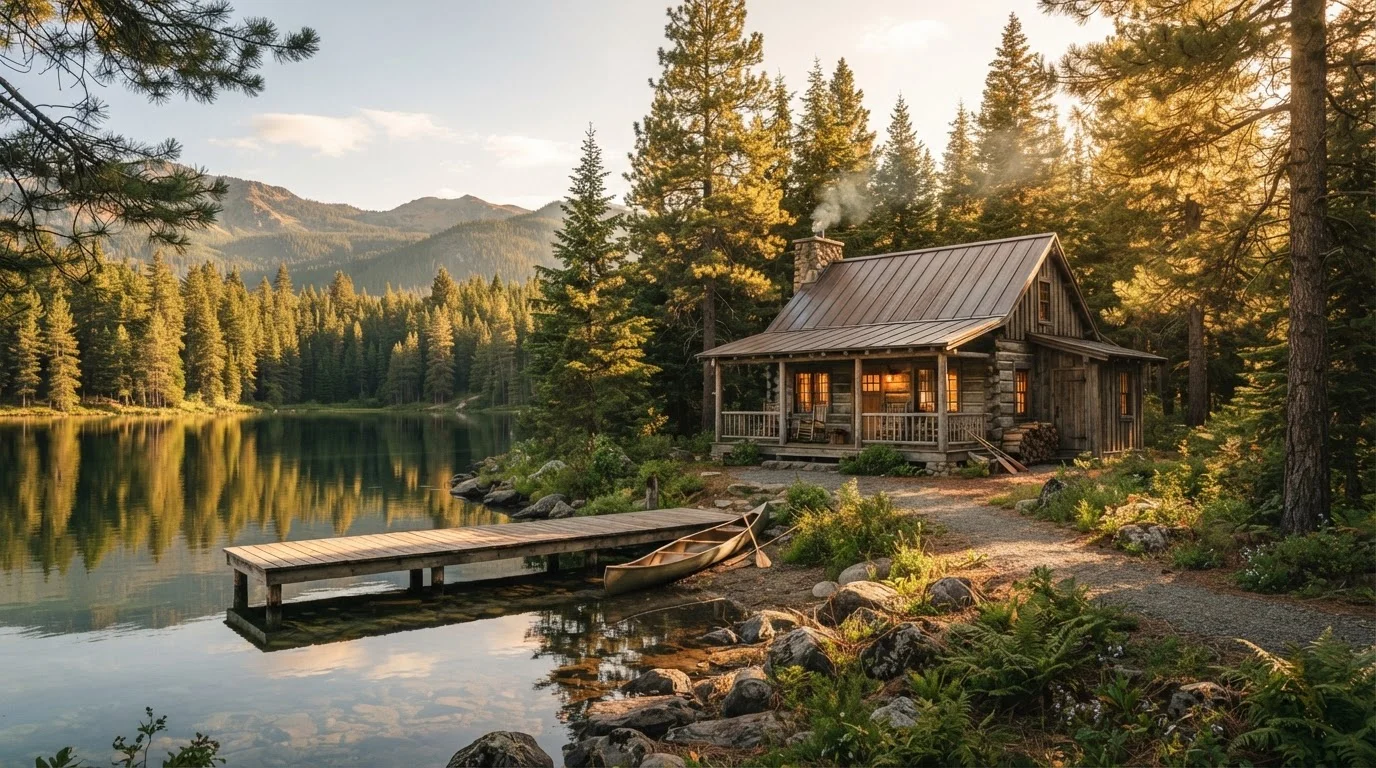
Historically, a cabin is a simple, often hand-built structure in a natural setting - think log walls, a fireplace, and proximity to woods, lakes, or mountains. The cabin experience is built around access to the outdoors: hiking, fishing, kayaking, stargazing. The lodging itself is secondary to the landscape it sits within.
Modern cabin rentals span a wide spectrum. Some remain authentically rustic - minimal amenities, propane heat, no reliable Wi-Fi - while others are fully renovated with high-end finishes and smart-home features. What typically remains consistent is the wooded or wilderness setting and the expectation of a nature-forward retreat. If a cabin listing doesn't mention proximity to outdoor activities or a natural feature like a lake or trail, it may be using the term loosely.
Check More Than the Label
When evaluating a cabin listing, look specifically at the photo of the exterior and the surrounding environment - not just interior shots. A property surrounded by trees and near a named body of water or trail system is more likely to deliver a genuine cabin experience than one with landscaped lawns and paved parking.
The Cottage: Charm, Coziness, and Coastal Roots
Cottage carries a different cultural weight. The word evokes small-scale, character-rich homes in pastoral or coastal settings - a shingled house near the shore in New England, a lakeside retreat in the Upper Midwest, a flower-bordered property in the Carolinas. Cottages are typically associated with a slower, simpler pace and are often found in established vacation communities where short-term rentals have existed for generations.
Size is a distinguishing factor: cottages tend to be more intimate than full vacation homes, often with one to three bedrooms and modest common areas. They're well-suited for couples or small families who want character and a sense of place over square footage. Setting and environment shape the cottage experience as much as the property itself does.
The Vacation Rental: A Category, Not a Style
Vacation rental is not a descriptor of architecture or aesthetics - it's a commercial and legal category. Any privately owned property rented to travelers for short durations qualifies. That includes cabins and cottages, but also condominiums, townhomes, suburban houses, urban apartments, and converted barns. The defining characteristic is the short-term rental structure: a private owner (or property manager) leases a fully contained space to guests, typically for a few nights to a few weeks.
This distinction matters when you're setting expectations. Booking a "vacation rental" tells you about the transaction type - private, whole-property, self-catered - but not about the vibe, surroundings, or aesthetic. You might be booking a sleek downtown condo or a countryside farmhouse. Reading the full listing carefully, reviewing photos, and checking guest feedback becomes essential. Our pre-booking checklist is a practical tool for doing exactly that.
If you're deciding between a vacation rental and a more traditional hotel or inn experience, it's worth understanding the trade-offs each offers. See how hotels and inns compare for context on different lodging formats.
“The word 'cabin' in a listing is a promise about feeling, not structure. Travelers should treat it as an aesthetic signal and then verify whether the reality matches the expectation through photos and reviews.”
— Pauline Frommer, Travel writer and editorial director at Frommer's Travel Guides
Making the Right Choice for Your Trip
Once you understand what these labels typically mean, the decision becomes about fit. Ask yourself what you're actually optimizing for: proximity to nature, local character, space for a group, kitchen access, or a particular setting. Then use those priorities to filter, rather than relying on the label alone.
- For outdoor-focused trips - hiking, fishing, or skiing - a genuine cabin in a wilderness setting typically delivers the immersive experience you're after.
- For a relaxed coastal or countryside escape - especially for couples or small groups - a cottage in an established vacation town can offer charm and community feel.
- For flexibility and space - a full vacation rental home, regardless of what it's called, usually provides the most practical amenities for longer stays or larger groups.
Whatever you choose, the label is a starting point, not a guarantee. Approach listings with a clear eye, verify the details, and you'll be well-prepared - whatever the property ends up being called. For strategies on stretching your travel budget across all lodging types, explore our travel on a budget hub.
Frequently Asked Questions
A cabin traditionally refers to a rustic, wooded structure meant for outdoor-oriented stays near forests, lakes, or mountains. A cottage is typically smaller, quainter, and associated with coastal or pastoral settings. Both words carry strong aesthetic and cultural connotations, though listings may blur the distinction.
Not necessarily. Vacation rental is a broad category that includes cabins, cottages, condos, townhouses, and entire homes. A cabin or cottage can be a vacation rental, but not all vacation rentals are cabins or cottages - many are ordinary houses or apartments.
Not always. Platform listings sometimes use terms like 'cabin' or 'cottage' loosely to appeal to travelers, even when the property doesn't match the traditional definition. Reading the full description, checking photos carefully, and reviewing guest feedback helps clarify what a property actually is.
This depends on your family's priorities. Vacation rentals - especially full homes - often provide the most space, multiple bedrooms, and kitchen facilities suited to families. Cabins work well for nature-loving families, while cottages can be cozy but may be smaller. Always confirm bedroom count and amenities before booking.
Many do, but it varies significantly by property. Most full vacation rentals include kitchens, while some rustic cabins may have only a kitchenette or outdoor grill. Always check the listed amenities and clarify with the host if meal-preparation facilities are important to your trip.
Focus on the property description, photo gallery, listed amenities, cancellation policy, and guest reviews rather than the label alone. Our <a href="/travel/destinations-stays/before-you-book-a-vacation-rental-a-room-by-room-checklist">room-by-room pre-booking checklist</a> walks you through what to verify before confirming any reservation.
The content on this site is for informational purposes only and is not a substitute for professional advice. Always consult a qualified professional for guidance specific to your situation.