

Our Verdict
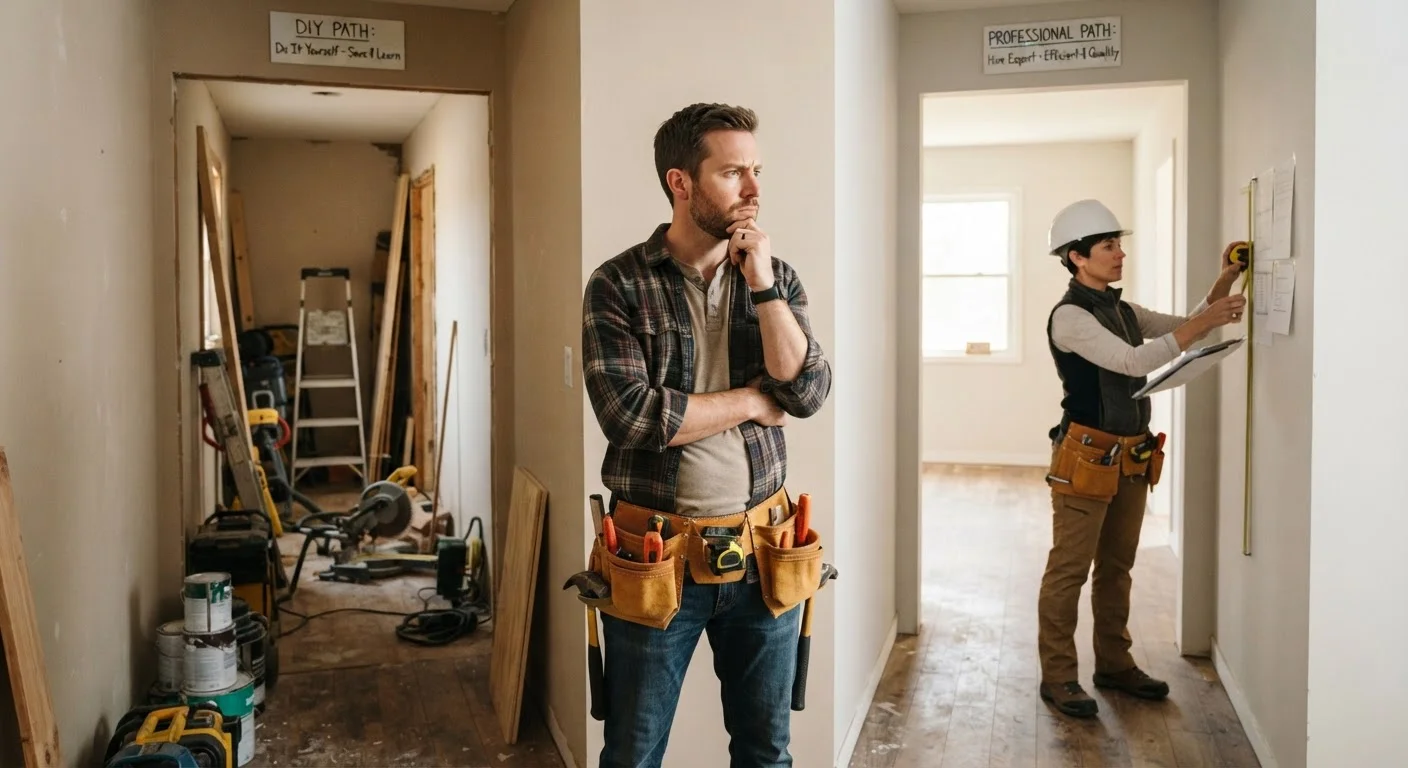
DIY home repairs offer real savings and a sense of ownership, but they require an honest assessment of skill, tools, and the stakes involved. For cosmetic fixes and straightforward maintenance, a confident homeowner can often handle the work safely. For anything touching electrical panels, gas lines, structural load paths, or work that requires a permit, hiring a licensed professional is generally the safer and more legally sound choice.
Homeowners who want a practical decision-making framework-whether they're experienced weekend warriors or first-time buyers tackling their first repair.
The Core Question: What Are You Actually Risking?
Every DIY decision comes down to a simple cost-benefit analysis, but the costs aren't only financial. The real variables are: personal safety, code compliance, the cost of a botched repair, and your home's future resale value. A poorly patched drywall hole is an inconvenience. A wiring mistake can start a fire. A gas line error can be fatal.
Before reaching for a tool or dialing a contractor, ask yourself four questions:
- Does this job require a permit or a licensed trade in my jurisdiction?
- Do I have the tools and knowledge to do it safely?
- What happens if I get it wrong-and can I live with that risk?
- Will unprofessional work affect my home's insurance or resale value?
Your answers will point you toward the right path. For a deeper look at when official approval is needed, see when DIY work requires a permit.
Where DIY Makes Sense
A wide range of home maintenance and cosmetic tasks are genuinely DIY-friendly, even for homeowners with modest experience. These jobs share a few common traits: the materials are forgiving, mistakes are visible and correctable, no permit is typically required, and the risk of injury or structural damage is low.
Significant labor cost savings on eligible tasks
Labor often represents 50-70% of the cost of common repairs. Handling straightforward work yourself can meaningfully reduce out-of-pocket expenses without compromising quality.
Flexible scheduling on your own timeline
DIY work lets you start and stop on your schedule, without waiting weeks for contractor availability-an advantage for non-urgent repairs.
Build practical skills and home knowledge
Completing repairs yourself deepens your understanding of how your home works, which helps you catch problems earlier and communicate more effectively with professionals when you do hire them.
Full control over materials and workmanship
You choose exactly what goes into the repair and can take the time needed to meet your own standard of quality, without relying on a contractor's judgment or cost-cutting.
Common examples include patching small holes in drywall-see drywall repair techniques for every size of damage-replacing a bathroom faucet, installing interior door hardware, painting walls and trim, caulking tubs and windows, and swapping out light fixtures on circuits that are first properly de-energized at the breaker. Flooring tasks like laying laminate or luxury vinyl plank also fall within reach for careful beginners.
That said, even simple jobs benefit from preparation. First-time renovators should research the task thoroughly, gather the right tools, and understand what a finished job should look like before starting.
When You Should Call a Licensed Professional
Certain categories of home repair should almost always involve a licensed professional-not because the work is inherently mysterious, but because the consequences of error are severe and because local codes frequently require it.
Safety hazards in regulated trade work
Electrical, gas, and structural work carries serious injury or fatality risk when performed without proper training. These are not areas where learning by trial and error is acceptable.
Unpermitted work creates legal and insurance exposure
Work completed without required permits may need to be torn out and redone at the homeowner's expense, and can complicate or invalidate insurance claims and future property sales.
Mistakes can be far more expensive than hiring out
A plumbing error that causes water damage, or a structural miscalculation, can cost many times more to fix than the original professional quote would have been.
Lack of specialized tools limits quality and safety
Many professional repairs require equipment that isn't practical to own or rent casually. Improvising with the wrong tools increases both error rates and injury risk.
DIY repairs may not meet resale inspection standards
Home inspectors often flag amateur workmanship during sales transactions, which can reduce your home's appraised value or require costly remediation before closing.
Electrical work is one of the clearest examples. Replacing a standard outlet is often legal for homeowners in many states, but upgrading a panel, adding a new circuit, or working in older homes with aluminum wiring is a different matter entirely. Projects that often require a licensed electrician covers this boundary in detail.
Plumbing that connects to the main line, gas appliance installation, structural alterations (removing walls, adding beams), and roof replacements are other areas where professional licensure matters-both for safety and for insurance purposes. If something goes wrong with unpermitted or unlicensed work, your homeowner's policy may not cover the damage.
Water pressure issues are another area where a DIY fix can mask a larger problem. What homeowners get wrong about water pressure explains which plumbing fixes are safe to attempt and which signal it's time to call a plumber.
The Middle Ground: Hybrid Approaches
Not every project is all-or-nothing. Many homeowners save money by doing the preparation work themselves-demolition, material sourcing, site cleanup-while leaving the skilled or regulated portions to a licensed professional. A bathroom remodel, for example, might allow a homeowner to handle tile removal and fixture selection while a plumber manages the drain rough-in.
Permits Protect You-Not Just the Government
Permit requirements exist to ensure work meets minimum safety standards and is inspected by a qualified official. When you pull a permit and pass inspection, you have documented proof the work was done correctly-valuable protection at resale and in insurance claims. Skipping required permits to save time or money is a risk that tends to surface at the worst possible moment.
If you do hire a contractor, understanding how the process actually works prevents costly misunderstandings. Common myths about hiring a general contractor breaks down what's actually true about bids, timelines, and agreements. And for flooring decisions specifically, the trade-offs between full demo and overlay are worth understanding before any work begins-see tile over tile vs. full demo.
This article is for general informational purposes only. Local building codes, permit requirements, and licensing rules vary significantly by state and municipality. Always verify requirements with your local building department and consult licensed professionals before undertaking regulated work.
The content on this site is for informational purposes only and is not a substitute for professional advice. Always consult a qualified professional for guidance specific to your situation.