

Our Verdict
Native plants offer genuine long-term advantages in water conservation, wildlife support, and reduced chemical input, but require an upfront investment of time, money, and planning to succeed. Traditional landscaping remains easier to source, install, and explain to neighbors, though it carries ongoing resource costs. Neither approach is universally superior - the right choice depends on your region, maintenance tolerance, budget, and neighborhood expectations.
Native plant landscaping suits homeowners willing to invest in a multi-year establishment process and who prioritize ecological impact and long-term savings; traditional landscaping suits those who want immediate visual results and a more conventional yard aesthetic.
What Sets These Two Approaches Apart
The term native plants refers to species that evolved naturally in a specific region before European settlement. They are adapted to local soils, rainfall patterns, and wildlife. Traditional landscaping, by contrast, typically relies on cultivated turf grasses, ornamental shrubs, and flowering annuals or perennials - many of which originate from other continents and are chosen primarily for appearance.
This distinction matters because plants that evolved in your local climate have built-in relationships with local insects, birds, and soil microbes. A non-native ornamental, however beautiful, may offer little ecological function. That said, traditional landscapes are not without value - they provide reliable curb appeal, familiar structure, and a well-understood maintenance rhythm that many homeowners depend on.
Understanding the real trade-offs between these two approaches helps you make decisions grounded in your own priorities rather than trends or assumptions.
The Case for Native Plants
Lower water needs once established
Native plants develop deep root systems suited to local rainfall patterns, dramatically reducing the need for supplemental irrigation after the first few growing seasons.
Supports local pollinators and wildlife
Many native bees, butterflies, and birds depend on specific native plant species to feed and reproduce - benefits that non-native ornamentals rarely provide.
Reduced fertilizer and pesticide reliance
Because native plants evolved with local soil conditions and pests, they are generally more resistant to local diseases and require fewer chemical inputs to thrive.
Long-term cost savings on maintenance
After establishment, native plantings typically require less mowing, watering, and feeding than conventional turf - reducing both labor and ongoing supply costs.
Better soil health over time
Deep-rooted native perennials improve soil structure and organic matter, which benefits garden productivity and reduces erosion on slopes and edges.
Once established - typically after one to three growing seasons - native plants are genuinely lower maintenance. Their root systems run deep, tapping groundwater and resisting drought without the supplemental irrigation a conventional lawn demands. This matters especially in drought-prone regions like the Southwest or parts of the Plains.
Ecologically, native plantings contribute to local food webs. Native bees, butterflies, and other pollinators often depend on specific plant genera to complete their life cycles - a relationship that ornamental imports cannot replicate. If supporting local wildlife is a priority, this is a meaningful advantage.
For water-conscious homeowners, pairing native plants with smart watering strategies makes practical sense. See our comparison of drip irrigation and sprinkler systems for guidance on matching irrigation methods to plant needs.
The Drawbacks of Going Native
Multi-year establishment period required
Native plants often look sparse or weedy for one to three growing seasons before filling in - a timeline that demands patience and may frustrate homeowners expecting quick results.
May conflict with HOA rules or local ordinances
Some homeowner associations and municipalities have aesthetic standards that effectively prohibit naturalistic or unmowed plantings; always check local rules before making major changes.
Sourcing true local natives can be difficult
Regionally appropriate native species are not always available at mainstream garden retailers, requiring homeowners to seek out specialty nurseries or native plant sales.
Design knowledge needed to avoid an unkempt look
Without deliberate plant selection and arrangement, native gardens can appear unintentional; effective design requires research into plant heights, bloom times, and spacing.
Higher upfront installation costs possible
Removing existing turf, amending soil, and purchasing native plants - especially from specialty suppliers - can result in a higher initial investment than re-seeding a conventional lawn.
The establishment phase is the most common sticking point. During the first year or two, native plantings can look sparse, weedy, or unfinished - which can attract complaints from neighbors or conflict with HOA aesthetic standards. Some municipalities or homeowner associations have ordinances that effectively prohibit naturalistic yard designs, so checking local rules before planting is essential.
Sourcing can also be a challenge. True locally-sourced native plants - as opposed to cultivars or plants collected from distant regions - are not always available at big-box garden centers. Specialty native plant nurseries exist in most regions but may require more research to locate.
Check Local Rules Before You Plant
Homeowner association guidelines and municipal codes vary widely in how they define acceptable landscaping. Some communities explicitly permit native or naturalistic yards; others have mowing height or 'weed' ordinances that could apply. Before investing in a native landscape overhaul, contact your HOA (if applicable) and your local planning or code enforcement office to understand what is and is not permitted in your area.
Finally, native landscapes still need deliberate design. Without thoughtful plant selection and placement, a native yard can look unintentional rather than ecological. Low-maintenance landscaping approaches can help you achieve a yard that reads as designed, not abandoned.
What Traditional Landscaping Does Well
Traditional landscaping excels at delivering immediate, predictable results. Sod can be installed in a weekend and looks finished from day one. Ornamental plantings - roses, boxwoods, ornamental grasses - are widely available, and most garden centers carry what you need in one stop.
Maintenance routines are well-established and easy to outsource. Lawn care services, irrigation companies, and landscape contractors are all comfortable working within conventional frameworks. If you rent your home, plan to sell within a few years, or simply want a yard that meets neighborhood norms without friction, traditional landscaping has practical advantages that are hard to dismiss.
Properly maintained conventional landscapes can also support some wildlife - particularly when flowering annuals and shrubs are included. They are not ecological dead zones, but they generally support a narrower range of species than native plantings would in the same space.
Resource Costs: Water, Fertilizer, and Time
The ongoing resource demands of a traditional lawn are significant. Cool-season grasses in particular require consistent irrigation during summer months, and many ornamental plants need supplemental feeding to perform. Overwatering is a surprisingly common and costly mistake even in conventional landscapes, leading to root disease and waste.
Mulching is a useful tool in both native and traditional settings for conserving soil moisture and regulating temperature. Our guide on mulching garden beds correctly covers how to get the depth right without smothering plant roots.
30-60%
Typical outdoor water use by conventional lawns
The U.S. Environmental Protection Agency estimates that landscape irrigation accounts for nearly one-third of all residential water use, with a significant portion lost to inefficiency.
1-3 years
Typical native plant establishment timeline
Horticulture extension programs at multiple land-grant universities consistently note that most native perennials require one to three full growing seasons to reach mature form and minimal-care status.
Native plant gardens, once established, generally require less fertilizer because they are adapted to local soil nutrient levels. Traditional landscapes often require annual or seasonal feeding to maintain density and color, adding both cost and potential runoff concerns for nearby waterways.
Finding a Practical Middle Ground
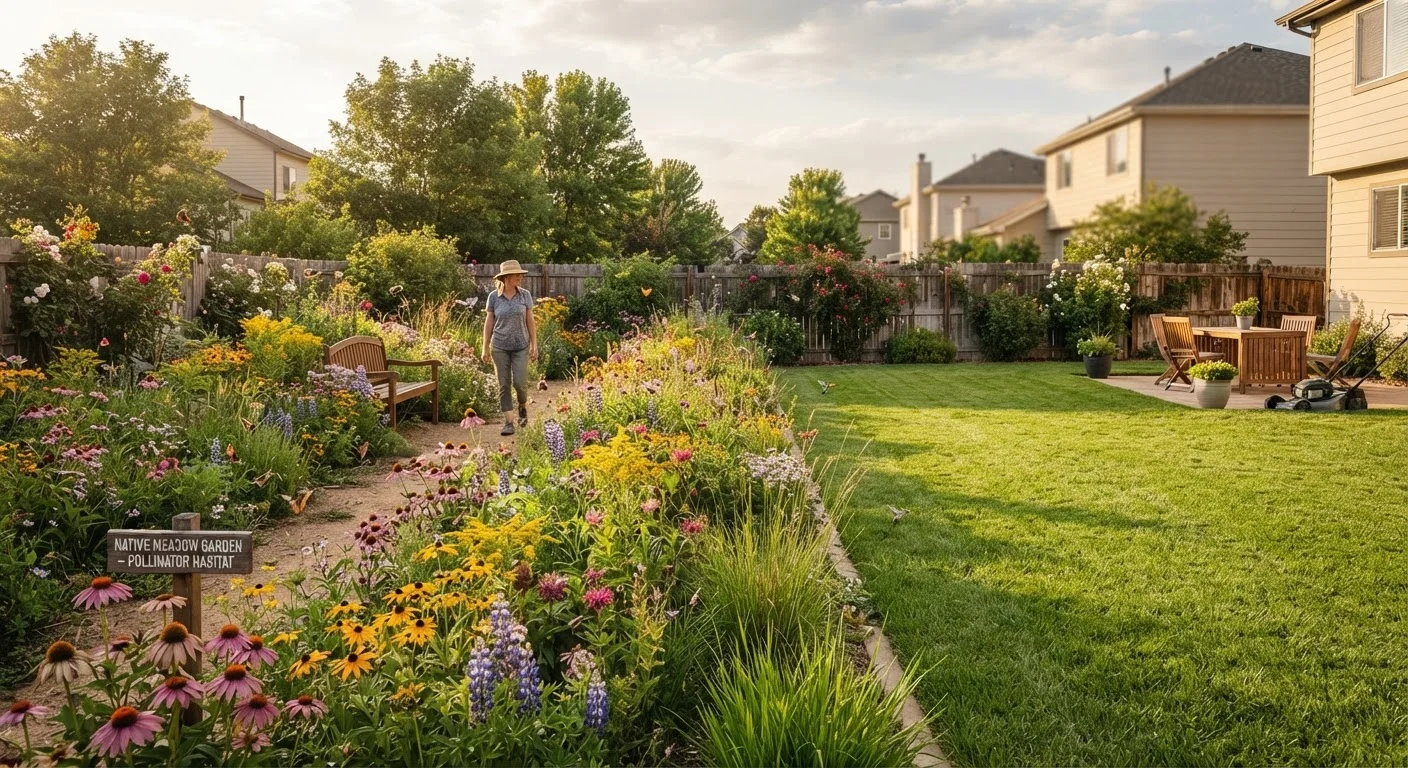
Many homeowners find the most workable solution is a hybrid landscape - retaining turf in high-use areas like play spaces, while converting borders, slopes, or low-traffic zones to native plantings. This approach reduces overall resource use without requiring a complete aesthetic overhaul.
Starting small is a reasonable strategy. Converting a single garden bed to native species lets you observe how plants perform in your specific soil and microclimate before committing to a full-yard transition. It also gives neighbors time to appreciate the change gradually.
Whatever your approach, the investment in good soil preparation, appropriate plant selection, and realistic expectations about the establishment timeline will pay dividends regardless of which direction you choose.
The content on this site is for informational purposes only and is not a substitute for professional advice. Always consult a qualified professional for guidance specific to your situation.