

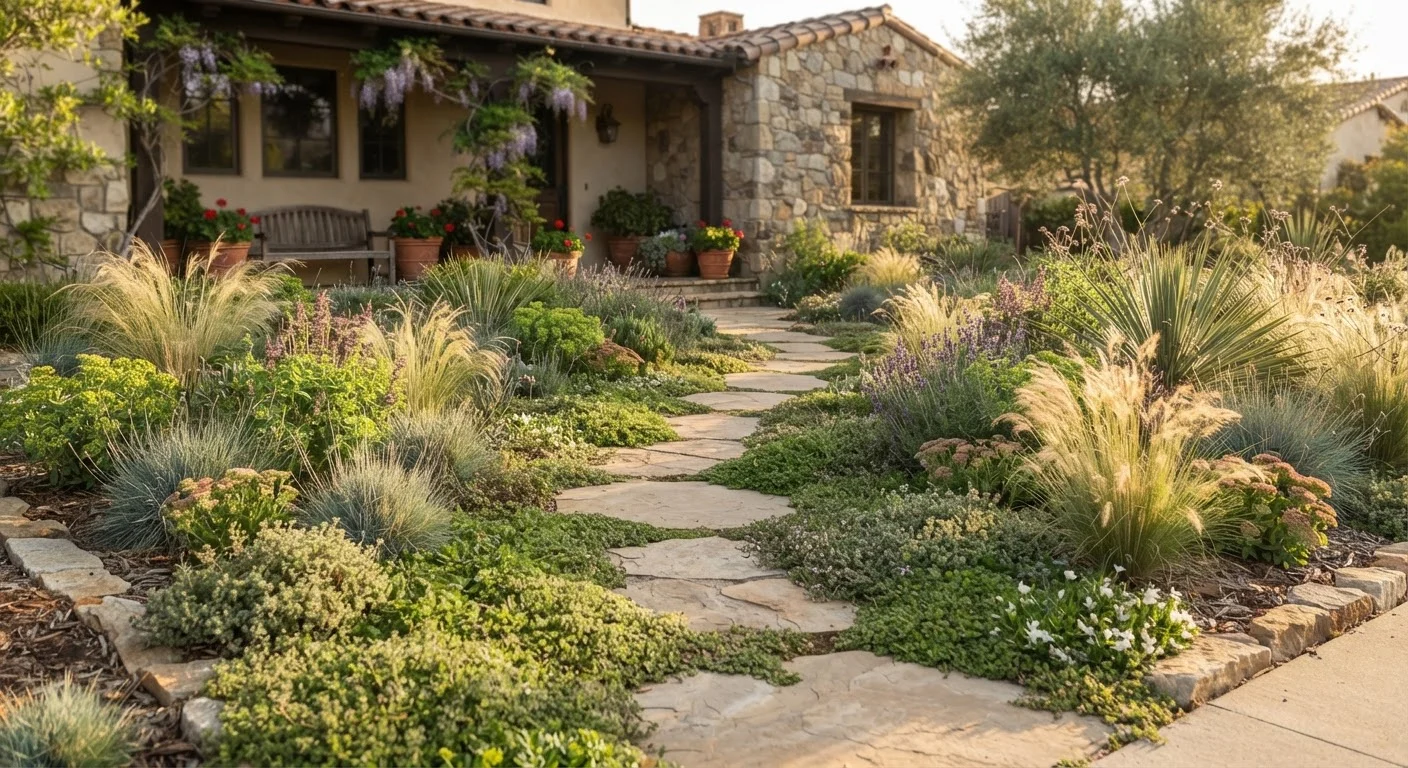
The Myth of the All-or-Nothing Yard
Many homeowners assume their only options are a labor-intensive, picture-perfect lawn or a neglected-looking patch of weeds. Neither extreme is the reality for most American yards. A thoughtfully designed landscape can look polished and cared-for without demanding hours of weekly attention - it simply requires making smarter upfront decisions about plants, materials, and layout.
If you're used to tracking every task on something like a seasonal lawn care calendar, you already understand the value of planning. Low-maintenance landscaping takes that same planning principle and bakes it into the physical design of your yard so the work is front-loaded, not endless.
The ideas below aren't shortcuts - they're structural choices that make your yard work for you instead of the other way around.
Replace Turf With Ground Covers in Problem Areas
Grass is high-maintenance by nature - it needs regular mowing, fertilizing, edging, and watering. In areas where turf struggles anyway (deep shade, steep slopes, narrow strips), replacing it with a low-growing ground cover is one of the highest-impact swaps you can make.
Creeping thyme, sedum, clover, and ornamental sweet potato vine are just a few options that spread to fill space, choke out weeds over time, and rarely need cutting. Clover, in particular, fixes its own nitrogen from the air, meaning it stays green with minimal feeding. Identify the spots where your lawn never quite looks right, and those are your best candidates for conversion.
Ground covers thrive where turf struggles, filling space and suppressing weeds with minimal intervention.
Choose Plants That Suit Your Climate, Not Fight It
A plant that's well-matched to your local rainfall, temperature range, and soil type is inherently easier to maintain than one that requires constant coaxing. This is the core case for using drought-tolerant and regionally adapted species.
Lavender, ornamental grasses, coneflower, and black-eyed Susan are examples of plants widely adapted across many U.S. regions that tend to be resilient once established. Native plants take this further - they've evolved alongside local rainfall patterns and soil conditions. For a broader look at the trade-offs between native and traditional approaches, see our comparison of native plants vs. traditional landscaping. The key principle: let your climate do the heavy lifting.
Plants suited to your local climate require far less supplemental watering, fertilizing, and troubleshooting.
Use Mulch Strategically and Generously
A 2-3 inch layer of organic mulch - shredded bark, wood chips, or composted leaves - does several things simultaneously: it holds soil moisture, moderates temperature swings, inhibits weed germination, and improves soil structure as it decomposes. This alone can eliminate a significant portion of routine watering and weeding time.
The most common mistake is applying mulch too thinly or piling it against plant stems (a practice known as "volcano mulching" that can encourage rot and pest activity). Keep mulch a few inches away from trunks and crowns, and refresh it once a year rather than constantly topping up. Proper mulching is one of the simplest, most durable low-maintenance investments a homeowner can make.
A proper 2-3 inch mulch layer can eliminate a significant share of routine watering and weeding in one step.
Install Drip Irrigation or a Timer-Based System
Manual watering is time-consuming and inconsistent. Drip irrigation delivers water directly to root zones - reducing evaporation and runoff while minimizing disease pressure from wet foliage. Paired with a basic timer, it removes watering from your weekly to-do list almost entirely.
Overhead sprinklers cover more ground but use water less efficiently and can encourage fungal issues on certain plants. If you're weighing the options, our breakdown of drip irrigation vs. sprinkler systems covers coverage, cost, and plant suitability in detail. Either way, automating irrigation is one of the most time-saving upgrades a homeowner can make.
Automating irrigation with a timer-based system effectively removes watering from your regular maintenance routine.
Define Edges Clearly to Keep the Design Readable
One of the main reasons yards look unkempt between maintenance sessions is blurring - grass creeping into beds, mulch spilling onto lawn, plants flopping into pathways. Clean, defined edges solve this structurally. Once installed, metal edging, concrete borders, or natural stone separation strips hold their shape for years with minimal upkeep.
A well-edged bed looks intentional even when the plants inside it are in a natural, slightly wild growth phase. It signals to the eye that the space is designed, not abandoned. Installing a physical barrier is a one-time task that pays off in visual tidiness over every season that follows.
Clear physical edging keeps plantings visually tidy even during natural growth phases between maintenance visits.
Incorporate Hardscaping to Reduce Planted Area
Patios, gravel areas, stepping stones, and raised beds don't grow, don't need watering, and don't require seasonal treatment. Replacing a portion of your planted or lawn area with hardscaping isn't just a design choice - it's a direct reduction in the surface area that demands attention.
The key is to make hardscaping look deliberate rather than utilitarian. Mixing materials (flagstone with decomposed granite, for instance), incorporating curves rather than rigid grids, and framing hardscape zones with a border of low-maintenance plantings creates a cohesive look that reads as designed rather than minimized. Think of hardscape as the backbone of the landscape - it holds the composition together regardless of season.
Hardscaping reduces the planted surface area requiring ongoing maintenance while anchoring the landscape's overall structure.
Putting It All Together
Low-maintenance landscaping isn't about doing nothing - it's about doing the right things once and letting your design carry the weight over time. When plants are well-matched to your soil, climate, and sun exposure, they tend to require far less intervention. When hardscaping takes the place of fussy turf, maintenance windows shrink dramatically.
Plan for Fall Prep, Even in Low-Maintenance Yards
Even resilient, low-maintenance landscapes benefit from a focused annual cleanup before winter. Cutting back spent perennials, clearing debris, and winterizing any irrigation components takes just a few hours but protects your investment. Our fall yard prep checklist walks through the key tasks season by season.
It's also worth rethinking assumptions you might be carrying from conventional gardening advice. Some widely repeated practices - like adding gravel at the bottom of planters for drainage - can actually work against you. Our look at common garden myths can help you avoid building extra problems into an otherwise efficient design.
Whatever combination of strategies you choose, the goal is a yard that looks intentional and cared-for even when you're not actively tending it. That balance - low effort, high visual payoff - is completely achievable for most American homeowners.
The content on this site is for informational purposes only and is not a substitute for professional advice. Always consult a qualified professional for guidance specific to your situation.