

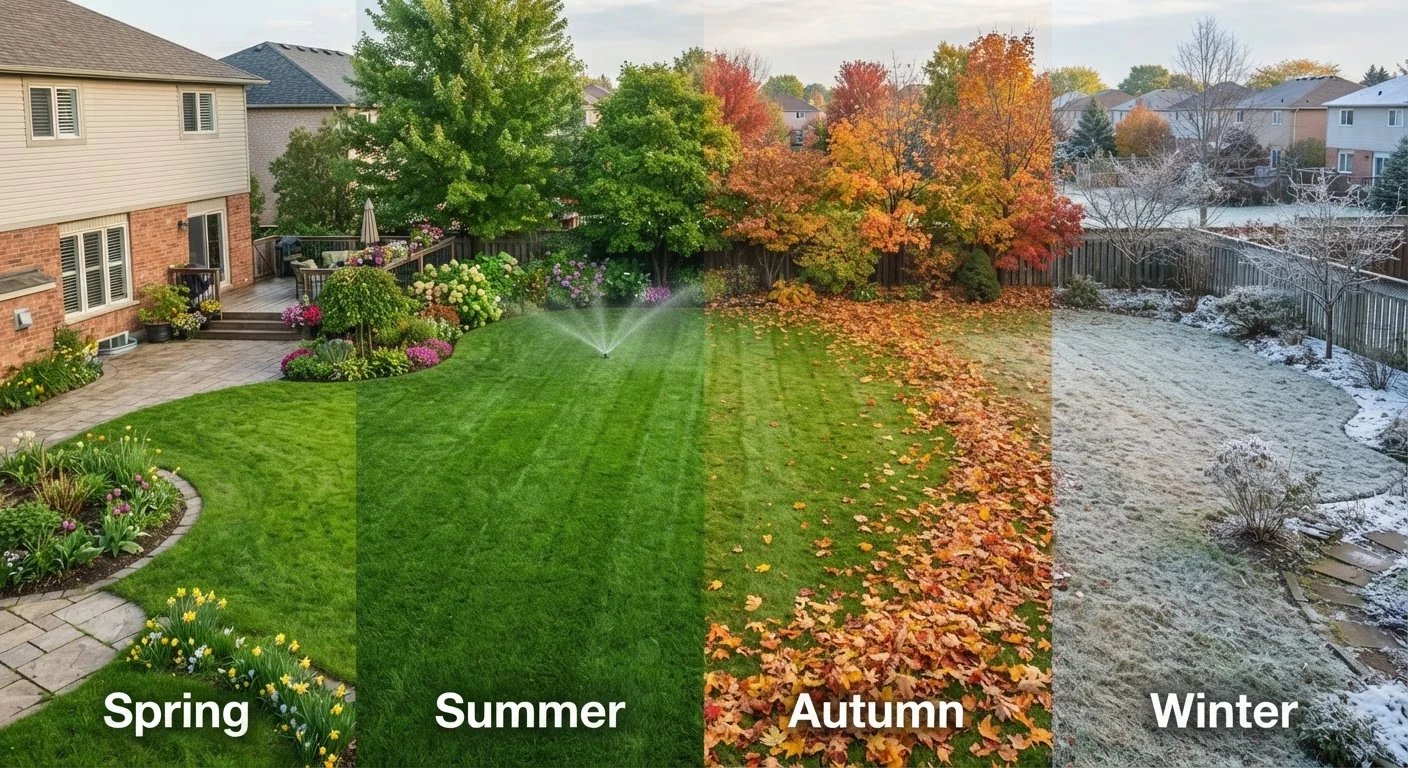
Understanding Your Grass Type First
Before any seasonal calendar makes sense, you need to know which grass category you're working with. American lawns generally fall into two camps: cool-season grasses - like Kentucky bluegrass, tall fescue, and perennial ryegrass - which thrive in northern and transitional-zone states, and warm-season grasses - like Bermuda, zoysia, and St. Augustine - which dominate lawns across the South and Southwest.
Timing your fertilizing, aerating, and overseeding tasks to the wrong season is one of the most common lawn care mistakes. Cool-season grasses push their strongest growth in spring and fall; warm-season grasses peak in summer. Build your calendar around that rhythm, not the date on the bag of fertilizer.
| Cool-Season Grass Peak Growth | Spring and Fall (University cooperative extension consensus) |
| Warm-Season Grass Peak Growth | Late Spring through Summer (University cooperative extension consensus) |
| Optimal Aeration Timing (Cool-Season) | Early Fall (Sept-Oct) |
| Optimal Aeration Timing (Warm-Season) | Late Spring (May-June) |
| Recommended Mowing Rule | Never remove more than 1/3 of blade length at once (General turfgrass management principle) |
| Soil Test Frequency | Every 2-3 years |
| Weekly Water Target | ~1 inch (rain + irrigation combined) |
For a broader look at keeping all your home's seasonal systems on track, see the annual home maintenance calendar that pairs well with your lawn plan.
Spring: Wake-Up Tasks (March-May)
Spring is when both grass types signal readiness - but the tasks differ. For cool-season lawns, this is prime time to fertilize, overseed thin patches, and apply pre-emergent weed control before soil temperatures reach 55°F (when crabgrass begins germinating). Start mowing when the grass reaches about 3-4 inches, never removing more than one-third of the blade at once.
For warm-season lawns, resist the urge to fertilize early. Wait until your grass has fully greened up and nighttime temperatures stay consistently above 60°F - typically late April through May in most southern states. Premature fertilization feeds weeds more than grass.
Spring is also a good window for a soil test every two to three years. Results guide fertilizer and lime applications far more precisely than guesswork. Your local cooperative extension office typically processes soil samples affordably.
Summer: Maintenance Mode (June-August)
Summer lawn care is largely about protecting what you've built, not pushing aggressive growth. Mow cool-season grasses higher in heat - around 3.5 to 4 inches - to shade roots and retain moisture. Reduce fertilization significantly; a stressed cool-season lawn in August heat doesn't need a nutrient push.
Warm-season grasses, by contrast, are in full swing. Fertilize every 6-8 weeks through midsummer, mow at species-appropriate heights (Bermuda at 1-1.5 inches, zoysia at 1-2 inches), and water deeply but infrequently - aiming for roughly one inch of water per week, including rainfall.
Brown patches in summer aren't always cause for alarm. Learn the difference between dormancy and drought damage before reaching for extra water or chemicals - the responses are very different.
Summer Watering: Timing Matters
Water your lawn in the early morning - ideally between 6 and 10 a.m. - to reduce evaporation and minimize fungal disease risk. Evening watering leaves grass blades wet overnight, which promotes conditions favorable to lawn diseases like dollar spot and brown patch. Midday watering wastes significant water to evaporation without meaningfully reaching roots.
Fall: The Most Important Season for Cool-Season Lawns (September-November)
Fall is the single most impactful season for cool-season lawns and is often underutilized by homeowners. September through mid-October is the ideal window to aerate compacted soil, overseed bare areas, and apply your most significant fertilizer application of the year. Cooler temperatures and reliable moisture give new seedlings the best possible start.
For warm-season grasses, fall means winding down. Stop fertilizing 6-8 weeks before your average first frost date to avoid stimulating tender growth that won't survive cold. Gradually lower your mowing height in late fall to discourage thatch buildup over winter.
For both grass types, fall cleanup matters: remove heavy leaf accumulations promptly so they don't smother turf, and complete any irrigation winterization before ground freeze. The fall yard prep checklist covers these steps in detail.
Winter: Planning Season (December-February)
Most American lawns are dormant in winter, which shifts your effort from yard to planning table. Use this period to sharpen or service mower blades, inspect sprinkler heads, and map any bare patches you noticed in fall for spring overseeding.
In warm-season regions where winters are mild (central Texas, Florida, coastal Carolinas), light maintenance continues - keep debris cleared and watch for winter weeds like henbit and annual bluegrass. In snow-prone northern zones, avoid heavy foot traffic on frozen turf, which can damage grass crowns.
Winter is also a good time to review whether your current approach is sustainable. The low-maintenance landscaping ideas worth exploring if your lawn demands more weekend hours than you'd like to give. Just as seasonal car upkeep prevents costly repairs - see seasonal car care for comparison - a consistent lawn calendar prevents the expensive correction work that neglect creates.
The content on this site is for informational purposes only and is not a substitute for professional advice. Always consult a qualified professional for guidance specific to your situation.