

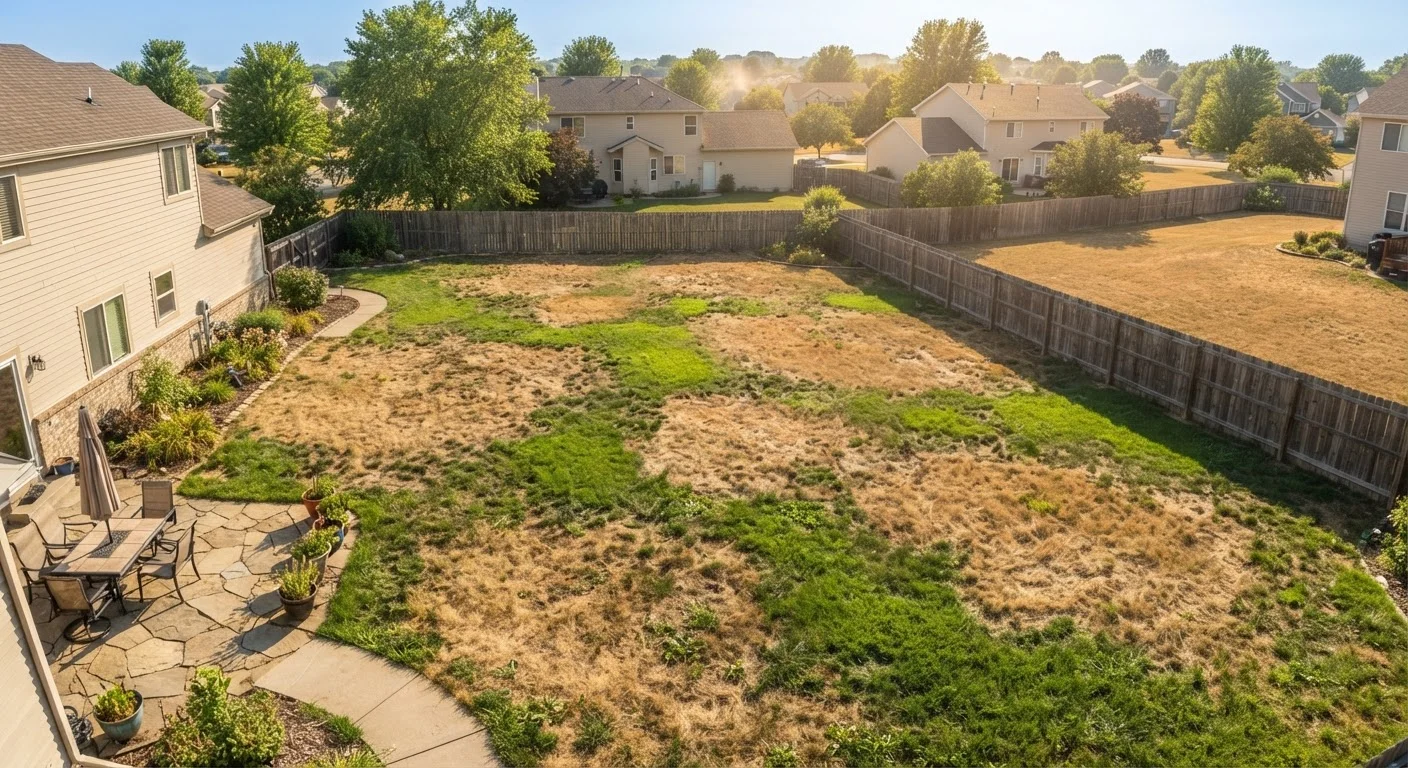
What's Actually Happening When Grass Turns Brown
When your lawn goes brown in July, the instinct is to panic - and then to water heavily. But that reaction often makes things worse. What's actually happening beneath the surface is more nuanced than simple neglect.
Grass is a living organism with built-in responses to environmental stress. When heat climbs and soil moisture drops, cool-season grasses in particular redirect energy away from leaf production and toward the crown - the dense, meristematic tissue sitting just above the soil line - and the root system. Visible blades yellow and die back intentionally, sacrificing the top growth to protect the plant's core. This is dormancy, and it's a feature, not a flaw.
Warm-season grasses handle heat differently. Bermuda, zoysia, and St. Augustine actively grow in hot weather but can still enter dormancy during sustained drought. Understanding which type of grass you have is the first step to reading your lawn's summer signals correctly. Check out The Seasonal Lawn Care Calendar Every American Homeowner Should Keep for a breakdown of grass types by region and season.
Dormancy vs. Drought Stress vs. Actual Damage
Not all summer browning is the same. There are three distinct conditions homeowners commonly confuse:
- Dormancy: Uniform browning across the lawn, intact crown tissue, firm roots. The grass is alive and waiting for better conditions.
- Drought stress: Blades wilt, curl, or turn bluish-gray before browning. Footprints remain visible in the lawn because the grass lacks the turgor pressure to spring back. This is an active distress signal, not yet dormancy.
- Heat or disease damage: Irregular brown patches, often with dead edges or a ring pattern, can indicate fungal disease or localized heat damage. Healthy dormancy looks even across the lawn; patchy browning warrants a closer look.
The crown test is your most reliable field check: part the brown blades at soil level and examine the white, dense tissue there. A firm, pale crown means life. A dark, soft, or absent crown is a sign of actual loss.
4-6 weeks
Typical dormancy survival window for cool-season grasses
Most turfgrass extension programs note cool-season grasses can tolerate roughly four to six weeks of summer dormancy before sustained die-off risk increases significantly.
1 inch/week
General deep-watering guideline for lawns under heat stress
Land-grant university extension services commonly recommend one inch of water per week - applied in one or two deep sessions - as a baseline for maintaining lawn health during drought conditions.
~30%
Water lost to evaporation with midday irrigation
Irrigation timing matters: watering during peak heat hours can result in significant evaporative losses before water reaches the root zone, according to cooperative extension estimates.
The Underground Story: Roots Under Pressure
What you see above ground reflects decisions the plant is making below it. During heat stress, grass roots stop elongating and can actually retract upward toward the soil surface - the opposite of what you want for a resilient lawn. Compacted soil makes this worse by restricting both water infiltration and root movement.
This is one reason lawn aeration matters so much in the overall picture - relieving compaction before summer stress arrives gives roots more room to go deep, where soil moisture is more stable. Shallow roots are highly vulnerable to surface drying.
Soil type also plays a role. Sandy soils drain quickly and dry out fast; clay soils can hold moisture but also restrict airflow to roots. In both cases, the goal is the same: encourage deep, infrequent watering that pulls roots downward rather than keeping them near the surface where heat and evaporation are most intense.
Raise Your Mower Deck in Summer
Cutting grass shorter doesn't slow browning - it accelerates it. Taller grass blades shade the soil surface, reduce moisture evaporation, and give the plant more leaf area for energy production. Most lawn care specialists recommend raising your mowing height by at least a half-inch to a full inch during peak summer months compared to your spring setting.
How to Respond - and What to Avoid
The right response depends on what you're actually dealing with:
- If your lawn is dormant: Resist the urge to fertilize or apply herbicides. Apply a minimal maintenance watering - roughly half an inch every two to three weeks - to keep crowns viable without pushing the grass out of dormancy prematurely. Avoid heavy foot traffic on dormant turf.
- If your lawn is drought-stressed but not yet dormant: Water deeply and infrequently rather than a little every day. One inch of water, once or twice per week, applied in the early morning, reaches deeper soil layers and reduces evaporation loss.
- If you're seeing patchy irregular damage: Investigate before treating. Fungal disease, grubs, or localized soil issues each require a different approach. Blanket overwatering a diseased area often feeds the problem. Our article on common garden myths addresses some widely held but counterproductive watering assumptions.
It's also worth noting that overwatering during summer stress can waterlog roots, invite fungal problems, and waste water - often without greening the lawn at all.
As temperatures ease in late summer and early fall, that's the moment to act. A light aeration, overseeding thin areas, and a modest balanced fertilizer application give cool-season lawns a strong launch into the recovery season. See our fall yard prep checklist for a step-by-step guide to that transition.
Frequently Asked Questions
Tug firmly on a handful of brown grass blades. If they resist pulling and the crown - the white, dense tissue at soil level - looks firm and intact, the grass is likely dormant. If the blades pull out easily with little resistance and the crown is mushy or absent, the grass may be dead.
It depends on whether you want to maintain green color or allow dormancy. A dormant lawn only needs about half an inch of water every two to three weeks to keep the crowns alive. Trying to force a dormant lawn green by heavy watering mid-summer can stress the grass further.
Most cool-season grasses can survive dormancy for four to six weeks without permanent damage. Extended drought beyond that window - especially with high heat - can push stress into actual die-off. Warm-season grasses generally tolerate longer dormant periods.
In most cases, yes. Cool-season grasses typically recover as temperatures drop in early fall. Warm-season grasses resume active growth once soil temperatures stabilize. Consistent care in the recovery window - light watering, avoiding foot traffic, and a fall feeding - supports regrowth.
Yes, significantly. Cutting grass too short removes leaf area the plant needs for photosynthesis and exposes the soil to heat. Raising your mower deck to leave grass taller in summer helps shade the soil, retain moisture, and reduce heat stress on the plant.
The content on this site is for informational purposes only and is not a substitute for professional advice. Always consult a qualified professional for guidance specific to your situation.