

Why Too Much Water Is More Dangerous Than Too Little
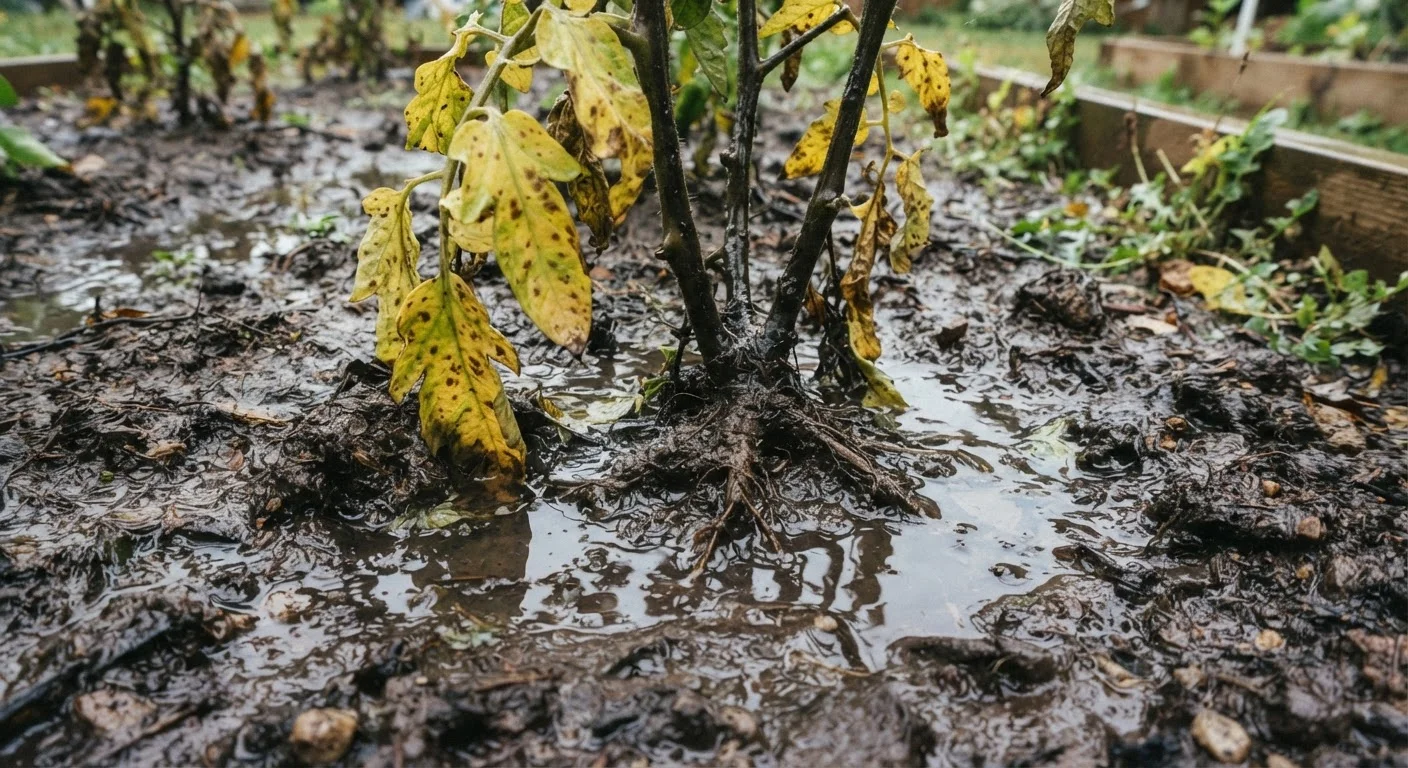
Most gardeners worry about forgetting to water. The reality is that overwatering is far more common - and far more destructive. A thirsty plant typically recovers quickly once it gets moisture. A plant suffocating in saturated soil has already begun to die at the root level, often before the gardener notices anything is wrong.
Roots need both water and oxygen to function. When soil is continuously waterlogged, the air pockets that healthy root systems depend on fill with water. Roots begin to rot, and a stressed root system becomes an open door for fungal pathogens like Pythium and Phytophthora - organisms that thrive in wet, anaerobic conditions. The plant's ability to take up water and nutrients collapses, and ironically, the above-ground symptoms look almost identical to drought: wilting, yellowing leaves, and stunted growth.
This is one reason the problem persists. Gardeners see a wilting plant, assume it needs more water, and make things worse. Understanding the actual mechanism helps break that cycle.
How to Recognize Overwatering Before It's Too Late
Catching overwatering early is largely a matter of knowing where to look - and what to smell. Common warning signs include:
- Uniformly yellow leaves across the plant, not just lower or older foliage
- Soft, mushy stems at or near the soil line
- A sour or rotten odor from the soil, indicating anaerobic bacterial activity
- Algae or moss forming on the soil surface
- Soil that feels wet two to three inches below the surface days after the last watering
The finger test remains one of the most reliable diagnostic tools available: push your finger two to three inches into the soil near the plant's root zone. If it feels moist, wait. Water only when that depth feels dry or barely damp. This habit alone eliminates the majority of overwatering problems in home gardens.
Overwatering Symptoms Mimic Drought Stress
A plant wilting in waterlogged soil looks nearly identical to one suffering from drought. Adding more water to an already saturated root zone accelerates root rot and can kill the plant faster than the original overwatering. Always check soil moisture at root depth before watering any plant showing distress.
For a deeper look at how excess moisture can cause problems beyond the garden - including foundation and structural concerns - see our guide to common structural problems.
Common Overwatering Mistakes and How to Avoid Them
Watering on a fixed daily schedule regardless of weather or soil conditions.
Why it happens: Set-it-and-forget-it irrigation feels convenient and responsible, but it ignores rainfall, temperature shifts, and plant dormancy cycles that dramatically change actual water needs.
Interpreting wilting as automatic proof of thirst and immediately watering more.
Why it happens: Wilting is the most visible plant distress signal, and water scarcity is the most intuitive cause - so the instinct to water is natural, even when roots are already saturated.
Planting in poorly draining soil without amending or addressing the drainage issue first.
Why it happens: Gardeners often focus on what goes above ground - plant selection, spacing, sunlight - and underestimate how much soil structure affects root health and water retention.
Applying too much mulch directly against plant stems and tree trunks.
Why it happens: More mulch feels like more protection, and the instinct to pile it high around plants is common. The result, however, is trapped moisture against bark and stems, which promotes rot and fungal disease.
Using the same watering frequency for all plants regardless of their water requirements.
Why it happens: Treating the garden as a single system is simpler, but succulents, vegetable crops, established shrubs, and container plants have vastly different needs - grouping them on one schedule guarantees some are overwatered.
Addressing these errors often requires pairing better watering habits with the right soil structure. See how mulching your garden beds correctly helps regulate soil moisture and reduce the temptation to water too frequently.
Smarter Watering: Practical Adjustments That Actually Help
The goal isn't to water less - it's to water correctly. A few structural and behavioral changes make a measurable difference:
- Water deeply and infrequently. Shallow, frequent watering keeps the top inch of soil wet and trains roots to stay near the surface, making plants more vulnerable. Watering deeply - slowly, so the water percolates rather than runs off - encourages roots to grow downward where soil moisture is more stable.
- Adjust for weather and season. A fixed irrigation schedule set in July will overwater in September. Reduce frequency after rain or during cool, cloudy stretches. Many smart irrigation controllers can adjust automatically based on local weather data.
- Improve drainage before planting. Amending heavy clay soil with compost increases its ability to drain excess water while retaining the right amount. Raised beds are another reliable option for naturally wet or compacted sites.
- Consider plant selection. Plants native to your region are often adapted to local rainfall patterns, meaning they need less supplemental irrigation. Native plants vs. traditional landscaping explores the trade-offs worth weighing before you plant.
~50%
Residential outdoor water use that is wasted
The U.S. Environmental Protection Agency estimates roughly half of residential outdoor water use is lost to overwatering, runoff, and evaporation.
9 billion gallons
Water used daily for landscape irrigation in the U.S.
According to EPA WaterSense program data, Americans use approximately nine billion gallons of water per day for landscape irrigation alone.
If you've encountered conflicting advice about when wilting means thirst versus overwatering, you're not alone - several common gardening myths make this confusion worse. Verifying what the evidence actually says is worth the effort.
The content on this site is for informational purposes only and is not a substitute for professional advice. Always consult a qualified professional for guidance specific to your situation.