

What Happens to Soil That Never Gets Aerated
Every time someone walks across a lawn - or the family dog runs laps, or a mower rolls over the same path - soil particles get pressed together. Over months and years, that steady pressure creates compacted soil: a dense layer where air pockets have been squeezed out and water can no longer move freely downward.
Grass roots need three things to thrive: oxygen, water, and nutrients. Compacted soil restricts all three. Rainwater pools or runs off instead of soaking in. Fertilizer sits near the surface rather than reaching the root zone. And roots, unable to push through the dense layer, spread shallow and wide - leaving grass vulnerable to drought stress and temperature swings.
Thatch - a layer of dead grass stems and organic debris that accumulates between the soil surface and living grass blades - compounds the problem. A thin layer of thatch (under half an inch) is harmless and even beneficial. But when it thickens beyond that, it blocks water infiltration and becomes a barrier between your lawn care inputs and the soil that needs them. See our guide to summer browning for a deeper look at what's happening underground when grass struggles.
½ inch
Maximum healthy thatch thickness
University extension programs generally recommend aerating when thatch exceeds half an inch, as thicker layers impede water and nutrient movement into the soil.
2-4 inches
Depth of core aerator tines
Standard core aerators extract plugs at this depth, which is sufficient to penetrate most compaction layers and improve oxygen movement in the root zone.
1-3 weeks
Time for soil plugs to break down
Under normal conditions, the plugs deposited by a core aerator decompose and return organic matter to the lawn within this timeframe.
How Core Aeration Works
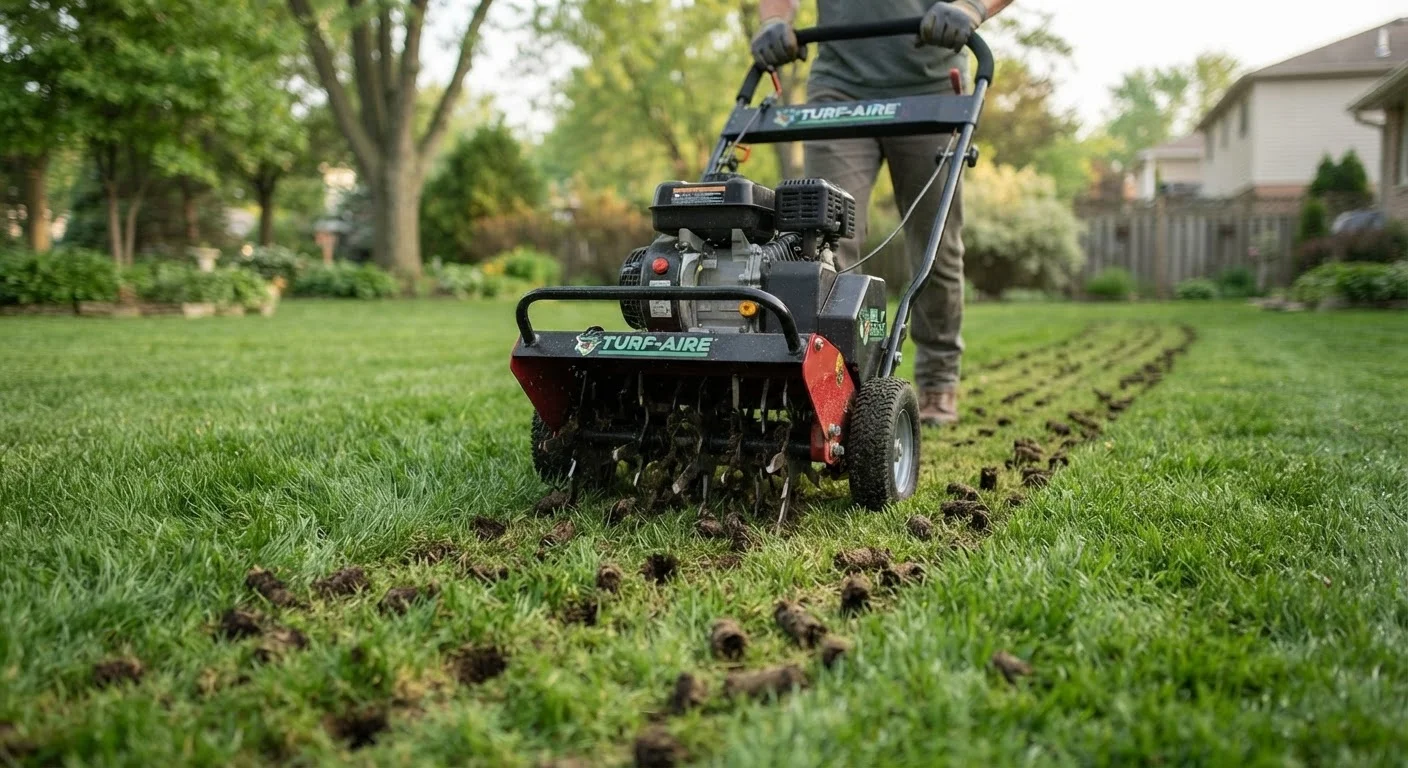
A core aerator - sometimes called a plug aerator - uses hollow tines to punch into the lawn and extract small cylinders of soil, typically two to four inches deep and about half an inch in diameter. The machine deposits those plugs on the surface in a grid pattern, leaving behind open channels throughout the root zone.
Those channels do several things at once. They allow oxygen to reach compacted areas. They create direct pathways for water and dissolved nutrients to travel deeper. They reduce thatch by accelerating microbial decomposition. And if you overseed immediately after aerating, the holes give new seed exceptional soil contact - dramatically improving germination rates compared to spreading seed on an undisturbed lawn surface.
The plugs left on the surface are not waste. They contain microorganisms that help break down thatch, and they return organic matter to the lawn. Leave them alone - they'll disappear within a few weeks.
Rent Before You Buy an Aerator
Walk-behind core aerators are available at most equipment rental centers for a fraction of the cost of purchasing one. For most homeowners, aerating once or twice a year doesn't justify ownership. Renting gives you access to a commercial-grade machine without the storage or maintenance burden.
Timing: When Aeration Actually Helps
Aeration is most effective when grass is actively growing and can recover quickly from the process. Aerating at the wrong time - during dormancy or summer heat stress - can do more harm than good by exposing weakened roots and drying out the soil further.
- Cool-season grasses (Kentucky bluegrass, fescue, ryegrass): Aerate in early fall, ideally late August through October. Growth is vigorous, temperatures are moderate, and overseeding takes hold before winter.
- Warm-season grasses (Bermuda, zoysia, St. Augustine): Aerate in late spring to early summer, when the grass is at peak growth and has time to recover before fall.
For a full month-by-month breakdown of when to aerate alongside other lawn tasks, see the Seasonal Lawn Care Calendar - it maps out aeration timing by grass type and region.
When to Skip Aeration Entirely
Not every lawn needs annual aeration, and doing it unnecessarily stresses grass without delivering meaningful benefit. Consider skipping aeration if:
- Your lawn was established within the last year from seed or sod.
- A screwdriver or pencil slides easily six inches into the soil with light pressure - low compaction doesn't need correction.
- Thatch is under half an inch thick.
- Your lawn is growing in sandy soil, which naturally resists compaction and drains well on its own.
- Grass is already under significant stress from drought, disease, or pest damage. Aeration adds recovery demand at the worst time.
Understanding your soil's baseline health is key. If you haven't tested your soil's structure and chemistry recently, our soil pH explainer is a practical starting point before making any major lawn care decisions.
Drought Stress Changes the Calculus
If your lawn has been under significant drought stress, aeration can do more harm than good - it opens the soil surface and accelerates moisture loss at a time when roots need protection. Wait until the lawn has recovered with consistent watering before scheduling aeration. When in doubt, prioritize hydration first.
What to Do Right After Aerating
The window immediately following aeration is valuable - the open channels give you temporary, direct access to the root zone. Make the most of it:
- Overseed. Spread grass seed across the aerated lawn so seed falls into the holes. Germination rates improve significantly when seed makes contact with soil rather than sitting on thatch.
- Fertilize. Apply a starter fertilizer formulated for root development. Nutrients will travel directly into the root zone through the open channels rather than sitting on a compacted surface.
- Water consistently. Keep the lawn moist for the first two to three weeks after aeration to support seed germination and help plugs break down. For guidance on efficient watering, our drip irrigation vs. sprinkler systems comparison covers how to match your setup to your lawn's needs.
- Hold off on foot traffic. Give the lawn two to four weeks to recover before resuming heavy use.
Frequently Asked Questions
Most lawns benefit from aeration once a year, though heavily compacted or high-traffic lawns may need it twice annually. Lawns with sandy soil or very low foot traffic can often go every other year without any noticeable decline in grass health.
No. Aeration on a newly seeded lawn can disrupt germination and damage fragile root development. Wait until new grass has been mowed at least three times before considering aeration, which typically means waiting a full growing season.
Water your lawn one to two days before aerating so the soil is moist but not soggy - this makes it easier for the aerator tines to penetrate. After aeration, water again to help the plugs break down and nutrients move into the newly opened channels.
Leave them in place. The plugs will break down naturally within one to three weeks, returning organic matter and microorganisms back to the surface. You can speed the process by mowing over them or raking lightly, but removal isn't necessary.
Possibly not, if the lawn is genuinely thriving. Healthy grass with good drainage and minimal thatch buildup may not need annual aeration. Use the screwdriver test - if a screwdriver pushes into the soil easily, compaction isn't your problem.
Push a standard screwdriver into your lawn by hand. If it sinks in six inches without much resistance, your soil is not significantly compacted. If you struggle to get it past two or three inches, compaction is likely limiting your grass's root growth.
The content on this site is for informational purposes only and is not a substitute for professional advice. Always consult a qualified professional for guidance specific to your situation.