

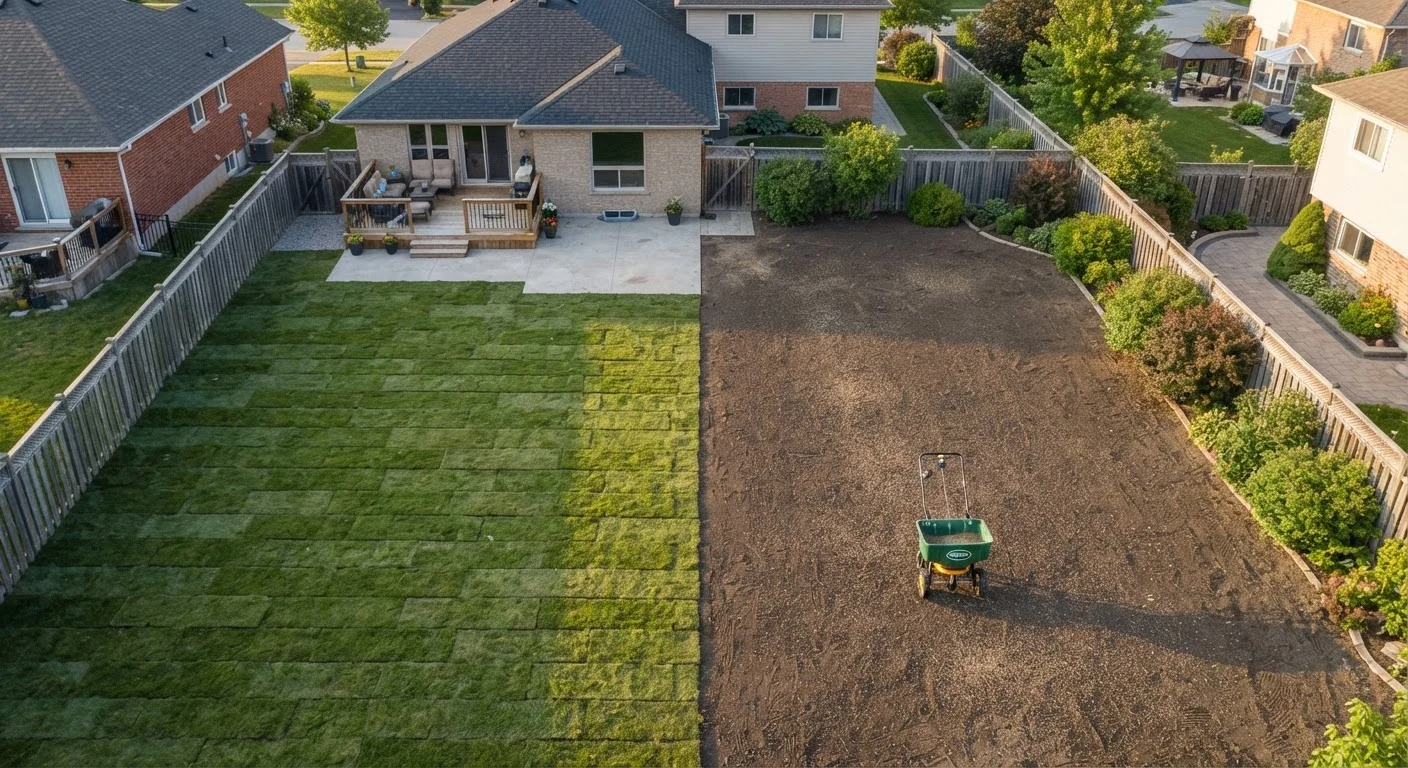
Option A
Grass Seed
The patient, budget-friendly path to a custom lawn.
Best for: Homeowners with flexible timelines, larger coverage areas, and a preference for selecting specific grass varieties.
Option B
Sod
The instant lawn solution for time-sensitive situations.
Best for: Homeowners who need immediate ground cover, are managing erosion, or have a firm landscaping deadline to meet.
Cost and Coverage: What You're Actually Paying For
The price gap between seed and sod is substantial. Grass seed generally runs between $0.05 and $0.30 per square foot depending on variety, while sod typically ranges from $0.50 to over $2.00 per square foot installed - and that's before factoring in professional labor if you're not laying it yourself. For a 2,000-square-foot lawn, that difference can mean hundreds to thousands of dollars.
That said, cost isn't the only financial variable. Seeded lawns require more watering during the germination period, and failed patches often need reseeding. Sod, if improperly installed or not watered aggressively in its first two weeks, can die and require replacement at full cost. Neither method is risk-free, and outcomes depend heavily on preparation and follow-through.
| Criterion | Grass Seed | Sod |
|---|---|---|
| Typical cost per sq ft | $0.05-$0.30 (seed only) | $0.50-$2.00+ (installed) |
| Time to usable lawn | 6-12 weeks | 2-3 weeks |
| Grass variety selection | Very wide | Limited to farm stock |
| Erosion control | Poor until established | Immediate |
| Best planting season | Species-dependent (fall or spring) | Any frost-free period |
| DIY difficulty | Moderate | Moderate to high (heavy lifting) |
| Long-term root depth | Potentially deeper | Depends on soil prep |
For either approach, investing in a soil test before you start pays off. Knowing your soil's pH and nutrient levels lets you amend correctly - something that matters just as much as which method you choose. Our guide on organic vs. synthetic fertilizers can help you decide how to feed your new lawn once it's established.
Timeline, Effort, and When Each Method Makes Sense
Timing is where seed and sod diverge most visibly. Grass seed needs time to germinate - typically 7 to 21 days depending on the species - and won't be ready for normal foot traffic for 6 to 12 weeks. Cool-season grasses like tall fescue and Kentucky bluegrass germinate best when seeded in late summer or early fall when soil temperatures are optimal. Warm-season grasses such as bermuda and zoysia perform best when seeded in late spring. Seeding outside these windows raises the risk of poor germination or seedling stress.
Sod, by contrast, can be laid almost any time the ground isn't frozen, though extreme heat raises failure risk. Within two to three weeks of proper installation and consistent irrigation, sod roots knit into the soil and the lawn is largely functional. This makes sod the practical choice when a project deadline, a home listing, or an erosion problem demands visible results fast.
7-21 days
Typical grass seed germination window
Germination time varies widely by species - ryegrass sprouts in about a week, while Kentucky bluegrass can take three weeks under ideal conditions.
2-3 weeks
Time for sod to root into soil
According to turfgrass extension guidance from land-grant universities, sod roots knit into prepared soil within roughly two to three weeks with consistent moisture.
60-80%
Cost savings with seed vs. sod
General industry estimates suggest seeding can cost 60-80% less than sod installation for equivalent coverage areas, though local labor and material costs vary.
Effort-wise, both methods require serious soil prep - tilling, grading, and amending - before anything goes down. Skipping prep is the most common reason new lawns fail. After installation, sod demands intensive daily watering for the first two weeks, while seed requires lighter but more frequent irrigation to keep the surface moist without washing seeds away. Once established, both lawns converge in their care needs. See the seasonal lawn care calendar for a month-by-month guide to keeping your lawn healthy year-round regardless of how it started.
One often-overlooked factor: after either method establishes, lawn aeration can meaningfully improve root depth and long-term turf health, especially in compacted soils.
Making the Right Call for Your Specific Yard
Neither seed nor sod is universally superior - the right choice depends on your yard's conditions, your timeline, and how much active effort you're prepared to give during establishment. A shaded yard with irregular terrain may respond better to a carefully chosen shade-tolerant seed blend than to sod, which can struggle without adequate sunlight. Conversely, a freshly graded slope after construction almost always warrants sod to prevent soil from washing away before seed can take hold.
Think about the grass species available to you as well. Sod farms grow a limited range of varieties suited to their region's market. If you're trying to establish a specific turf type for drought tolerance, traffic resistance, or local climate fit, seed gives you considerably more control. Whatever method you choose, pairing it with a smart watering system helps stretch your investment - our article on drip irrigation vs. sprinkler systems can help you find the right setup for new lawn establishment.
A Note on Watering Commitments
New lawns - seeded or sodded - are vulnerable to drying out during establishment. Sod especially requires daily irrigation for the first two weeks to prevent the root mat from desiccating before it bonds with the soil. If you're installing during summer or in a drier region, make sure you have a reliable watering plan in place before you start. A watering system failure during this critical window can mean starting over entirely.
The content on this site is for informational purposes only and is not a substitute for professional advice. Always consult a qualified professional for guidance specific to your situation.