

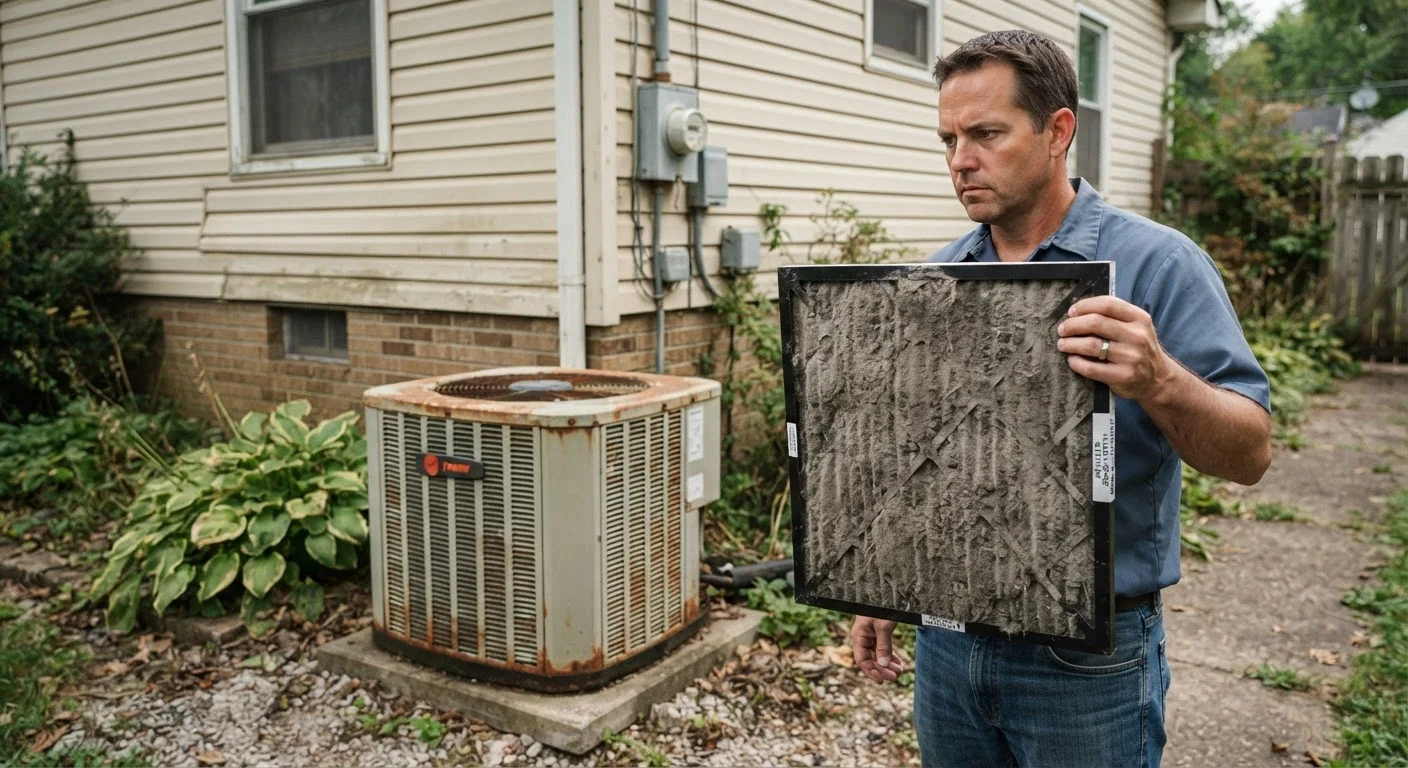
A Long Lifespan Is Earned, Not Guaranteed
A well-built central HVAC system - furnace, air handler, and air conditioner combined - is designed to last anywhere from 15 to 25 years depending on the equipment type and climate. But that lifespan assumes routine care. In practice, many systems fail or require major repairs well before that window closes, often because of maintenance gaps that compound quietly over time.
Understanding how your home's heating and cooling systems function is the first step toward protecting them. For a broader look at how HVAC connects to your home's other mechanical systems, see how HVAC, plumbing, and electrical work together. The mistakes below are among the most common reasons systems age faster than they should.
Changing air filters infrequently or not at all.
Why it happens: Filter changes feel optional when the system appears to be working, and many homeowners simply forget how often it needs to be done.
Closing or blocking supply and return vents to redirect airflow.
Why it happens: It seems logical that closing vents in unused rooms saves energy, but HVAC systems are designed to move a specific volume of air throughout the whole house.
Ignoring a refrigerant leak in the air conditioning system.
Why it happens: Refrigerant loss often shows up gradually - slightly warmer air, longer run times - making it easy to dismiss as a minor issue or a hot day.
Skipping annual professional maintenance entirely.
Why it happens: When a system is running without obvious problems, paying for an inspection feels unnecessary - but most wear happens invisibly before a failure occurs.
Placing the thermostat near heat sources or in poorly circulated areas.
Why it happens: Thermostat location is often overlooked during installation or furniture rearrangement, and its effect on system behavior isn't immediately obvious.
Letting outdoor condenser units become overgrown or obstructed.
Why it happens: The outdoor unit sits out of sight and tends to get neglected, while nearby plants, mulch, and debris accumulate around it over seasons.
How to Build Habits That Actually Protect Your System
Most HVAC failures aren't sudden - they're the accumulated result of small oversights. Recognizing the patterns above is useful only if it leads to consistent action. The good news is that the most protective habits require very little time or skill.
15-25 years
Expected HVAC system lifespan with proper care
Equipment manufacturers and HVAC industry sources generally cite this range for well-maintained central heating and cooling systems.
5-7 years
Potential lifespan lost due to neglected maintenance
HVAC service professionals commonly note that poorly maintained systems can fail significantly earlier than their design life would suggest.
Scheduling a professional tune-up once a year - ideally in spring for cooling systems and fall for heating - gives a trained technician the chance to catch refrigerant issues, test electrical connections, lubricate moving parts, and inspect the heat exchanger before problems become failures. Many utility companies and HVAC contractors offer maintenance agreements that make this easier to keep up with.
Equally important is building a simple log: note the date every time you change a filter, schedule a service visit, or notice an unusual sound or smell. This record helps both you and any technician spot patterns and prioritize repairs. For a structured approach to year-round upkeep, the seasonal home systems maintenance checklist offers a practical room-by-room framework.
Don't overlook your ductwork either. Even a well-maintained furnace or AC unit can be undermined by leaky or poorly sealed ducts - a problem explored in depth in our guide on ductwork and why it matters. For a wider set of low-effort habits that pay off over time, practices that keep home systems running well is worth bookmarking.
Unusual Smells or Sounds Warrant Prompt Attention
A burning smell, persistent musty odor, rattling, or grinding from your HVAC system are not things to wait out. These can signal electrical faults, failing motors, mold in ductwork, or a cracked heat exchanger - a potentially serious safety concern. Turn the system off and contact a licensed HVAC technician before running it again.
The content on this site is for informational purposes only and is not a substitute for professional advice. Always consult a qualified professional for guidance specific to your situation.