

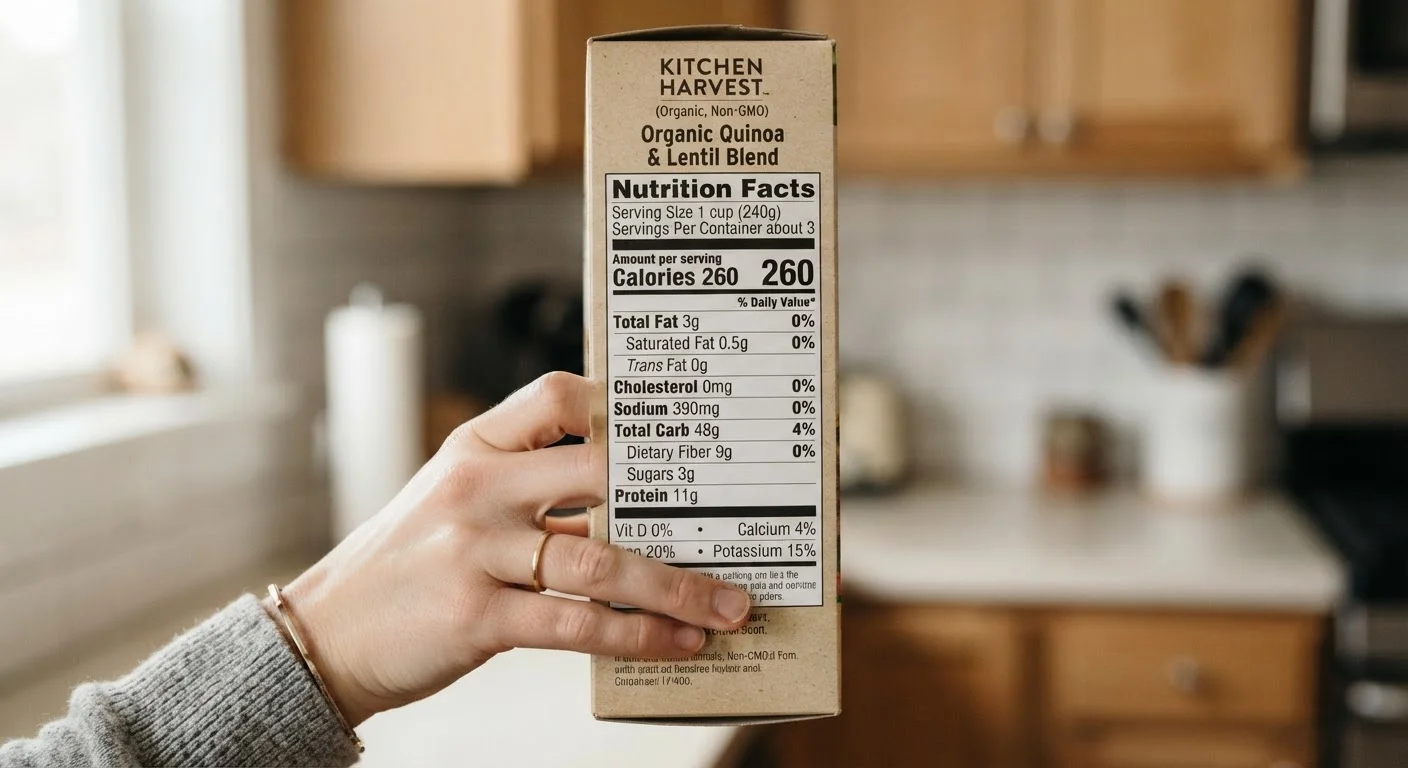
What the Nutrition Facts Panel Actually Is
The Nutrition Facts label is a standardized information panel required by the U.S. Food and Drug Administration (FDA) on most packaged food and beverages. Its purpose is straightforward: give consumers a consistent, comparable snapshot of a food's nutritional content. If you're new to thinking about food and nutrients, our beginner's guide to nutrition fundamentals provides useful context before diving in.
The current label format - updated by the FDA in 2016 and phased in through 2020 - made several meaningful changes: calories are displayed in larger type, added sugars now have their own line, and serving sizes were adjusted to reflect amounts people realistically eat rather than idealized portions.
Understanding the label doesn't require a nutrition degree. It does require knowing what each section is measuring - and what it isn't.
What you will need
Breaking Down Each Section of the Label
Serving Size and Servings Per Container
This is the single most important line on the panel. Every number that follows - calories, grams of fat, milligrams of sodium - reflects one serving, not the entire package. If a bag of chips lists 140 calories per serving but contains 3.5 servings, eating the whole bag means consuming roughly 490 calories.
Serving sizes are set to reflect typical consumption amounts, not recommendations. They're a measurement reference, not a suggestion. For a broader look at why portion perception can be tricky, see our article on how people commonly misread portion sizes.
Calories
Calories measure the energy a food provides per serving. The number itself is neutral - context matters. A 250-calorie food that's rich in fiber, protein, and micronutrients is nutritionally different from one that delivers the same calories mostly through added sugars and refined starch. For more on that distinction, see nutrient density vs. calorie density.
Nutrients: What to Look at and Why
Below calories, the label lists specific nutrients in two broad groups:
- Nutrients often consumed in excess - total fat, saturated fat, trans fat, cholesterol, sodium, and added sugars. These appear near the top of the nutrient list.
- Nutrients often under-consumed - dietary fiber, vitamin D, calcium, iron, and potassium. These appear lower on the panel.
Understanding the difference between fat types is worth its own deep dive - our guide to dietary fats explains what current nutrition science says about each. Similarly, the vitamins and minerals at the bottom of the label are covered in detail in our overview of micronutrients.
% Daily Value (%DV)
The right-hand column shows the percentage of a daily reference amount that one serving provides, based on a general 2,000-calorie diet. A useful rule of thumb recognized by nutrition educators: 5% DV or less is considered low for that nutrient; 20% DV or more is considered high. Use %DV to quickly compare products or gauge whether a food is a meaningful source - or a significant contributor - of any given nutrient.
Use %DV to Compare, Not to Optimize
The % Daily Value is based on a general 2,000-calorie reference diet - a standardized benchmark, not a target for everyone. Use it as a relative gauge when comparing two products, not as a precise measure of what your body needs. Individual calorie and nutrient requirements vary based on age, activity level, health status, and other factors.
Added Sugars
Added sugars now appear as a separate sub-line under total sugars - a meaningful update, since naturally occurring sugars (in plain milk or whole fruit, for example) behave differently from sugars added during processing. Our article on natural vs. added sugars explains that distinction in detail.
The Ingredients List
Just below the Nutrition Facts panel, you'll find the ingredients list - governed by its own rule: ingredients are listed in descending order by weight. Whatever appears first is present in the largest amount. A long list isn't automatically a red flag, but it's useful context alongside the numbers above it.
Putting It Together in Practice
Reading a label fluently is a skill that builds with repetition. A practical approach: check serving size first, then scan the %DV column for nutrients you're particularly mindful of, then glance at the ingredients if you want more detail on what's in the product.
Labels are most useful as a comparison tool - placing two similar products side by side and reading them against the same serving size reveals real differences quickly. They're less useful as moral scorecards. A single food's label says nothing about the rest of your diet, and overall eating patterns matter far more than any individual item. For a grounded look at how whole and processed foods fit together, see whole foods vs. processed foods.
If you have specific health conditions, dietary goals, or take medications that affect nutrient absorption, a registered dietitian can help you interpret labels in the context of your personal situation. Our guide to nutrition questions for your healthcare appointment is a helpful starting point.
Find the Serving Size First
Locate the serving size at the very top of the panel, just below the bold "Nutrition Facts" header. Note both the serving size amount (e.g., "2/3 cup") and the number of servings per container. Every other number on the label is calculated per single serving.
Check the Calorie Count
Read the calories per serving in large bold type. Then mentally multiply by the number of servings you'll actually consume. This gives you a realistic picture of the energy the food provides, rather than a per-serving figure that may not match your actual intake.
Scan the % Daily Value Column
Run your eye down the right-hand %DV column. Use the 5%/20% benchmark: 5% DV or less signals a low amount of that nutrient per serving; 20% DV or more signals a high amount. This quick scan helps you identify whether a food is a significant source of fiber or calcium - or whether it contributes heavily to your daily sodium or saturated fat intake.
Note the Added Sugars Line
Find the "Added Sugars" sub-line under Total Sugars. This figure represents only the sugars added during processing or preparation - not the naturally occurring sugars already present in ingredients like fruit or dairy. The %DV for added sugars is based on a daily reference of 50 grams.
Check the Sodium Entry
Sodium is listed in milligrams (mg) and as a %DV. Processed and packaged foods are the primary source of sodium in most American diets, so this line is worth a regular glance - especially when comparing two similar products where sodium content can vary considerably.
Glance at the Ingredients List
Scroll below the Nutrition Facts box to the ingredients list. Ingredients are listed in descending order by weight, so the first few ingredients make up the bulk of the product. Cross-reference any ingredients you're unfamiliar with or are monitoring for dietary reasons (such as added sugars under alternative names like "high fructose corn syrup" or "cane juice").
This article is for general informational and educational purposes only and is not medical or dietary advice. Individual nutritional needs vary. Consult a qualified healthcare professional or registered dietitian for guidance specific to your health and circumstances.
The content on this site is for informational purposes only and is not a substitute for professional advice. Always consult a qualified professional for guidance specific to your situation.