

Our Verdict
Calorie density and nutrient density measure fundamentally different things, and neither metric alone tells the full story of food quality. Calorie density helps contextualize energy intake, while nutrient density reveals how much nutritional value you get for those calories. Using both lenses together offers a more complete picture of what you're eating and why it matters for overall wellbeing.
| Best for | Recommended |
|---|---|
| Those trying to understand food quality beyond energy counts | Nutrient density focus |
| Those managing portion awareness within a balanced eating pattern | Calorie density awareness |
| Those seeking a well-rounded, sustainable approach to eating | Combining both concepts |
What Each Term Actually Means
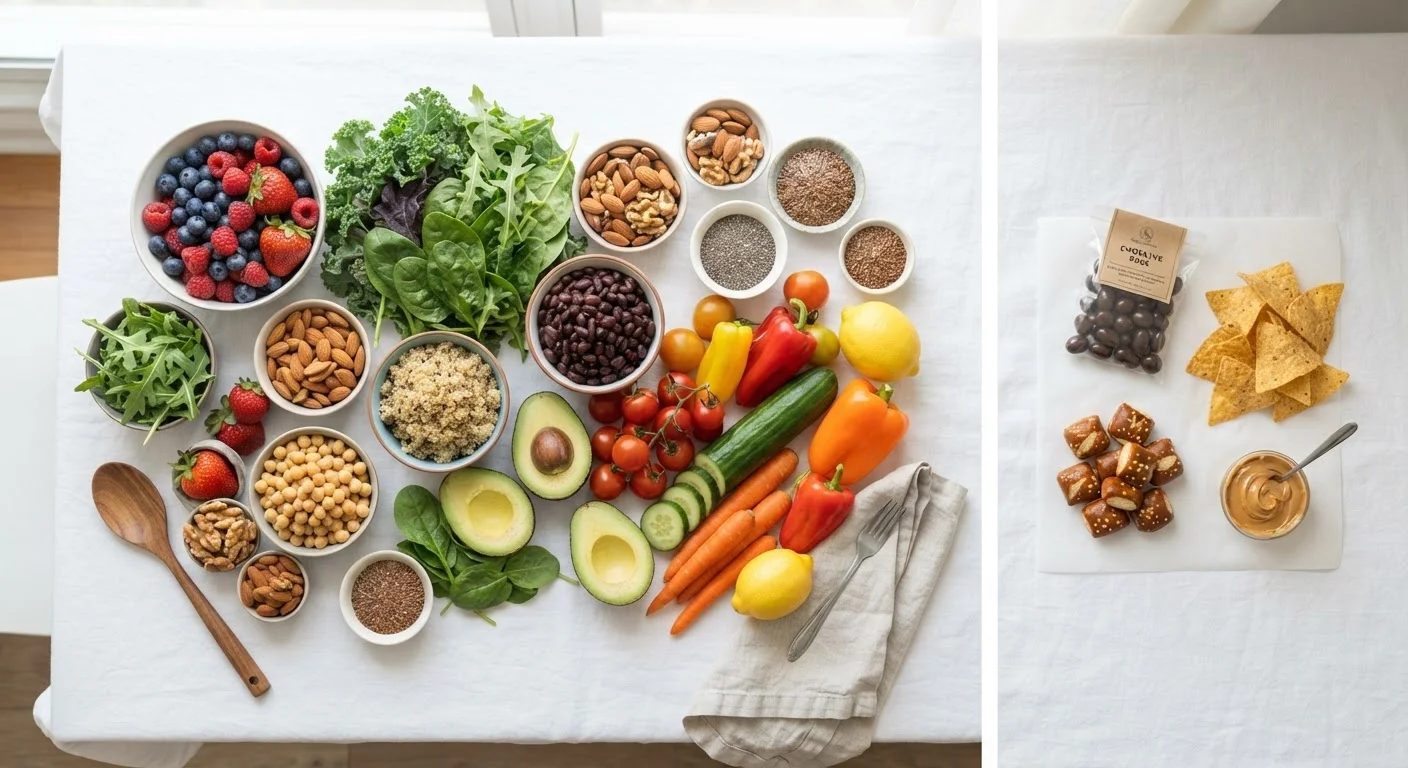
Calorie density refers to how many calories are packed into a given weight or volume of food - typically expressed as calories per gram. Foods with a high calorie density deliver a lot of energy in a small amount. Think oils, nuts, and pastries. Foods with a low calorie density, such as leafy greens or broth-based soups, provide far fewer calories for the same volume.
Nutrient density, by contrast, describes how many beneficial nutrients - vitamins, minerals, fiber, protein, and phytonutrients - a food provides relative to its calorie content. A nutrient-dense food delivers substantial nutritional value without an excess of calories. Spinach, lentils, and salmon are classic examples.
These two concepts are not opposites, and foods don't always fall neatly into one camp. Avocados, for instance, are both calorie-dense and nutrient-dense. Plain white bread is calorie-dense but relatively low in nutrients. Understanding both terms together gives a clearer picture of food quality than either metric alone. For a practical tool that captures both, see how reading a Nutrition Facts label can help you evaluate any packaged food.
How They Compare Across Key Dimensions
Looking at calorie density and nutrient density side by side reveals why neither metric is sufficient on its own - and how combining them shapes a more useful view of food quality.
| Calorie Density | Nutrient Density | |
|---|---|---|
| What it measures | Energy (calories) per gram of food | Nutrients per calorie of food |
| Primary question answered | How much energy does this provide? | How much nutritional value does this deliver? |
| High-scoring food examples | Oils, cheese, pastries, nuts | Leafy greens, legumes, eggs, salmon |
| Low-scoring food examples | Celery, broth, cucumber, lettuce | Sugar-sweetened beverages, plain crackers |
| Risk of focusing on this alone | May overlook nutritional quality | May overlook total energy intake |
| Best used for | Portion and energy awareness | Evaluating overall food quality |
Notice that some foods score well on both measures, while others require more context. A handful of almonds is calorie-dense but also nutrient-rich. A sugar-sweetened beverage can be moderately calorie-dense while offering almost no nutrients at all. The overlap - or gap - between these two values is where the most meaningful information lives.
Why Calories Alone Can Mislead
Decades of public health messaging have trained many people to view calories as the primary measure of a food's impact. While calorie awareness has a legitimate role in understanding energy balance, it has limits as a standalone guide.
Two foods with identical calorie counts can have dramatically different effects on satiety, micronutrient intake, and overall dietary quality. One hundred calories from a handful of almonds delivers fiber, vitamin E, magnesium, and healthy fats. One hundred calories from a plain cracker delivers relatively little beyond starch and sodium.
Reframe the Question You Ask About Food
Instead of asking only 'How many calories is this?' try also asking 'What nutrients am I getting for those calories?' This shift in framing - from pure energy accounting to nutritional value - aligns more closely with how nutrition science understands food quality. Neither question replaces the other; together, they offer a more complete view.
Reducing food to its caloric value also sidesteps the role of food matrix - the physical structure of food that affects how it's digested and absorbed. Whole foods often have complex structures that slow digestion, support gut health, and moderate blood sugar responses in ways that their isolated nutrients or calorie counts don't reflect.
This is part of why nutrition researchers increasingly emphasize food quality alongside energy balance. To explore how food structure relates to processing levels, whole foods vs. processed foods breaks down the difference in practical terms.
Putting Both Concepts to Work
Thinking about both calorie density and nutrient density doesn't require tracking apps or complex calculations. It's more of a mental shift - moving from asking how much energy is in this? to also asking what does this food actually do for my body?
Some practical starting points:
- Volume and satiety: Lower calorie-dense foods often take up more physical space in a meal, which can contribute to feelings of fullness.
- Micronutrient gaps: Nutrient-dense foods help fill gaps in vitamins and minerals that many Americans don't get enough of, including potassium, magnesium, and vitamin D, according to federal dietary surveys.
- Context matters: There's no single food that needs to be avoided or maximized. Dietary patterns over time - not individual foods - are what research consistently links to health outcomes.
Neither concept should be used as a rigid rule. Eating well is shaped by culture, access, budget, preference, and individual health needs. A registered dietitian can help translate these frameworks into a personalized approach that fits your life.
This article is for general informational and educational purposes only and is not a substitute for professional medical or dietary advice. Always consult a qualified healthcare provider or registered dietitian before making significant changes to your diet.
The content on this site is for informational purposes only and is not a substitute for professional advice. Always consult a qualified professional for guidance specific to your situation.