

Our Verdict
None of these three categories is inherently better or worse - each represents a different risk-reward profile. Refurbished goods typically offer the most predictable condition and protection, open-box items can be excellent value when inspected carefully, and floor models require the most due diligence but can yield meaningful savings on the right product.
| Best for | Recommended |
|---|---|
| Buyers who want a discount with more reliability and warranty protection | Certified refurbished goods |
| Shoppers comfortable inspecting products in person before committing | Open-box items |
| Experienced buyers willing to negotiate and accept as-is condition | Floor models |
Why These Three Categories Get Confused
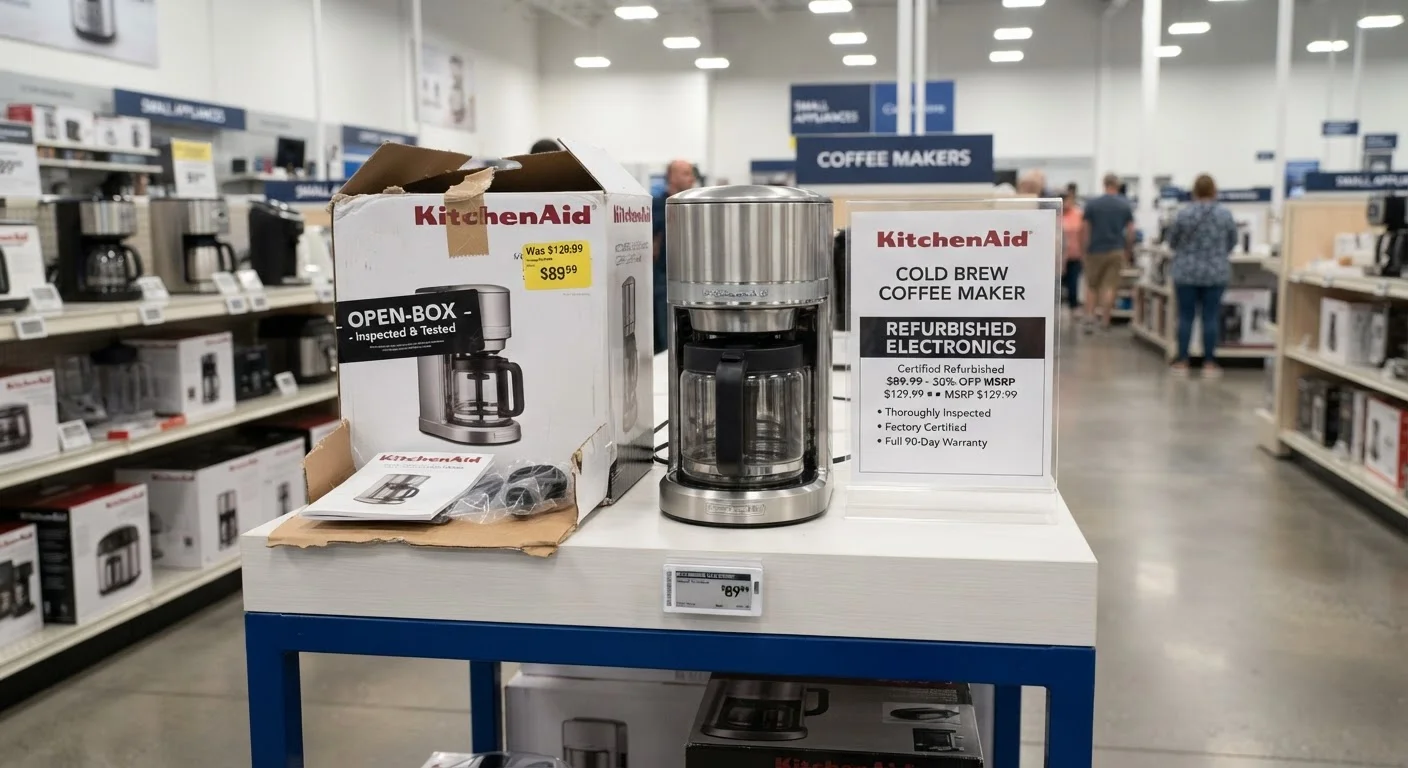
Walk into any big-box retailer or browse a major online marketplace and you'll encounter all three: floor models, open-box items, and refurbished goods. Retailers and resellers frequently group them under vague labels like "pre-owned" or "like new," which obscures meaningful differences in condition, history, and buyer protection.
Understanding what each term actually means - and what it doesn't guarantee - can significantly change how you approach the purchase. These aren't interchangeable deal categories. They're distinct product situations with different inspection requirements, warranty implications, and return policy considerations. For a deeper look at how buyer protections vary by seller type, see how your protections differ between third-party sellers and direct retailers.
Floor Models: High Visibility, High Wear
A floor model is a unit that has been used in a store as a working display - sometimes for months, sometimes for years. Customers have pressed its buttons, opened its doors, adjusted its settings, and occasionally mishandled it. The item has never been sold before, which technically makes it "new" in ownership terms, but the condition is rarely comparable to an untouched unit in a box.
Key things to verify before buying a floor model:
- Cosmetic condition: Look for scratches, scuffs, or worn finishes that won't be covered post-purchase.
- Completeness: Confirm all accessories, remotes, cords, and documentation are present. Floor models frequently lose these over time.
- Warranty status: Many manufacturers treat a floor model sale as the start of the warranty period - meaning some time may have already elapsed. Ask the retailer directly.
- Functionality: Request a full demo. Every feature should be tested in store, not assumed to work.
Floor models are typically sold as-is, and return windows may be shortened or eliminated. Always review the store's specific policy before agreeing to a sale. Return policy fine print matters especially here.
Negotiate Floor Model Pricing
Floor models are almost always priced with some flexibility, especially if you can document visible wear or missing components. Before agreeing to the sticker price, ask a department manager whether additional discounts are available - many retailers have room to negotiate further on display units, particularly toward end of a product cycle.
Open-Box Items: Returned, Not Necessarily Repaired
An open-box item is one that was sold, then returned by the customer. The reasons for return vary widely - buyer's remorse, a duplicate gift, incompatibility with a home setup, or an actual defect. Retailers rarely disclose the specific reason, which is why the condition of open-box goods can range from essentially new to functionally compromised.
Open-box items may have been inspected by store staff, but the depth of that inspection varies considerably by retailer. Some stores apply condition grades ("Excellent," "Good," "Fair") with defined criteria; others rely on visual checks only. When shopping open-box:
- Ask about the return reason if buying in person - staff sometimes have this information on file.
- Check for all included components. Original packaging is often discarded or damaged, and accessories may be missing.
- Clarify warranty coverage. Some open-box items carry the remaining original manufacturer warranty; others come only with a limited store guarantee.
- Understand the return window. Open-box return policies are frequently shorter and more restrictive than those for new items.
Not every markdown on an open-box item represents genuine savings. Distinguishing real savings from the illusion of a deal is a useful habit to apply here.
Refurbished Goods: The Most Standardized Category
Refurbished products have undergone a defined repair, testing, and quality-assurance process before resale. The rigor of that process - and what "refurbished" guarantees - depends heavily on who performed it.
Manufacturer-certified refurbished items are typically the most reliable. The original manufacturer inspects, repairs, and recertifies the unit to meet original performance standards, often replacing worn components. These frequently come with a renewed warranty, sometimes comparable in length to what a new purchase would carry.
Third-party refurbished items are processed by independent refurbishers whose standards vary. A credible third-party refurbisher will disclose what was tested and what was replaced. Less transparent sellers may do minimal work and apply the "refurbished" label loosely.
Questions to ask before buying refurbished:
- Who performed the refurbishment - the manufacturer or a third party?
- What specific repairs or component replacements were made?
- What warranty is included, and who backs it?
- What is the return policy if a defect surfaces shortly after purchase?
| Floor Model | Open-Box | Refurbished | |
|---|---|---|---|
| Previous ownership | Never sold; store-used | Sold and returned by customer | Previously used; resold after repair |
| Condition consistency | Varies; often cosmetic wear | Highly variable by return reason | Most standardized, especially manufacturer-certified |
| Warranty coverage | Partial or none; verify with retailer | Remaining original or limited store warranty | Often renewed warranty, especially manufacturer-certified |
| Inspection needed | Extensive; test all functions in store | Moderate; check completeness and function | Lower for certified; higher for third-party |
| Return policy | Often as-is; very limited | Shorter window than new items | Varies; manufacturer-certified often most generous |
| Accessories included | Frequently incomplete | May be missing components | Usually complete per refurbisher's standard |
Making a Smart Decision Across All Three
The right category depends on your risk tolerance, how much inspection access you have, and what warranty coverage matters most for the product type. A floor model refrigerator carries different stakes than a floor model lamp. An open-box laptop warrants more scrutiny than an open-box kitchen utensil set.
General principles that apply across all three categories:
- Get everything in writing. Verbal assurances about condition or warranty don't protect you after the sale.
- Inspect before you commit. For in-person purchases, test every function you care about. For online purchases, review condition descriptions and grade definitions carefully.
- Know the return window before you pay. Shortened or as-is policies are common across all three, and discovering that after purchase is costly.
- Factor in the total cost. If a missing accessory or out-of-warranty repair is likely, factor that into what the item is actually worth to you at the offered price.
These same habits of careful evaluation apply in other purchase contexts too - from comparing new construction to existing homes to any situation where condition and history affect long-term value. For a broader grounding in buyer rights, the Consumer Rights Basics hub covers returns, warranties, and protections in depth.
This article is for general informational purposes only and does not constitute legal or financial advice. Specific warranty terms, return policies, and consumer protections vary by retailer, manufacturer, and jurisdiction. Verify all terms directly with the seller before purchasing.
The content on this site is for informational purposes only and is not a substitute for professional advice. Always consult a qualified professional for guidance specific to your situation.