

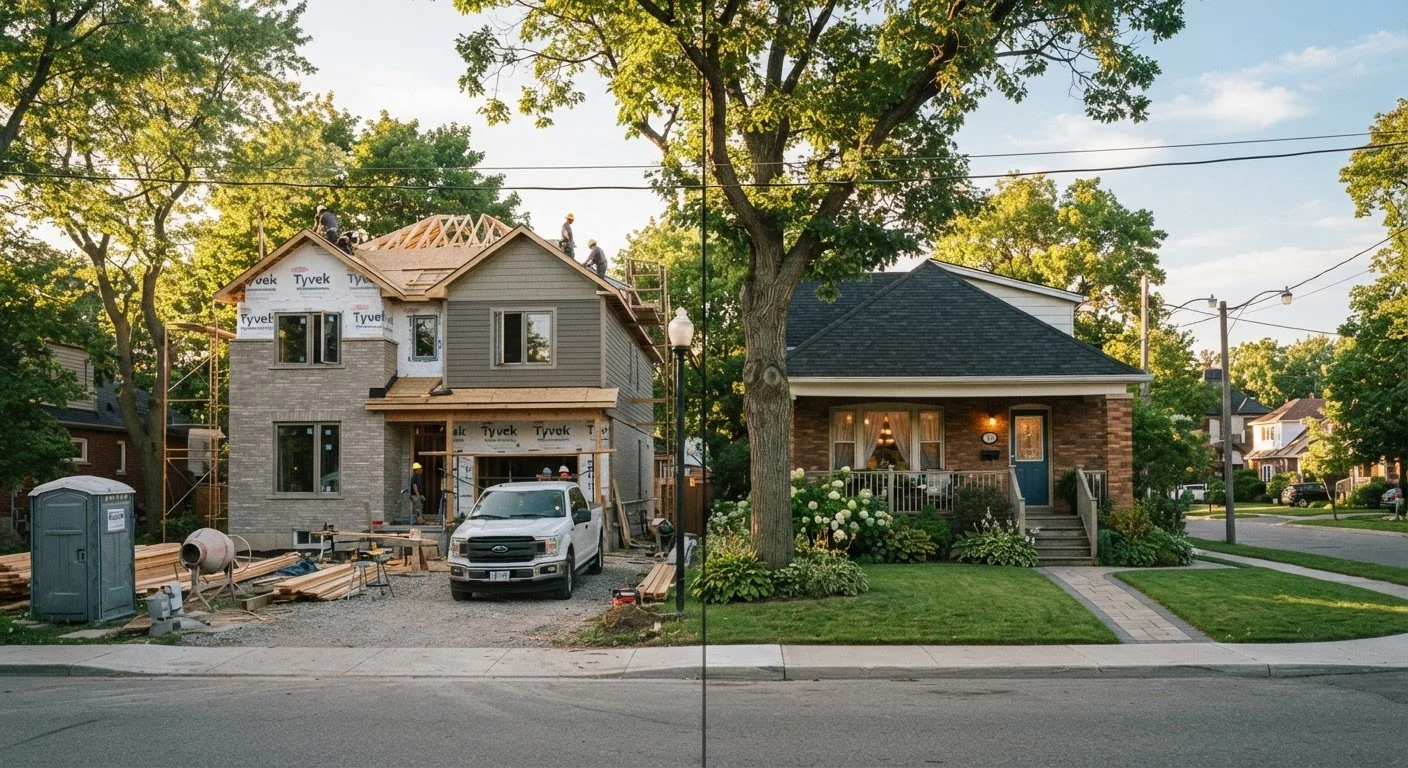
Our Verdict
Neither new construction nor an existing home is universally the better choice. New builds suit buyers who want modern layouts, minimal immediate maintenance, and can absorb longer timelines and tighter negotiation margins. Existing homes tend to work better for buyers who need flexibility, want to move quickly, or are drawn to established communities with mature landscaping and neighborhood character.
| Best for | Recommended |
|---|---|
| Buyers who want move-in-ready homes in established neighborhoods | Existing Home |
| Buyers who prioritize modern floor plans and new-home warranties | New Construction |
| Those working within strict time or cost constraints | Existing Home |
| Buyers willing to wait and customize a home to their specifications | New Construction |
Understanding What You're Actually Choosing Between
When buyers weigh new construction against existing homes, they're often surprised to find the differences go well beyond aesthetics. These are fundamentally different purchasing processes, each with its own contract structures, timelines, negotiation dynamics, and risk profiles.
New construction encompasses homes built by a developer or builder that have never been occupied. This includes both spec homes - built ahead of buyer commitments - and custom or semi-custom builds designed to buyer specifications. Existing homes (sometimes called resale homes) are previously owned properties sold through a more traditional real estate transaction.
If you've already thought through whether homeownership fits your current life, our overview on renting vs. buying trade-offs covers the foundational financial and lifestyle factors worth settling first.
| New Construction | Existing Home | |
|---|---|---|
| Price negotiation | Limited; builders set pricing | More flexible; seller-driven |
| Closing timeline | 6 months to 2+ years | Typically 30-60 days |
| Warranty coverage | Builder warranty included | Usually none; buyer's risk |
| Customization | Often available pre-build | Requires post-purchase renovation |
| Maintenance risk (Year 1-5) | Lower; systems are new | Higher; depends on age/condition |
| Neighborhood character | Unproven; still developing | Established and assessable |
| Energy efficiency | Built to current standards | Varies widely by age |
| Contract complexity | Builder contracts; attorney review advised | Standard purchase agreement |
The Case for New Construction
New homes come with meaningful practical advantages. Chief among them is a builder's warranty - typically covering structural components for several years and systems like HVAC and plumbing for a shorter window. This can significantly reduce surprise expenses in the early years of ownership.
Modern layouts reflect how people actually live today: open floor plans, energy-efficient windows and insulation, smart-home readiness, and code-compliant electrical systems. Buyers who want these features in an older home often have to fund them through renovation, which adds cost and complexity. For a clear picture of what those decisions involve, see our piece on renovating for value vs. comfort.
However, new construction carries real trade-offs. Builder contracts are not the same as standard purchase agreements - they tend to be written to favor the builder, with limited contingencies and strict timelines. Buyers should have a real estate attorney review any builder contract before signing. Delays are also common; supply chain disruptions and permitting issues can push completion dates by months.
Always Bring Independent Representation
Many buyers of new construction assume the builder's sales agent represents their interests - they don't. Builder agents work for the builder. Bringing your own buyer's agent and, for contract review, a real estate attorney can help ensure you understand exactly what you're agreeing to before signing anything.
The Case for an Existing Home
Resale homes generally offer more negotiation room. Sellers are individuals, not corporations, and market conditions, personal circumstances, and days on market all create leverage that simply doesn't exist in most new-construction deals. Buyers can request repairs, seller concessions, or price reductions - especially in softer markets.
Established neighborhoods also come with something a brand-new development can't offer: a track record. Schools, commute patterns, neighbors, walkability, and community character are all knowable before you commit. Mature trees and landscaping are a small but real quality-of-life factor many buyers overlook until they're staring at a freshly graded lot.
The downsides are real too. Older homes may have deferred maintenance, outdated systems, or require updates to meet current energy or accessibility standards. A thorough home inspection is non-negotiable - it's the primary tool buyers have to understand what they're actually purchasing. Understanding how home equity actually builds can also help set realistic expectations about long-term value in any home you buy.
Key Decision Factors to Weigh
The right choice depends heavily on your individual situation. Here are the practical factors most buyers should work through:
- Timeline: New construction can take six months to over two years to complete. If your current lease ends soon or you're relocating for work, an existing home's 30-60 day closing timeline may be the determining factor.
- Budget flexibility: New builds often have fewer price negotiation opportunities, and upgrades in the design center add up quickly. Existing homes may come with deferred costs, but those costs are at least assessable during due diligence.
- Risk tolerance: Builder delays, rising material costs mid-build, and neighborhood development uncertainty are real risks in new construction. Existing homes carry different risks - hidden defects, aging systems - that inspections help surface but don't eliminate.
- Long-term goals: Consider how you expect your needs to change. A newer home may require less maintenance in years one through five, but that advantage narrows over time.
The dynamic here isn't entirely unlike the new vs. used trade-off in other big purchases. Our comparison of new car vs. used car trade-offs applies some of the same framework to a decision many readers will recognize.
This article is for general informational purposes only and does not constitute financial, legal, or real estate advice. Consult a licensed real estate professional, attorney, or financial adviser for guidance specific to your situation.
The content on this site is for informational purposes only and is not a substitute for professional advice. Always consult a qualified professional for guidance specific to your situation.