

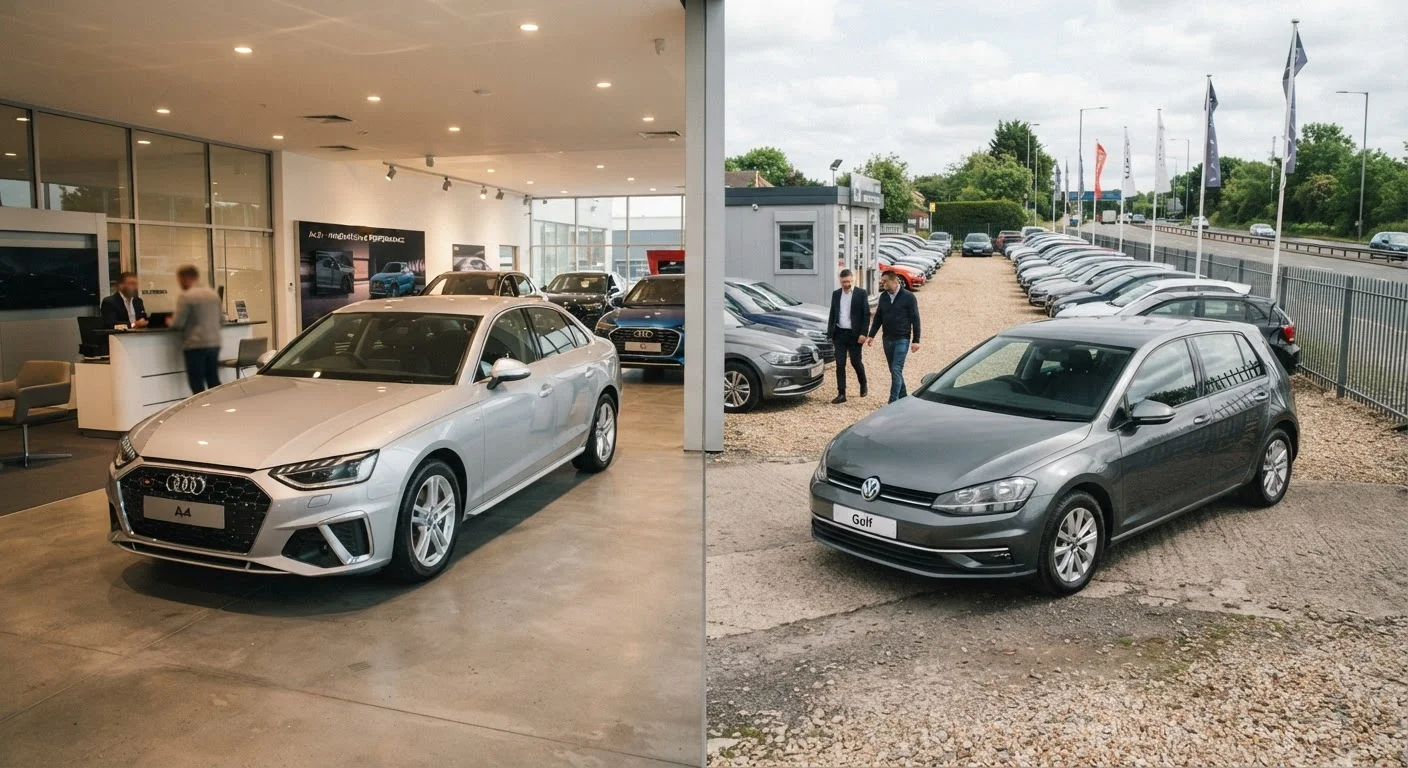
Option A
New Car
The full-warranty, latest-features option.
Best for: Buyers who want predictable costs, manufacturer support, and access to current safety technology.
Option B
Used Car
The lower-entry-cost, value-focused alternative.
Best for: Budget-conscious buyers willing to accept some uncertainty in exchange for a lower purchase price and slower depreciation.
The Depreciation Factor: Where the Real Cost Gap Lives
New vehicles lose value quickly - industry data consistently shows that a new car can shed roughly 15-25% of its value within the first year of ownership, with the steepest decline often occurring the moment it leaves the lot. By the time a vehicle is three years old, it may have lost 40-50% of its original retail price.
This dynamic is actually an argument for used cars for many buyers. When you purchase a three-year-old vehicle, you let the original owner absorb that initial depreciation cliff. What you gain is a vehicle that, in many cases, still has significant useful life ahead of it - but at a substantially reduced cost.
For new-car buyers, depreciation matters most if you plan to sell or trade in within a few years. If you intend to keep the vehicle long-term, the annual impact of that depreciation spreads out considerably and may matter less in your overall calculation. For more on how trade-in timing intersects with this, see common trade-in timing mistakes.
| Criterion | New Car | Used Car |
|---|---|---|
| Purchase price | Higher - full retail | Lower - depreciation absorbed |
| Depreciation exposure | Steepest in years 1-3 | Much of it already occurred |
| Financing rates (APR) | Generally lower | Often higher |
| Warranty coverage | Full factory warranty | None by default; CPO adds some |
| Insurance cost | Higher (greater replacement value) | Lower for older models |
| Safety technology | Latest driver-assist systems | Varies by model year and trim |
| Vehicle history | None; starts fresh | Unknown unless verified |
| Customization options | Full factory options available | Limited to existing inventory |
Financing, Insurance, and the True Monthly Cost
Sticker price is only part of the story. Financing rates typically differ between new and used vehicles. Lenders often offer lower annual percentage rates (APRs) on new cars - sometimes significantly lower - because new vehicles are seen as less financial risk. Used-car loans, particularly for older or higher-mileage vehicles, can carry meaningfully higher interest rates, which partially offsets the lower purchase price.
Insurance costs also vary. New vehicles generally cost more to insure because their replacement value is higher. However, the gap narrows considerably for late-model used vehicles. An older used car may also allow you to drop comprehensive and collision coverage if the vehicle's value doesn't justify the premium, reducing your ongoing costs.
~20%
Average new-car value lost in year one
Industry analysts estimate new vehicles lose roughly 15-25% of their value within the first twelve months of ownership.
1-2%+
Typical APR gap: new vs. used loans
Used-car auto loan rates have historically run higher than new-car rates, with the gap varying based on vehicle age, credit profile, and lender.
3 yrs / 36k mi
Common new-car bumper-to-bumper warranty
Most major manufacturers offer at least this baseline of coverage, though powertrain warranties typically extend further.
Before signing any financing agreement, it's worth understanding the total interest you'll pay over the life of the loan - not just the monthly payment. For a broader look at how financing structures affect long-term costs, understand the trade-offs of buying on financing before committing.
Reliability, Warranties, and the Unknown History Problem
One of the clearest advantages of a new car is the warranty. Most new vehicles come with a bumper-to-bumper warranty covering three years or 36,000 miles, plus a powertrain warranty that typically extends to five years or 60,000 miles. This means that for your first several years of ownership, most unexpected mechanical failures are covered - a meaningful financial buffer.
Used cars carry no such guarantee by default. You're buying a vehicle with some history - and unless you have that history verified, you're accepting a degree of uncertainty. A pre-purchase inspection by an independent mechanic can reduce that risk significantly and is generally worth the modest cost. Vehicle history reports (which document accidents, title issues, and service records) add another layer of due diligence.
There is a middle path worth considering: certified pre-owned (CPO) vehicles. These are used vehicles - typically late-model, lower-mileage - that have passed a manufacturer-defined inspection and carry an extended warranty. They cost more than standard used cars but less than new. Our separate guide explains what CPO certification actually covers and whether the added cost tends to be justified.
When a Pre-Purchase Inspection Makes Sense
For any used vehicle not covered by a manufacturer CPO program, an independent pre-purchase inspection by a qualified mechanic is strongly advisable. This typically costs between $100 and $200 and can surface issues that aren't visible to the buyer. It's one of the most cost-effective steps in the used-car buying process.
Technology, Safety, and the Generational Gap
New vehicles benefit from the most current safety technology. Features like automatic emergency braking, lane-keeping assist, blind-spot monitoring, and rear cross-traffic alert have become standard or near-standard on many new models in recent years. These systems have demonstrated measurable reductions in certain collision types in real-world data collected by safety organizations.
A used car purchased from several model years back may lack some or all of these features, depending on the vehicle and trim level. For buyers who prioritize safety technology - particularly those with families or new drivers in the household - this generational gap is worth factoring in seriously, not just as a convenience trade-off.
On the other hand, many buyers find that a well-chosen used vehicle from three to five years ago still offers a strong suite of features at a fraction of the new price. The key is researching which specific features were available - and at which trim levels - for the model year and vehicle you're considering.
The content on this site is for informational purposes only and is not a substitute for professional advice. Always consult a qualified professional for guidance specific to your situation.