

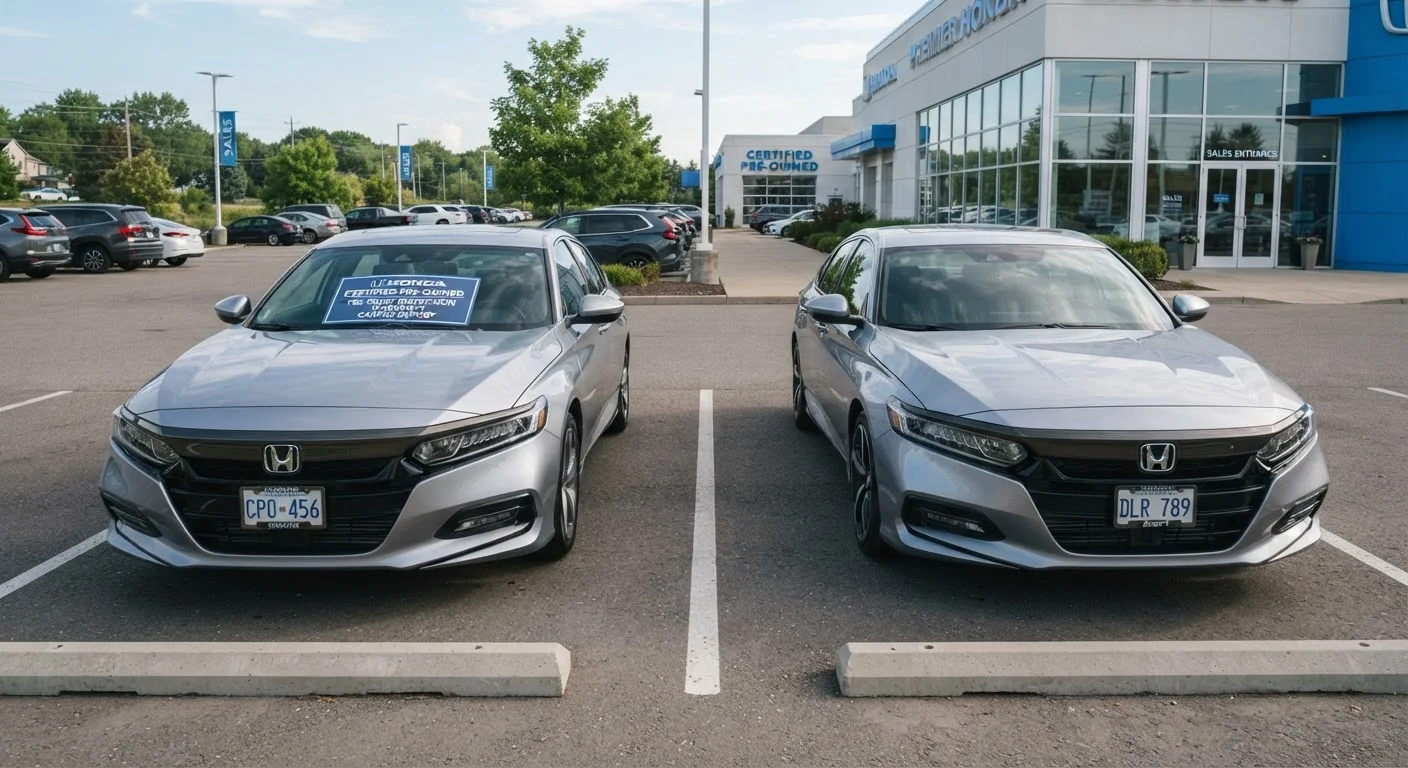
Option A
Certified Pre-Owned (CPO)
The inspected, warranted, dealer-backed option.
Best for: Buyers who want used-car pricing with some of the reassurance of buying new.
Option B
Standard Used
The straightforward, lower-cost alternative.
Best for: Buyers comfortable doing their own due diligence in exchange for a lower purchase price.
What Makes a Car 'Certified Pre-Owned'?
The term Certified Pre-Owned - often abbreviated CPO - refers to a used vehicle that has been inspected against a defined checklist and reconditioned to meet a specific standard before being sold. The program is then backed by some form of warranty or guarantee that extends beyond the sale date.
There are two broad types of CPO programs:
- Manufacturer-backed CPO: Run by the automaker (e.g., a program administered through an automaker's franchised dealerships). These tend to have more rigorous inspection criteria, age and mileage limits, and factory-backed warranties. The vehicle typically must be a recent model year with relatively low mileage to qualify.
- Dealer-backed CPO: Created and administered by individual dealerships or dealer groups, without factory involvement. Standards vary widely, and the warranty is backed by the dealership rather than the manufacturer - an important distinction if the dealership closes or changes ownership.
Before assuming any CPO label carries the same weight, it's worth asking the seller which type of program applies and requesting a copy of the inspection checklist. As our guide on what certifications actually mean explains, not every label signals the same level of rigor.
How Standard Used Cars Are Sold
A standard used car is sold without a formal certification process. The vehicle may come from a private seller, an independent used-car lot, or even a franchised dealer's non-CPO inventory. In most states, used vehicles are sold as-is - meaning once you sign, you own whatever problems the car has, disclosed or not.
That doesn't mean the purchase is reckless by definition. Buyers of standard used vehicles have several tools available to reduce risk:
- Vehicle history reports (such as those from services that pull from title, insurance, and odometer records) can flag accidents, title issues, and ownership history.
- Independent pre-purchase inspections by a licensed mechanic can reveal mechanical issues the seller may not disclose. See our breakdown of what a pre-purchase inspection covers for a practical overview.
- Negotiating the price is generally more straightforward with standard used cars, especially if you come in with inspection findings or comparable market data.
The key difference from CPO is that you are responsible for doing the homework rather than relying on the seller's program to have done it.
| Criterion | Certified Pre-Owned (CPO) | Standard Used |
|---|---|---|
| Inspection process | Formal checklist, documented | None required; buyer arranges independently |
| Warranty included | Yes - limited, varies by program | Typically sold as-is; no warranty |
| Price | Higher - premium for certification | Lower - no certification markup |
| Eligibility limits | Usually age and mileage restricted | No restrictions |
| Where sold | Franchised dealerships primarily | Dealers, private sellers, auctions |
| Program oversight | Manufacturer or dealer-defined | None - buyer assumes responsibility |
| Negotiating flexibility | Limited - price reflects certification | Generally more room to negotiate |
The Real Cost Difference - and What You Get For It
CPO vehicles carry a measurable price premium. Industry data has historically placed that premium in the range of a few hundred to over two thousand dollars compared to an equivalent non-certified used vehicle, depending on make, model, and the scope of the program. Whether that premium is worth it depends on a few factors:
~$1,000-$3,000
Typical CPO price premium over standard used
Industry analysts have broadly estimated the CPO premium in this range, though it varies by vehicle segment, program, and market conditions.
2-7 years
Typical maximum vehicle age for manufacturer CPO eligibility
Most automaker-backed CPO programs require the vehicle to fall within a recent model-year window; older vehicles are ineligible regardless of condition.
~$100-$200
Typical cost of an independent pre-purchase inspection
A licensed mechanic's inspection of a standard used vehicle generally costs far less than the CPO premium, making it a cost-effective alternative for due diligence.
- Warranty scope: A manufacturer-backed CPO warranty that covers the powertrain for several years has real financial value - particularly for vehicles with higher mileage or complex systems. But it's worth reading the actual warranty terms. Understanding the difference between a warranty and a guarantee matters here - coverage limits, deductibles, and exclusions vary significantly.
- Inspection quality: A 150-point inspection checklist sounds thorough, but the value depends on who performs it, what pass/fail criteria apply, and whether failed items are actually repaired or simply noted.
- Your financial risk tolerance: If an unexpected $2,000 repair would be a serious hardship, paying a CPO premium for warranty coverage may be a rational hedge. If you have savings set aside for maintenance, you might prefer to pocket the difference.
For broader context on how CPO fits into the used-vs.-new decision, our article on new car vs. used car trade-offs covers the full spectrum of options.
Questions to Ask Before You Decide
Regardless of which route you're considering, the right questions make a significant difference. For CPO vehicles, ask:
- Is this a manufacturer-backed or dealer-backed program?
- What does the warranty actually cover, and for how long?
- Is there a deductible for warranty claims?
- Can I see the completed inspection report?
- What items were repaired or replaced to meet certification?
For standard used vehicles, ask:
- Can I take the car to an independent mechanic before purchase?
- Is there a vehicle history report available?
- What is the seller's disclosure policy on known defects?
- Is the price negotiable based on inspection findings?
Our guide on questions worth asking before a test drive provides a more complete framework for evaluating any used vehicle before you commit.
The bottom line: CPO is a structured product with real but variable benefits. Standard used is a more open-ended purchase that rewards buyers willing to do their own legwork. Neither is universally better - the right choice depends on the specific vehicle, program terms, and your own financial situation.
The content on this site is for informational purposes only and is not a substitute for professional advice. Always consult a qualified professional for guidance specific to your situation.