

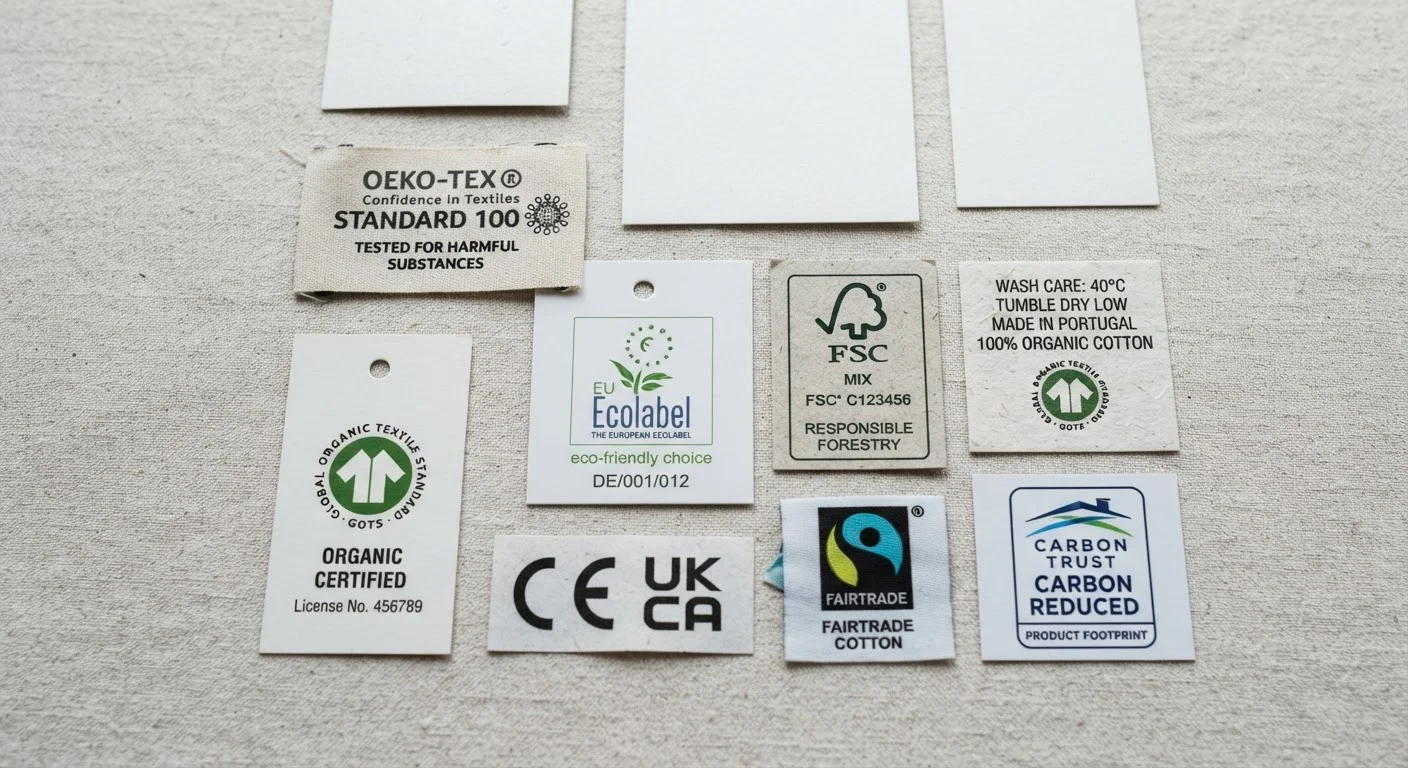
Why the Issuing Body Is Everything
A certification is only as credible as the organization behind it. When evaluating any label, the first question is: who issued this, and what is their relationship to the manufacturer?
Truly independent certifiers have no financial stake in whether a product passes. They derive revenue from the testing and certification process itself - not from product sales. Organizations like UL (Underwriters Laboratories), NSF International, and the OEKO-TEX Association operate under this model. By contrast, industry-funded bodies or in-house 'certification' programs may have structural conflicts of interest that weaken their credibility.
The second question is how compliance is verified. A rigorous program requires periodic retesting, factory inspections, or both - not just a one-time application. Certifications that require ongoing audits are meaningfully different from those granted after a single document review. Understanding this distinction is the foundation of first-party vs. third-party verification in consumer products.
Government-Backed vs. Voluntary Programs
Some familiar labels - like ENERGY STAR or FTC-required fiber content labels - are backed by U.S. federal agencies. Others, like OEKO-TEX or NSF, are voluntary programs run by independent nonprofit organizations. Both can be credible, but they operate under different authorities. Understanding which type of program you're looking at helps calibrate how much weight to give it.
Certifications Worth Recognizing
Not all product categories have equally strong certification ecosystems, but several marks have earned credibility through transparent standards and independent enforcement:
- UL (Underwriters Laboratories): Primarily covers electrical safety for appliances and electronics. UL listing means a product was tested against established safety standards and is subject to ongoing market surveillance.
- ASTM International standards: Widely used in children's products, protective gear, and construction materials. ASTM standards are developed by technical committees and referenced in U.S. law in several categories.
- OEKO-TEX STANDARD 100: Tests textiles for harmful substances at every production stage. Annual re-certification is required. Particularly relevant for apparel, bedding, and baby products.
- ENERGY STAR: A U.S. EPA program certifying that appliances and electronics meet energy efficiency thresholds. Products must meet EPA specifications verified through third-party testing.
- NSF International: Covers water filtration, food equipment, and dietary supplements. NSF certification involves product testing, facility inspections, and annual reassessment.
These programs share common traits: published standards, independent testing, and mechanisms for revoking certification if compliance lapses. That accountability structure is what separates them from marketing language.
2,000+
Substances tested under OEKO-TEX STANDARD 100
According to OEKO-TEX, the standard tests for over 2,000 substances, including pesticides, heavy metals, and formaldehyde, across all components of a finished textile product.
100+
Countries with ENERGY STAR program presence
The U.S. EPA's ENERGY STAR program, originally launched in 1992, has been adopted or adapted in more than 40 countries, with the U.S. program covering thousands of certified product models.
3rd party
Testing requirement for ENERGY STAR certification
Since 2010, EPA has required that ENERGY STAR certified products be verified through independent, EPA-recognized third-party testing laboratories before they can display the mark.
Labels That Carry Less Weight
The certification landscape also includes marks that are vague, self-issued, or difficult to verify. Consumers regularly encounter terms like 'eco-certified,' 'clinically tested,' 'dermatologist approved,' or 'lab-tested' on packaging. These phrases are generally not protected trademarks and can be applied without independent oversight.
'Clinically tested' means a study was conducted - but says nothing about who conducted it, how large it was, whether it was published, or whether the results were positive. 'Dermatologist approved' may simply mean a company paid a dermatologist to review its formula. These claims are worth noting, but they should not be weighted the same way as a verifiable certification from an accredited body.
The broader issue is what's sometimes called greenwashing - using certification-adjacent language to imply credibility without earning it. Spotting greenwashing in product marketing requires recognizing which terms are regulated and which are not.
How to Evaluate a Certification You Don't Recognize
When you encounter an unfamiliar mark, a short verification process usually answers the key questions:
- Search the issuing organization directly. Look for a clear mission, published standards, and a public product registry or license database. If the certifier's website is thin or lacks this information, treat the mark skeptically.
- Check whether the specific product is listed. Many legitimate certifiers maintain searchable databases. If a product claims a UL listing or OEKO-TEX certification, you can confirm it by searching those organizations' public records.
- Understand what the standard actually covers. A certification for 'chemical safety' doesn't necessarily address durability or construction quality. Match the certification scope to the quality attribute you actually care about.
This kind of layered evaluation - where certifications are one input alongside materials, construction, and track record - is covered in more depth in a practical framework for assessing quality across product categories. Certifications are meaningful evidence, but they work best alongside other signals, not as a shortcut that replaces them.
Start with the Certifier's Own Database
Most accredited certifying bodies maintain a searchable public registry of certified products and manufacturers. Before trusting a label on packaging, take two minutes to look up the product directly on the certifier's website. An active, current listing is far stronger evidence than the label itself.
Frequently Asked Questions
UL (Underwriters Laboratories) is an independent safety science organization that tests products against established safety standards. A UL listing means the product was evaluated and met those standards at the time of testing. UL also conducts ongoing market surveillance to confirm continued compliance.
OEKO-TEX STANDARD 100 is a widely respected textile certification that tests for harmful substances across the entire product, including threads and dyes. It is issued by the OEKO-TEX Association and requires annual re-certification. It is generally considered one of the more rigorous and transparent textile certifications available.
Legitimate certification marks are trademarked and controlled by the issuing body - a company cannot legally use them without authorization. However, vague terms like 'eco-certified' or 'lab-tested' are not protected and can be used by anyone without independent verification.
Visit the certifying organization's official website and use their public product database or license lookup tool. Most credible certifying bodies maintain searchable registries where you can confirm whether a specific product or manufacturer holds a current, valid certification.
Not exactly. Some labels, like the ENERGY STAR program (administered by the U.S. EPA) or FTC-mandated textile fiber content labels, are government-backed requirements. Third-party certifications are typically voluntary programs run by independent organizations. Both can be meaningful, but their authority and scope differ.
No. A certification confirms a product met specific standards under specific test conditions - it does not guarantee long-term durability, real-world performance, or that every unit off a production line is identical. Treat certifications as one credible input among several when evaluating quality.
The content on this site is for informational purposes only and is not a substitute for professional advice. Always consult a qualified professional for guidance specific to your situation.