

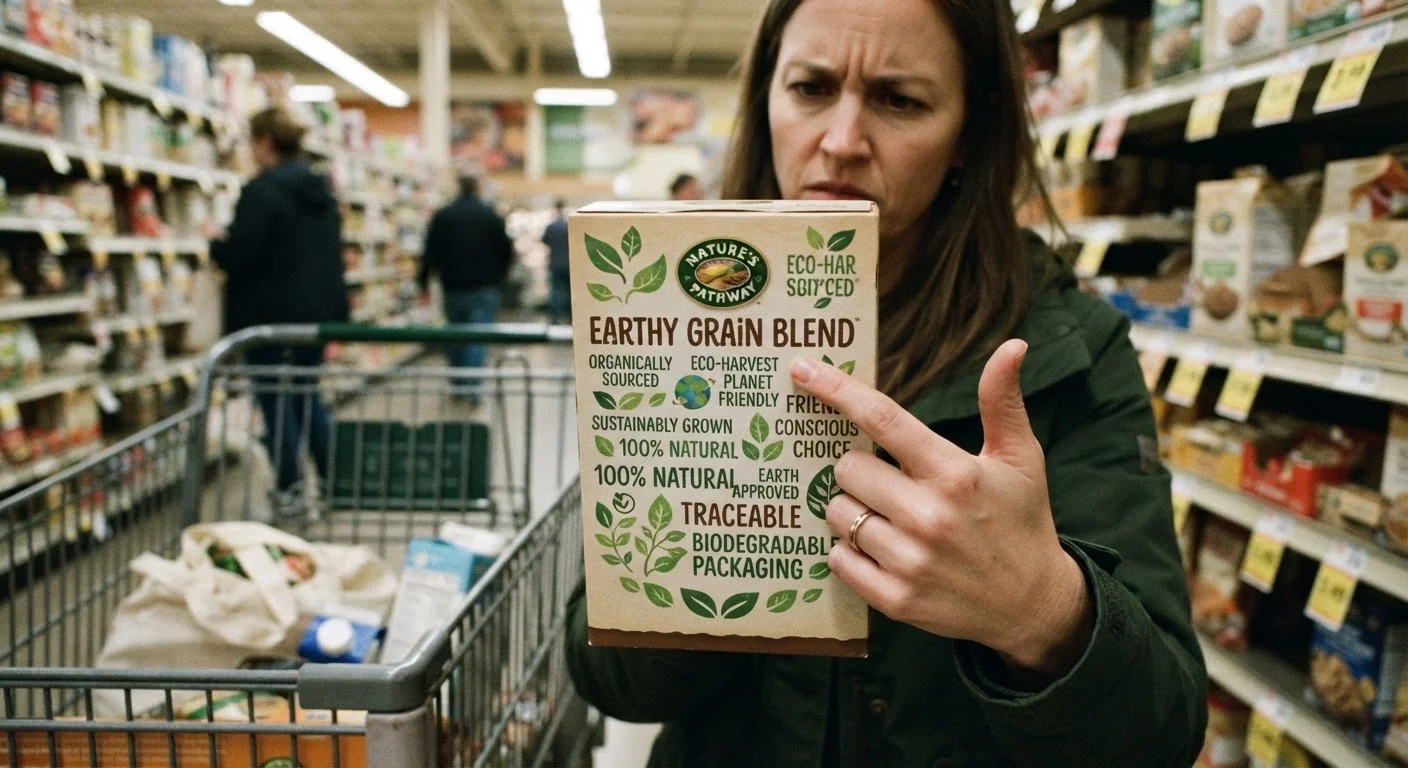
Why Greenwashing Is So Easy to Miss
Environmental claims have become standard packaging copy. Phrases like "sustainably sourced," "carbon-conscious," and "planet-friendly" appear on everything from laundry detergent to electronics. Because shoppers generally want to make responsible choices, these labels create a fast, favorable impression - which is precisely why marketers lean on them so heavily.
The problem isn't that environmental claims are always false. It's that most lack any external accountability. A brand can print "eco-friendly" on a label without meeting a single verified standard, because no uniform federal rule prohibits vague sustainability language for most product categories. The Federal Trade Commission's Green Guides offer some direction, but they are guidelines rather than enforceable product-certification requirements.
Understanding where the gaps are - and which mistakes consumers most often make - is the foundation of smarter shopping. For a broader look at how self-reported claims differ from verified ones, see first-party claims vs. third-party verification.
Accepting vague terms like 'natural' or 'green' as meaningful without looking for a definition.
Why it happens: These words feel intuitive and positive, so shoppers assume they carry regulated meaning - but for most product categories they do not.
Treating a brand-created eco-badge as equivalent to a third-party certification.
Why it happens: Badges and seals look authoritative by design. Without knowing which organizations issue real certifications, it's hard to spot a self-awarded logo.
Assuming one green attribute means the whole product is sustainable.
Why it happens: Marketers highlight a single positive feature - recycled packaging, for instance - while other aspects of the product's footprint remain unaddressed.
Ignoring a company's broader environmental record and focusing only on product-level claims.
Why it happens: Packaging is immediately visible; a company's actual environmental performance takes more effort to find.
Overlooking percentage and condition qualifiers in recycled or biodegradable claims.
Why it happens: Shoppers typically read a claim holistically - 'contains recycled materials' sounds comprehensive but may mean as little as 5% recycled content.
How to Evaluate Claims More Rigorously
Once you can identify where greenwashing hides, the next step is building a quick evaluation habit. Start at the certification - not the headline claim. Logos from independent certification bodies such as ENERGY STAR, USDA Organic, OEKO-TEX, or FSC involve documented standards and third-party auditing. A brand-created badge that looks similar but has no verifiable issuing body is a red flag. Our guide to what product certifications actually mean breaks down which seals carry real weight.
42%
Online green claims found misleading or unsubstantiated
A 2021 European Commission sweep of green claims found that 42% of them were exaggerated, false, or deceptive, based on a review of more than 344 product websites.
1 in 3
Environmental claims lacking supporting evidence
The same European Commission review found roughly one in three green claims provided no supporting evidence of any kind on the product or its website.
Next, look past the front-of-pack. Ingredient lists, material disclosures, and supply chain transparency reports - when a company publishes them - give a far more accurate picture than marketing copy. If a brand cannot point you to any third-party data or audited sustainability report, treat its green claims with proportional skepticism. Environmental claims are only as credible as the evidence behind them, so demanding that evidence is always a reasonable ask.
Finally, consider the product category itself. A product described as "recycled" may use a small percentage of post-consumer content while the rest is virgin material. Percentage disclosure matters. Similarly, "biodegradable" is only meaningful if the product will realistically end up in conditions where biodegradation can occur - industrial composting facilities, for example, are not universally accessible.
Watch for 'Carbon Neutral' Without Context
'Carbon neutral' claims can involve offset purchases rather than actual emissions reductions, and offset quality varies widely. If a product or brand makes this claim, look for details on how the neutrality was calculated, which standard was used, and whether the offsets are independently verified. A bare 'carbon neutral' label with no methodology disclosed is rarely the whole story.
For a parallel skill - reading past selective data on product spec sheets - see reading between the lines of a product specification sheet. Both habits reinforce the same core principle: marketing copy is a starting point, not a conclusion.
The content on this site is for informational purposes only and is not a substitute for professional advice. Always consult a qualified professional for guidance specific to your situation.