

Why Air Leaks Matter More Than Most Homeowners Realize
Air leaks are small, easy to overlook, and collectively responsible for a significant portion of energy loss in a typical home. The U.S. Department of Energy has long noted that sealing air leaks - combined with adequate insulation - is one of the most impactful things homeowners can do to improve home efficiency. Drafty rooms, uneven temperatures between floors, and heating or cooling systems that seem to run constantly are all common symptoms.
The good news is that most air-sealing work is well within DIY reach. The key is understanding which product to use where, because caulk, weatherstripping, and spray foam each serve distinct purposes. Mismatching the method to the gap is the most common mistake, and it usually means the seal fails prematurely.
For a broader look at how air sealing fits into seasonal home care, see our room-by-room maintenance checklist. And if you're also addressing insulation in your attic, our attic insulation guide covers how the two strategies work together.
What you will need
Understanding Your Three Main Sealing Options
Caulk is a flexible sealant applied from a tube or cartridge. It's ideal for stationary gaps - meaning places that don't move or flex - such as the joint between a window frame and exterior siding, or where a pipe enters a wall. Silicone caulk holds up well in wet areas like bathrooms; latex paintable caulk suits interior trim work. Most caulk remains flexible once cured and bonds well to wood, masonry, and drywall.
Weatherstripping is designed specifically for moving parts: door edges, operable windows, and attic hatches. Because these surfaces compress and release repeatedly, rigid caulk would crack within weeks. Foam tape, V-strip, and door sweeps are all forms of weatherstripping suited to different pressure levels and gap sizes.
Spray foam - either low-expansion or high-expansion - fills irregular, hard-to-reach gaps around pipes, wiring, and structural framing. It expands to conform to odd shapes, making it well suited for basement rim joists or the gap where a dryer vent exits the wall. Low-expansion foam is preferable around window and door frames because high-expansion foam can actually bow the framing if overapplied.
Caulk gun and cartridge caulk
Used to apply bead sealant along stationary joints such as window frames, trim edges, and pipe penetrations.
Weatherstripping (foam tape, V-strip, or door sweep)
Seals moving gaps around door edges, operable windows, and attic access hatches.
Low-expansion spray foam can
Fills larger or irregular gaps around pipes, wires, and rim joists where caulk won't reach or conform.
Utility knife or putty knife
Removes old, failed caulk or weatherstripping before new material is applied.
Incense stick or thin strip of tissue
Helps locate air movement by revealing subtle drafts near suspected leak points.
Painter's tape
Masks adjacent surfaces for a clean caulk line, especially on visible interior trim.
Finding Air Leaks Before You Seal Them
You can't seal what you can't find. On a cold, windy day, walk slowly along walls near windows, door frames, electrical outlets, and baseboards with a damp hand or a lit incense stick held a few inches from the surface. Movement in the smoke or a distinct chill indicates airflow. Pay particular attention to:
- The perimeter of window and door frames, both interior and exterior
- Electrical outlets and switch plates on exterior walls
- Where pipes, wires, or ducts pass through walls, floors, or ceilings
- The attic hatch or pull-down stair frame
- Basement rim joists - the framing that sits on top of your foundation wall
If your home has persistent comfort problems despite a well-maintained HVAC system, leaky ductwork may also be a factor. Our article on ductwork and HVAC efficiency explains how duct leakage compounds air sealing issues.
How to Seal Each Type of Gap
With your gaps identified, match each one to the right product and work systematically.
Prepare the surface
Remove any old, cracked, or peeling caulk or weatherstripping using a utility knife or putty knife. Clean the area with a dry cloth to remove dust and debris. If the surface is damp, allow it to dry completely - most sealants won't bond properly to wet surfaces.
Apply caulk to stationary gaps
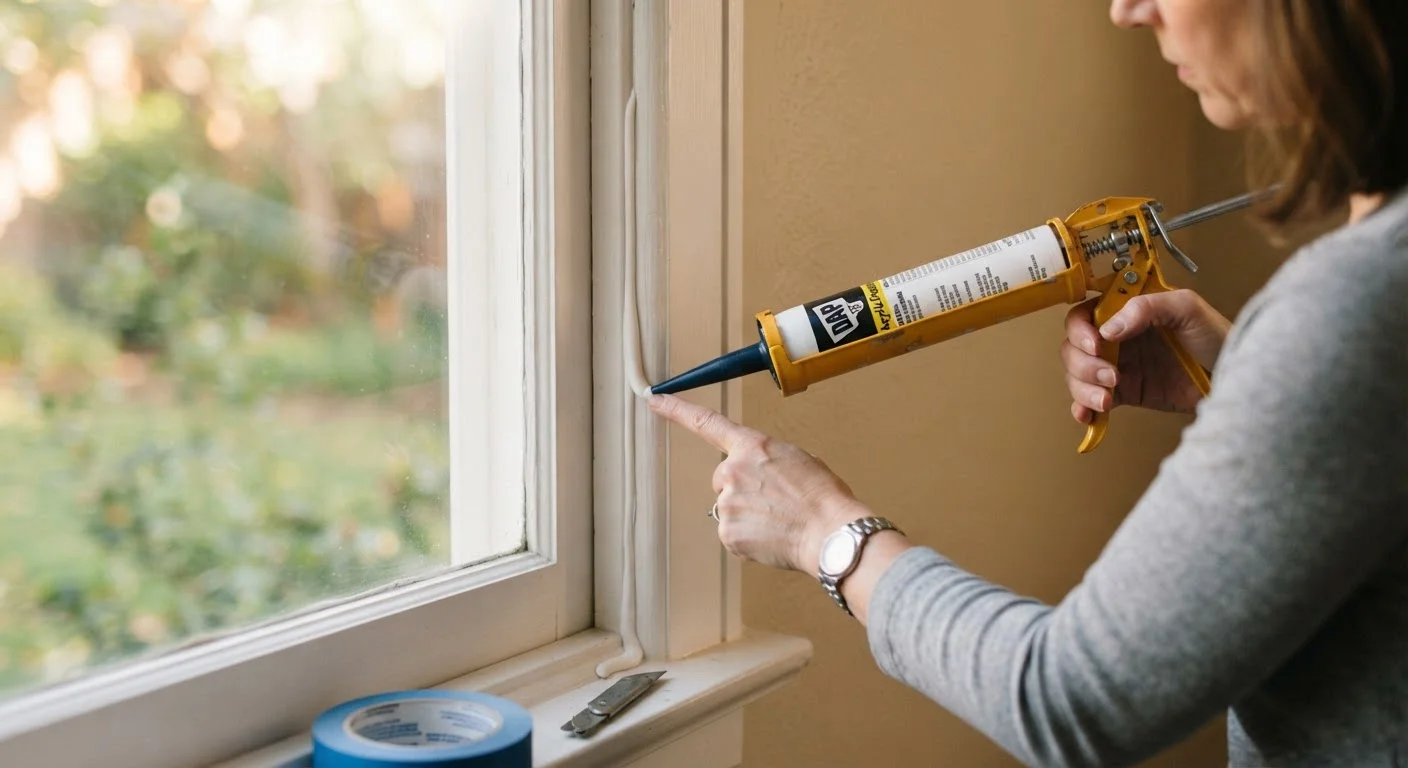
Load your caulk cartridge into the gun and cut the tip at a 45-degree angle - start with a small opening you can widen if needed. Hold the gun at a consistent angle and move at a steady pace to produce an even bead. Immediately smooth the bead with a dampened finger or a caulk tool. Apply painter's tape beforehand for cleaner lines on visible interior work.
Install weatherstripping on movable joints
Measure the door or window edge before cutting weatherstripping to length. For a standard entry door, apply foam compression tape or V-strip along the stop molding (the narrow strip the door closes against). For the bottom of the door, a door sweep attached to the door's interior face is typically the most effective solution. Press firmly to ensure adhesion along the full length.
Use spray foam for large or irregular gaps
Shake the can well before use. Insert the straw applicator into the gap and apply foam in short bursts - it will expand significantly after application. Use low-expansion foam around window and door frames. For basement rim joists and pipe penetrations, standard expanding foam is appropriate. Wear gloves; cured foam is extremely difficult to remove from skin.
Seal electrical outlets on exterior walls
Turn off power to the outlet at your breaker panel and verify it's off with a non-contact voltage tester before removing the cover plate. Place a pre-cut foam outlet gasket (available at hardware stores) behind the cover plate, then reinstall. For gaps where wiring enters from the wall cavity, a small amount of low-expansion spray foam applied around the wire - not the wires themselves - will block airflow.
Once complete, re-check your work on the next cold or windy day using the same hand or smoke method. A well-sealed home will feel noticeably more uniform in temperature. If you've addressed air sealing and still notice significant drafts near your central air system, our guide on central air conditioning maintenance may help identify other contributing factors.
Spray Foam Near Electrical and Gas Lines
Expanding spray foam should never be applied directly to electrical wiring or in contact with gas lines, flues, or high-heat surfaces such as recessed light housings in the ceiling below an attic. Many recessed lights are not rated for insulation or foam contact. Check the fixture's rating label before sealing around it, and use fire-rated caulk or a proper airtight cover where required.
The content on this site is for informational purposes only and is not a substitute for professional advice. Always consult a qualified professional for guidance specific to your situation.