

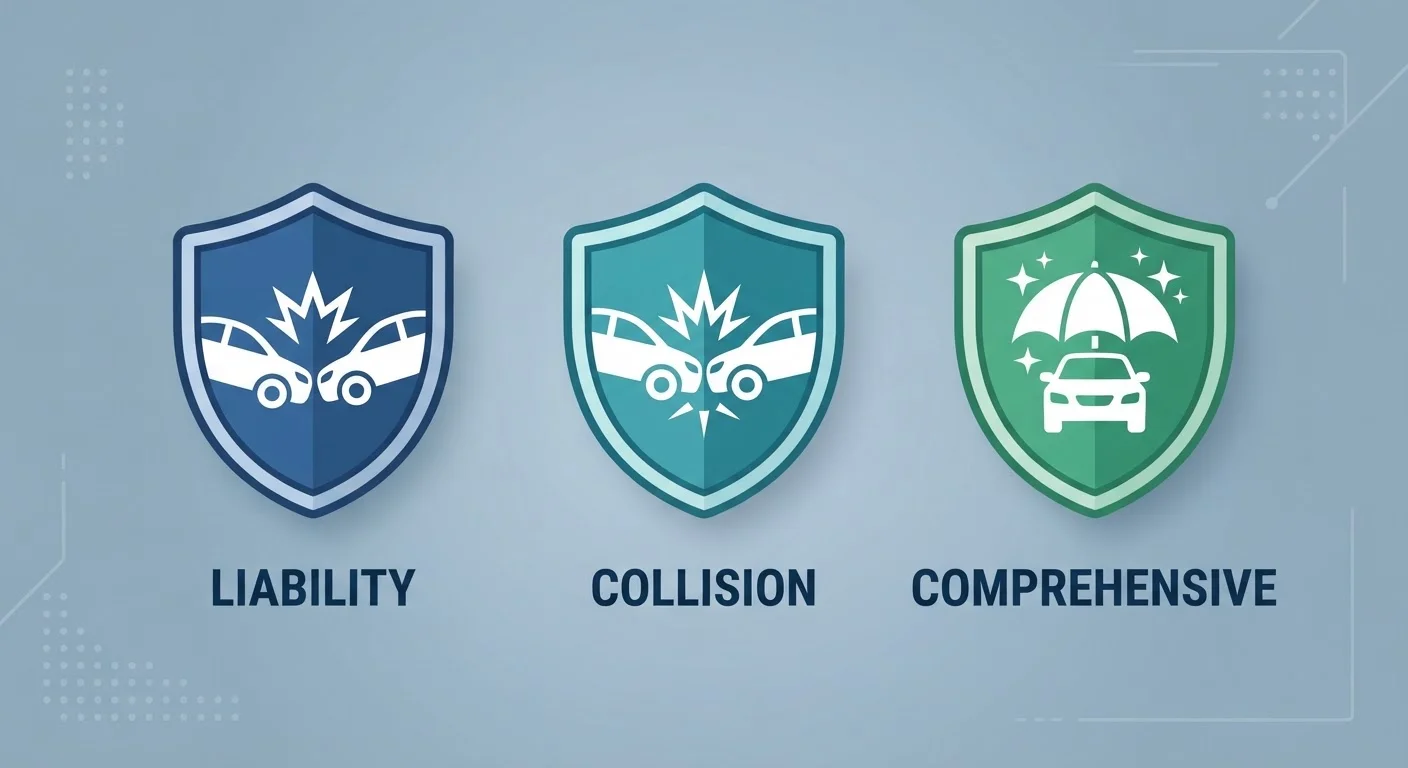
Liability Coverage: Protecting Others from Your Mistakes
Liability coverage is what most people picture when they think of car insurance - and for good reason. It's the coverage the law actually requires. When you cause an accident, liability insurance pays for the injuries and property damage suffered by the other party.
A standard liability policy has two components:
- Bodily injury liability: Covers medical expenses, lost wages, and legal costs if you injure someone else in an accident you caused.
- Property damage liability: Pays to repair or replace another person's vehicle or property you damaged.
Liability limits are typically written as three numbers - for example, 25/50/20 - representing per-person injury limits, per-accident injury limits, and property damage limits, all in thousands of dollars. State minimums are often low enough that a serious accident can exhaust them quickly, leaving you personally responsible for the remainder.
One critical point: liability coverage does nothing for your own vehicle or your own medical bills. It is entirely outward-facing. For your own protection, you need the other coverage types. See our plain-language auto insurance overview for how all the pieces fit together.
Collision Coverage: Repairs After an Accident, Regardless of Fault
Collision coverage pays to repair or replace your vehicle after it's damaged in a collision - whether that means hitting another car, backing into a pole, or rolling your vehicle. Importantly, fault doesn't determine whether collision coverage kicks in. If your car is damaged in a crash, this is the coverage that addresses it.
A key feature of collision coverage is the deductible - the amount you pay out of pocket before your insurer covers the rest. Common deductibles range from $250 to $1,500. Choosing a higher deductible typically lowers your premium, but means more out-of-pocket cost when you file a claim.
If the repair cost exceeds the vehicle's actual cash value (ACV), insurers will typically declare the car a total loss and pay you the ACV instead of repair costs. This is worth understanding if you own a financed vehicle, since the ACV payout may be less than what you still owe on the loan. Our article on gap insurance covers that specific scenario in detail.
Collision Claims and At-Fault Accidents
Filing a collision claim after an at-fault accident may affect your premium at renewal. This doesn't mean you shouldn't file - that's what the coverage is for - but it's worth understanding how your insurer handles claims history. Review your policy documents or speak with a licensed agent about how claims are rated before making a decision.
Comprehensive Coverage: Protection Beyond the Road
Comprehensive coverage handles damage to your vehicle from causes that have nothing to do with a collision. Common examples include theft, vandalism, fire, falling objects, flooding, hail, and hitting an animal. It's sometimes called "other than collision" coverage, which is actually a more accurate description of what it does.
Like collision, comprehensive comes with a deductible you choose when setting up the policy. The same logic applies: a higher deductible means a lower premium but more out-of-pocket exposure per claim.
Lenders and leasing companies typically require both collision and comprehensive coverage when you're financing or leasing a vehicle. They have a financial stake in the car, and these coverages protect that investment. Once a vehicle is paid off, the choice to carry them becomes yours.
For a deeper look at how these two coverages differ in practice, our collision vs. comprehensive comparison breaks down real scenarios where each applies.
~13%
Uninsured U.S. drivers on the road
According to the Insurance Research Council, an estimated 1 in 8 drivers in the U.S. operates without insurance, underscoring why understanding your own coverage matters.
$500
Most common collision deductible chosen
Industry data consistently shows $500 as the most frequently selected collision deductible, balancing premium savings against out-of-pocket risk.
49 states
States requiring liability insurance
New Hampshire is the only state that does not mandate liability insurance outright, though drivers there must still demonstrate financial responsibility if involved in an accident.
How These Three Coverages Work Together
Think of liability, collision, and comprehensive as covering three distinct directions of risk:
- Liability: Damage and injury you cause to others.
- Collision: Damage to your own vehicle from a crash.
- Comprehensive: Damage to your own vehicle from everything else.
Together, they form what's commonly called "full coverage" - though that phrase isn't an official insurance term. Our article on full coverage vs. minimum coverage explains what that phrase actually means in practice.
There are also coverages these three don't address at all - such as your own medical bills after a crash or damage caused by an uninsured driver. For those gaps, separate coverages exist. See our overview of Personal Injury Protection and Medical Payments coverage and uninsured motorist coverage to understand what else may belong in a complete policy.
Frequently Asked Questions
In nearly all U.S. states, yes. Liability insurance is the legal minimum required to drive. The required coverage amounts vary by state, so check your state's specific minimums. Driving without it can result in fines, license suspension, or worse financial exposure after a crash.
It depends on the vehicle's value and your financial situation. If your car's market value is low, the cost of collision coverage may outweigh potential payouts. A common rule of thumb is to weigh the annual premium against what the insurer would actually pay if the vehicle were totaled, but this is a personal financial decision.
Yes. Comprehensive coverage is specifically designed for non-collision events, including weather-related damage such as flooding, hail, and wind. Always review your actual policy documents to understand any exclusions or sub-limits that may apply.
Generally yes, as both are optional coverages (unless required by a lender). Some drivers choose comprehensive alone - for example, if they own an older car outright but want protection against theft or weather damage. Collision without comprehensive is also possible.
Liability coverage does not pay for your own injuries or damage to your own vehicle. It only covers losses you cause to other people and their property. For your own car, you'd need collision or comprehensive coverage depending on the type of loss.
The content on this site is for informational purposes only and is not a substitute for professional advice. Always consult a qualified professional for guidance specific to your situation.