

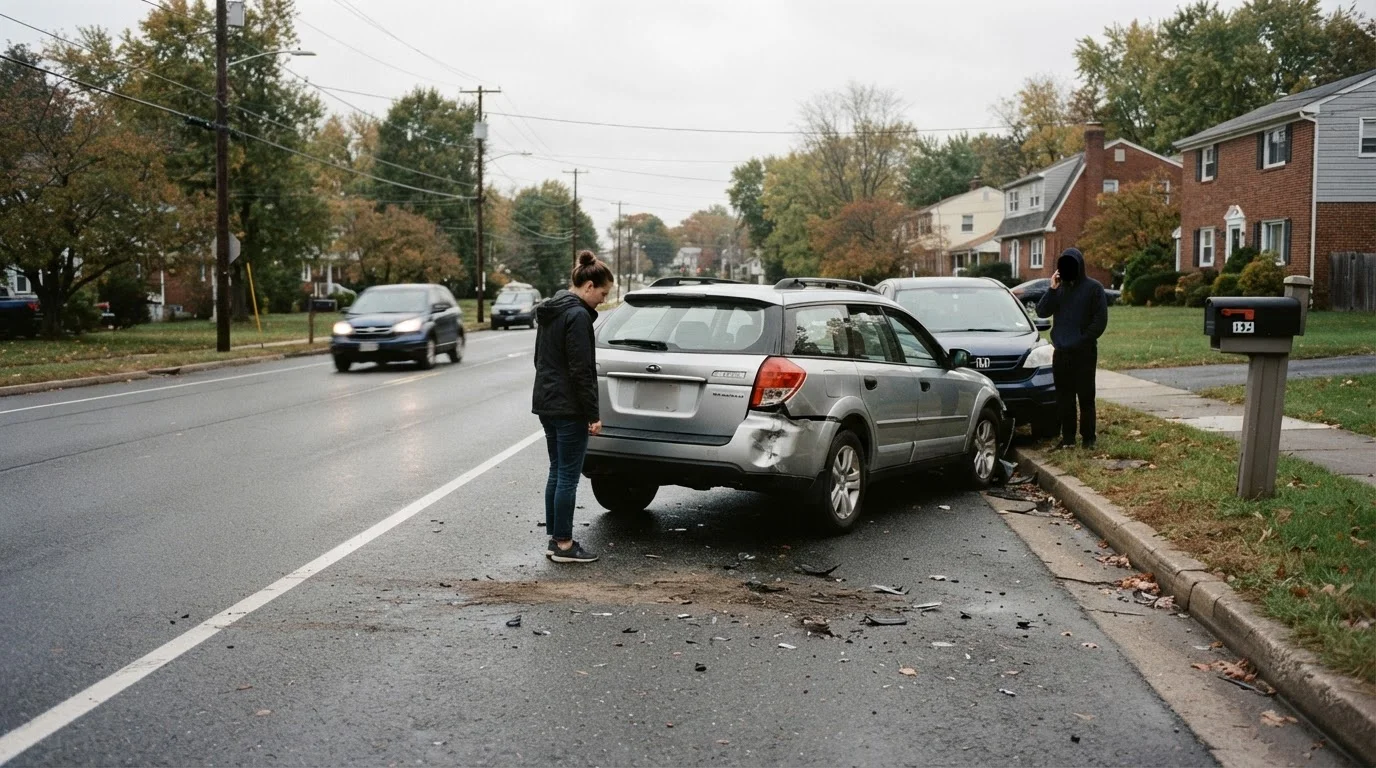
The Problem It's Designed to Solve
Every state except New Hampshire requires drivers to carry liability insurance - coverage that pays for other people's injuries and property damage when you cause a crash. The system assumes both parties have it. The reality is messier.
According to the Insurance Research Council, approximately one in eight drivers on U.S. roads carries no auto insurance at all. In some states, the uninsured rate exceeds 20%. When an uninsured driver causes a crash, the injured party has few good options: sue the at-fault driver personally (often unproductive if they have limited assets), absorb the costs, or turn to their own policy.
That last option is where uninsured motorist coverage enters the picture. It was created specifically to fill the gap left by at-fault drivers who simply don't have coverage to pay for the damage they caused. For a deeper look at how the broader insurance system fits together, see Auto Insurance Decoded.
1 in 8
U.S. drivers with no auto insurance
According to the Insurance Research Council, approximately 12.6% of motorists nationwide are uninsured.
~20%+
Uninsured driver rate in some U.S. states
States like Mississippi and Michigan have historically reported uninsured motorist rates exceeding 20%, per IRC data.
~50%
States requiring UM/UIM coverage
Roughly half of U.S. states mandate uninsured or underinsured motorist coverage as part of a standard auto policy.
What UM and UIM Coverage Actually Pay For
Uninsured motorist bodily injury (UMBI) coverage pays for medical expenses, lost wages, and pain and suffering for you and your passengers when an uninsured driver is at fault. It doesn't cover your car - that's a separate matter.
Underinsured motorist (UIM) coverage handles a closely related scenario: the other driver has insurance, but their liability limit is lower than your total losses. For example, if you sustain $60,000 in medical expenses and the at-fault driver carries only $25,000 in liability coverage, your UIM coverage can bridge that $35,000 shortfall - up to your own policy's UIM limit.
Some policies also include uninsured motorist property damage (UMPD), which covers repairs to your vehicle after an uninsured-driver crash. This is separate from collision coverage and varies significantly by state. To understand how collision and other core coverages interact with UM, see the core coverage types explained.
Hit-and-Run Accidents and UM Coverage
One of the less obvious applications of UM coverage is hit-and-run accidents. If a driver strikes your vehicle and flees without stopping, there's no insurance information to exchange - and no at-fault party you can realistically pursue. Most states treat an unidentified hit-and-run driver as an "uninsured motorist" for claims purposes, which means your UM coverage can respond.
There's a catch worth knowing: some states require physical contact between your vehicle and the hit-and-run vehicle before a UM claim is valid. In those states, a phantom driver who runs you off the road without making contact wouldn't trigger UM coverage. Verify your state's rule and your policy's specific language before assuming coverage applies.
Review Your Policy Before You Need It
Don't wait for an accident to find out whether you have UM or UIM coverage - or what your limits are. Pull out your declarations page (the summary sheet at the front of your policy) and look for lines labeled UM, UIM, UMBI, or UMPD. If you're not sure how to read it, your insurer's customer service line or a licensed agent can walk you through it.
State Rules and Coverage Limits
Roughly half of U.S. states require drivers to carry UM or UIM coverage; the other half make it optional but still require insurers to offer it. In states where it's optional, you typically must reject it in writing to decline it. That paper trail matters - some drivers later discover they waived coverage without fully understanding what they gave up.
UM/UIM limits mirror the structure of liability limits: expressed as a per-person amount and a per-accident maximum. A common choice is to match your UM/UIM limits to your liability limits, since you're essentially protecting yourself against the same types of losses you're protecting others from. That said, decisions about specific coverage amounts should be made with a licensed insurance professional who can account for your circumstances.
State-minimum liability limits are often quite low - far below the cost of a serious injury. Carrying only minimum liability while also waiving UM coverage leaves you doubly exposed. For more on that gap, see where drivers get the coverage calculation wrong.
This article provides general information about auto insurance concepts and is not personalized insurance or legal advice. Coverage terms, availability, and requirements vary by state and insurer. Consult a licensed insurance agent or your state's Department of Insurance for guidance specific to your situation.
Frequently Asked Questions
No. Roughly half of U.S. states mandate UM or UIM coverage; the rest make it optional. Even in states where it's optional, insurers are generally required to offer it to you in writing before you can waive it. Check your state's Department of Insurance website for the specific rules.
In most states, yes - uninsured motorist coverage extends to hit-and-run situations where the at-fault driver cannot be identified. Some states require physical contact between vehicles before a hit-and-run UM claim is valid, so check your policy's exact language.
UM (uninsured motorist) applies when the at-fault driver has zero liability insurance. UIM (underinsured motorist) applies when the at-fault driver has some insurance, but their policy limit isn't high enough to cover your total losses. Many policies bundle both together.
Your health insurance may cover medical treatment, but it generally won't compensate you for lost wages, pain and suffering, or vehicle repairs. UM coverage is designed to address the full scope of losses a liability claim would otherwise cover.
A general principle is to match your UM/UIM limits to your existing liability limits, since you're protecting yourself against the same scale of losses. Consult a licensed insurance agent to assess what makes sense for your financial situation - this article is general information, not personalized advice.
It depends on whether your policy includes uninsured motorist property damage (UMPD) coverage, which is separate from UM bodily injury coverage. Some states offer or require UMPD; others don't. Collision coverage on your own policy is another route for vehicle repair costs regardless of fault.
The content on this site is for informational purposes only and is not a substitute for professional advice. Always consult a qualified professional for guidance specific to your situation.