

Why Prices Follow Seasonal Rhythms
Retail pricing isn't arbitrary. Prices on many common goods rise and fall according to patterns tied to demand cycles, inventory management, model-year transitions, and retailer promotional calendars. Understanding these rhythms won't guarantee savings, but it helps you time purchases more deliberately and avoid paying a premium simply because a product is in peak demand.
The core mechanism is supply and demand. When consumer demand is high - think air conditioners in July or toys in November - retailers have less incentive to discount. When demand drops, excess inventory creates pressure to clear stock, and prices tend to follow. Manufacturers compound this by releasing new models on predictable schedules, which pushes older versions down in price.
Recognizing these patterns requires some research before you buy. Tracking a product's price history over several weeks (many browser extensions and shopping tools log this data) gives you a baseline. Without that context, it's easy to mistake a normal retail price for a meaningful discount. See our guide to sorting real savings from deal illusions for a deeper look at this distinction.
| Best general window for electronics | January-February (post-holiday clearance) |
| Appliance discount windows | September-October and major holiday weekends |
| End-of-season apparel markdowns | Winter: Jan-Feb; Summer: Aug-Sep |
| Outdoor/lawn equipment price dip | Late summer through fall |
| Key research tool | Price history tracking via browser extensions |
Common Category Patterns and What Drives Them
Different product categories follow different seasonal clocks. Here are some of the most consistent patterns, along with the underlying logic:
- Consumer electronics: Prices on televisions tend to soften in late January and February after the holiday surge clears inventory. New model announcements - often tied to industry trade events early in the calendar year - can push prior-generation prices down significantly.
- Appliances: Major appliances frequently see markdowns in September and October as retailers make room for updated model lines. Holiday weekend sales events (Memorial Day, Labor Day) are also traditional discount windows for this category.
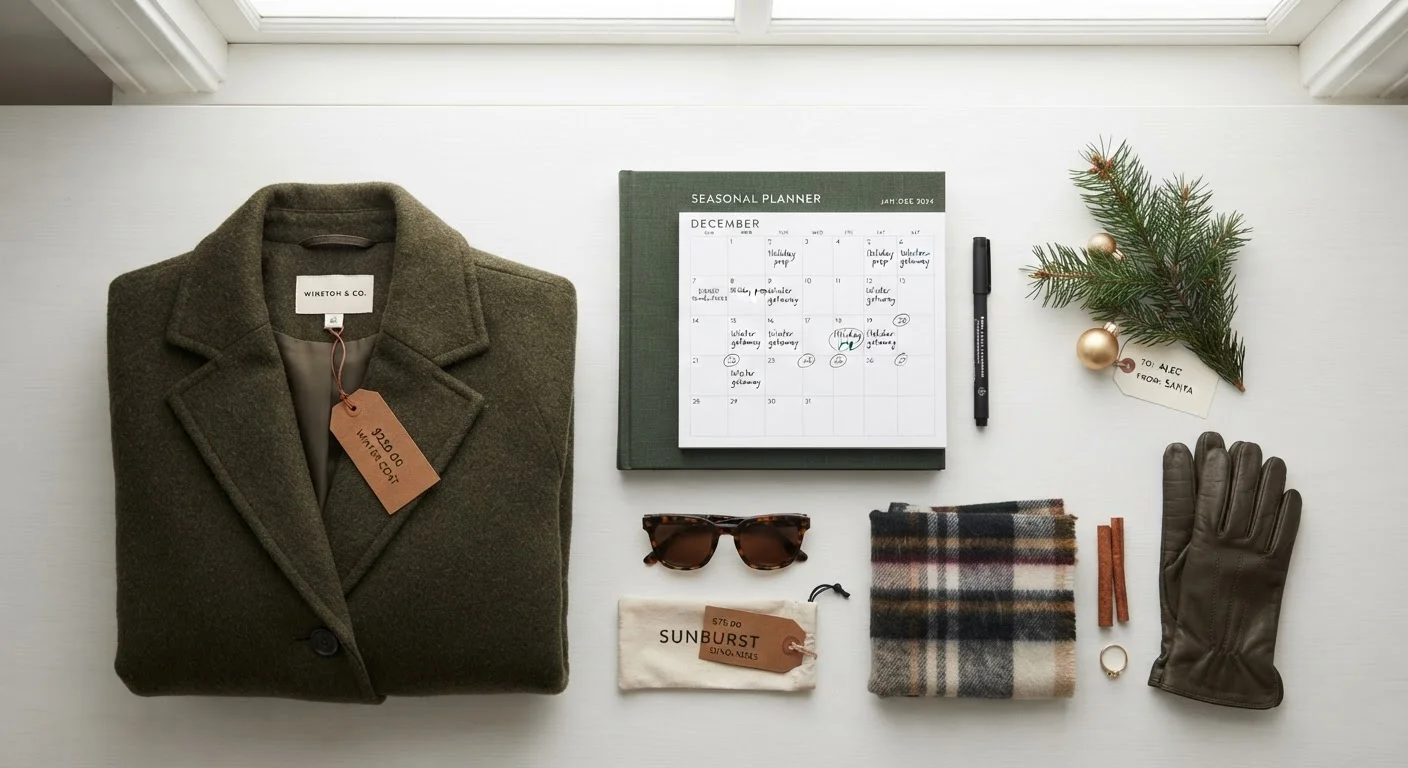
- Apparel and seasonal clothing: End-of-season clearance is the most reliable pattern in fashion retail. Winter clothing typically discounts in January and February; summer apparel in August and September. The tradeoff is that selection narrows as the season closes.
- Outdoor and lawn equipment: Prices on lawn mowers, grills, and patio furniture tend to drop in late summer and fall as demand winds down. Buying a grill in September rather than May often means paying less for the same item.
- Travel and lodging: Airfare and hotel rates closely track demand, making shoulder-season travel a practical way to reduce costs. Our article on peak vs. shoulder season travel explores what actually changes beyond price.
Holiday Sale Events Aren't Always the Low Point
Major promotional events like Black Friday, Cyber Monday, and back-to-school sales are heavily marketed as prime buying opportunities. In practice, prices on many items reach their annual low at other times of year - particularly after the holiday season ends and inventory clears. Always compare a sale price against the product's price history rather than treating the event itself as validation.
It's worth noting that promotional events like Black Friday or back-to-school sales don't always represent the lowest price of the year for a given item. Retailers use these events strategically. Understanding retail pricing tactics and what they signal can help you evaluate whether a promoted price is genuinely favorable.
Mistakes That Undercut Timing Strategies
Knowing when prices tend to drop is only useful if you avoid common traps that offset those advantages.
Buying under urgency: Seasonal sales are often framed with countdown timers and limited-quantity messaging. This creates pressure to act before you've compared prices or confirmed you actually need the item. Understanding impulse-buying triggers can help you distinguish genuine opportunity from manufactured urgency.
Ignoring total cost: A discounted price isn't automatically a good deal if it comes with higher shipping costs, inferior warranty terms, or a model that's been discontinued without support.
Waiting too long: In categories with limited inventory - like specific apparel sizes or certain appliance configurations - waiting for the deepest discount can mean the item sells out entirely. There's a practical tradeoff between timing and availability.
Assuming all sales align with the same calendar: Seasonal patterns are generalizations. Individual retailers operate on their own promotional schedules, and regional factors (a local store closing, regional demand spikes) can shift pricing outside of typical windows. Price tracking over time remains the most reliable data you can collect.
Seasonal pricing
The practice of adjusting prices in response to predictable shifts in consumer demand throughout the year. Prices typically rise during high-demand periods and fall when demand drops.
Inventory clearance
A retailer's effort to sell off excess stock, often by reducing prices. This commonly occurs when a new model is introduced or when a selling season ends.
Model-year transition
The point at which a manufacturer releases an updated version of a product, causing retailers to discount the outgoing version to move remaining units.
Price history
A record of how a product's retail price has changed over time. Reviewing price history helps consumers distinguish a genuine markdown from a price that was temporarily inflated before a 'sale.'
Shoulder season
In retail and travel contexts, a period between peak demand and off-peak periods where prices and crowds are typically lower, offering practical value without the full limitations of the off-season.
The content on this site is for informational purposes only and is not a substitute for professional advice. Always consult a qualified professional for guidance specific to your situation.