

Understanding What Actually Moves the Needle
Homeowners often assume that putting money into a property automatically means getting more money out of it. The reality is more nuanced. Property value is shaped by a layered combination of factors - some within your control, some entirely outside it. Understanding which is which is foundational to making sound decisions throughout your ownership journey.
Broadly speaking, value drivers fall into two categories: external factors (neighborhood conditions, local economy, school quality, nearby development) and internal factors (maintenance quality, updates, square footage, layout). Neither category works in isolation. A beautifully renovated home in a declining neighborhood may struggle to hold its value, while a modest but well-maintained property in a desirable area can appreciate steadily over years.
For a closer look at how market value is actually determined versus how government assessors see your property, see our piece on assessed value vs. market value. Below, we break down the specific factors that genuinely move - up or down - what your home is worth.
Location and neighborhood trajectory
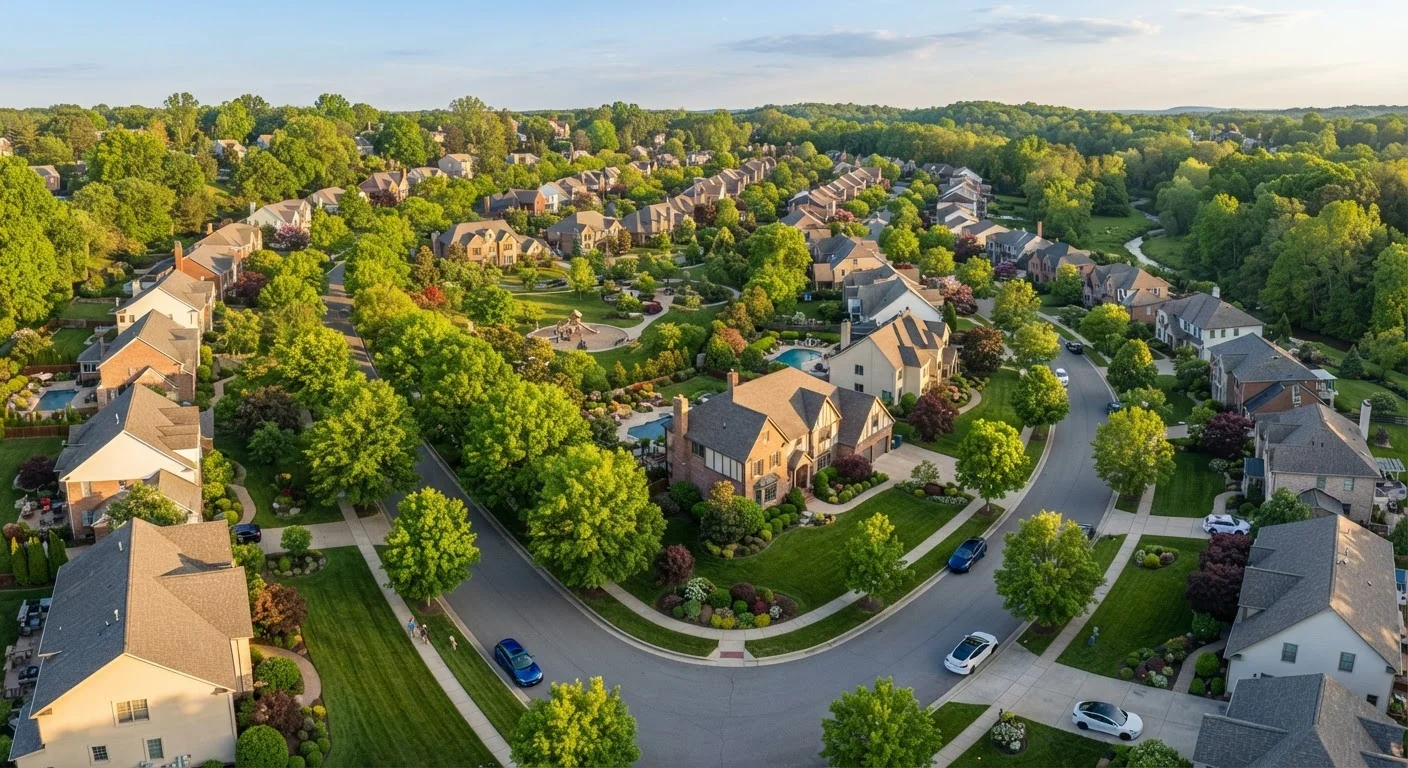
No factor carries more weight in home valuation than location - and more specifically, where that location appears to be heading. Buyers price in not just current conditions but anticipated future desirability. Proximity to quality schools, low crime rates, accessible transit, and well-funded public services all contribute meaningfully to what the market will bear.
Neighborhood trajectory matters as much as its current state. A neighborhood undergoing reinvestment - new businesses, infrastructure improvements, younger demographic influx - can drive values upward even before those changes fully materialize. Conversely, a stable but stagnating area may see flat appreciation for years. Homeowners can't move their house, but they can monitor local development plans, school district performance, and municipal investment patterns to stay informed.
Location isn't just where your home sits - it's where the neighborhood appears to be going.
Deferred maintenance and visible neglect
Few things erode value faster than neglected upkeep. Buyers and their inspectors are trained to spot deferred maintenance - and when they do, they either lower their offers or walk away entirely. A leaking roof, failing HVAC system, rotting wood trim, or cracked foundation will suppress market value well beyond the actual repair cost because they signal broader neglect to buyers.
The compounding nature of deferred maintenance makes it especially costly. Minor issues left unaddressed tend to grow into major structural problems. Our article on why deferred maintenance costs more than homeowners expect goes into depth on how this pattern plays out financially.
Deferred maintenance signals broader neglect - and buyers factor that into every offer they make.
Kitchen and bathroom condition
Kitchens and bathrooms are consistently the rooms buyers scrutinize most closely, and their condition carries disproportionate weight in perceived home value. Dated finishes, dysfunctional layouts, or poor-quality materials in these spaces can make an otherwise solid home feel less valuable than it is.
Importantly, not all kitchen and bath upgrades pay back equally. Mid-range remodels typically recover a higher percentage of their cost at resale than high-end luxury renovations - particularly when luxury finishes exceed the expectations of the surrounding neighborhood's price tier. Cosmetic refreshes (new hardware, paint, updated lighting) often deliver better returns per dollar than full gut renovations. Functionality and cleanliness matter more to most buyers than premium materials.
Functional, updated kitchens and bathrooms consistently outperform other rooms in buyer perception.
Curb appeal and exterior condition
First impressions in real estate are formed before a buyer steps through the front door. The exterior condition of a home - landscaping, paint, driveway, roofline, windows - shapes buyer expectations and emotional response from the moment they arrive. Strong curb appeal can increase perceived value and draw more buyer interest; poor curb appeal can cause buyers to undervalue an otherwise well-maintained interior.
Investments in curb appeal tend to be relatively cost-efficient. Fresh exterior paint, a well-maintained lawn, healthy landscaping, and a clean entryway can meaningfully shift buyer perception without large capital outlay. For ideas on the outdoor side of this equation, our lawn and garden guidance covers practical upkeep strategies.
A buyer's first impression is formed at the curb - before they ever see the inside.
Energy efficiency and mechanical systems
As utility costs and environmental awareness have grown, energy efficiency has become a more tangible value factor. Homes with modern insulation, high-efficiency HVAC systems, updated windows, and - in many markets - solar installations tend to attract buyers who factor ongoing operating costs into their purchase decisions.
Beyond efficiency, the age and condition of core mechanical systems (heating, cooling, electrical, plumbing) significantly influence buyer confidence and appraisal outcomes. Aging systems that are functional but near end of life often trigger price negotiations or inspection contingencies. Proactively updating these systems doesn't always recoup full cost at resale, but it removes obstacles that can stall or derail transactions.
Aging mechanical systems can quietly undermine buyer confidence even when a home looks move-in ready.
Square footage, layout, and usable space
Size matters in home valuation - but usable, functional space matters more than raw square footage. Appraisers use comparable sales (comps) to establish a per-square-foot baseline, but buyers apply a qualitative lens: how livable is the space? Open floor plans, adequate bedroom and bathroom counts for the target buyer demographic, and sensible traffic flow all contribute to perceived value in ways that extra square footage in awkward configurations may not.
Finished basements and converted garages can add value, but their contribution depends heavily on how well they were executed and whether they meet local building codes and permitting requirements. Unpermitted additions, in particular, can create legal complications that complicate sales and suppress final sale prices.
Livable, functional layout consistently outperforms raw square footage in how buyers assess a home.
Macro market conditions and interest rates
Individual property decisions occur within a broader market context that no homeowner controls. Interest rate environments shape buyer purchasing power: when rates are low, buyers can afford more home, which pushes prices upward; when rates rise sharply, demand softens and price growth moderates or reverses. Local job markets, population trends, and housing supply constraints all feed into this broader picture.
Homeowners benefit from understanding these dynamics - not to time the market, but to set realistic expectations about appreciation. The common myths about building home equity article addresses some widely-held assumptions about appreciation that don't always hold up under scrutiny.
Market conditions set the ceiling - individual home improvements only work within that range.
Protecting Value Over the Long Term
Home value isn't a static number - it responds continuously to decisions made (or avoided) over time. The homeowners who tend to fare best at resale are those who treat their property as a long-term asset: staying current on maintenance, making targeted improvements with broad appeal, and monitoring neighborhood conditions as they evolve.
Prioritize maintenance before improvements
If you're working with a limited budget, address deferred maintenance before investing in upgrades or renovations. A freshly renovated kitchen in a home with a failing roof or aging electrical panel will not perform as expected at resale. Buyers and appraisers look holistically at a property's condition, and unresolved maintenance issues often surface during inspection, giving buyers leverage to renegotiate. Solid fundamentals first - enhancements second.
If you're weighing whether a specific renovation makes financial sense, our guide on renovating for value vs. comfort can help you think through the tradeoffs clearly. And because home value feeds directly into your equity position, understanding how home equity builds over time is equally worth your attention.
This article is for general informational purposes only and does not constitute financial, legal, or real estate advice. Consult a licensed real estate professional for guidance specific to your property and local market conditions.
The content on this site is for informational purposes only and is not a substitute for professional advice. Always consult a qualified professional for guidance specific to your situation.