

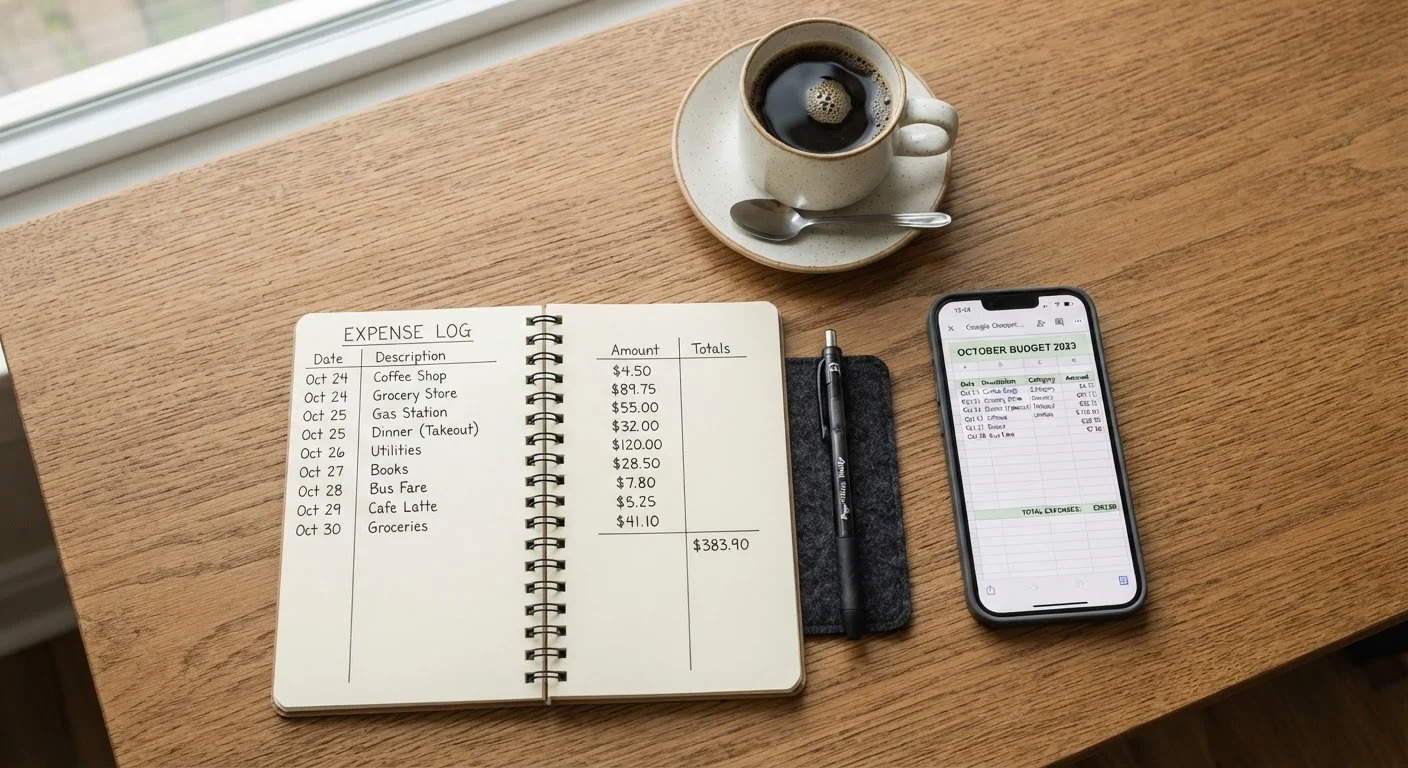
Why a Full Month of Data Changes Everything
A single week of tracking can tell you roughly what you spend on lunch. A full month tells you the truth. It captures the irregular purchases that derail most estimates - the annual subscription that renews quarterly, the car repair, the birthday dinner, the impulse order. These irregular expenses are precisely what make budgets fail when they're built on assumptions rather than evidence.
Most people significantly underestimate how much they spend in discretionary categories. The act of writing down each transaction - before rationalizing it - creates a factual record that's far more reliable than memory. It also tends to create a mild but meaningful accountability effect: knowing you'll log a purchase makes you slightly more deliberate about making it.
This exercise isn't about judgment. It's about information. Once you have 30 days of actual data, you can compare it to your income, identify the categories that absorb the most money, and decide which ones align with your priorities. That informed starting point is what separates realistic budgeting from wishful thinking. See how different approaches handle spending control in our look at envelope budgeting vs. digital trackers.
What you will need
Tools, Setup, and What to Track
There's no universally correct tool for spending tracking. A hand-written ledger in a $2 notebook is as effective as a sophisticated app - as long as you use it every day. The goal is frictionless capture: you want logging a purchase to take less than 30 seconds.
Pocket notebook or journal
Records cash purchases on the spot before they're forgotten.
Spreadsheet (Google Sheets or Excel)
Organizes transactions into categories and calculates totals automatically.
Personal finance or budgeting app
Syncs with bank accounts to import transactions automatically, reducing manual entry.
Bank and credit card statements
Serve as a backup record to cross-check logged transactions at month's end.
Set up your categories loosely at the start. Broad buckets like food, transport, housing, utilities, and everything else are enough to begin. You'll refine them at month's end when you have full context. Avoid creating so many subcategories upfront that the system becomes burdensome to maintain.
Making Sense of What You Find
When you total your categories at the end of 30 days, resist the urge to immediately judge individual line items. Start with the big picture: total spending versus total take-home income. Then look at which categories claimed the largest shares of your spending.
Common discoveries include dining and food delivery costs that are two to three times higher than expected, forgotten recurring subscriptions, and transportation costs (fuel, tolls, parking, rideshares) that accumulate faster than anticipated. These aren't moral failures - they're simply patterns that were invisible until measured.
With this data in hand, you're ready to make informed decisions. The monthly budget audit checklist is a useful next step for turning these findings into ongoing adjustments. And if you're building a budget for the first time, the spending record you've just created is exactly the foundation the complete beginner's budgeting guide recommends starting with.
This article is for general informational and educational purposes only and does not constitute personalized financial advice. Consider consulting a qualified financial professional for guidance specific to your situation.
The content on this site is for informational purposes only and is not a substitute for professional advice. Always consult a qualified professional for guidance specific to your situation.