

Option A
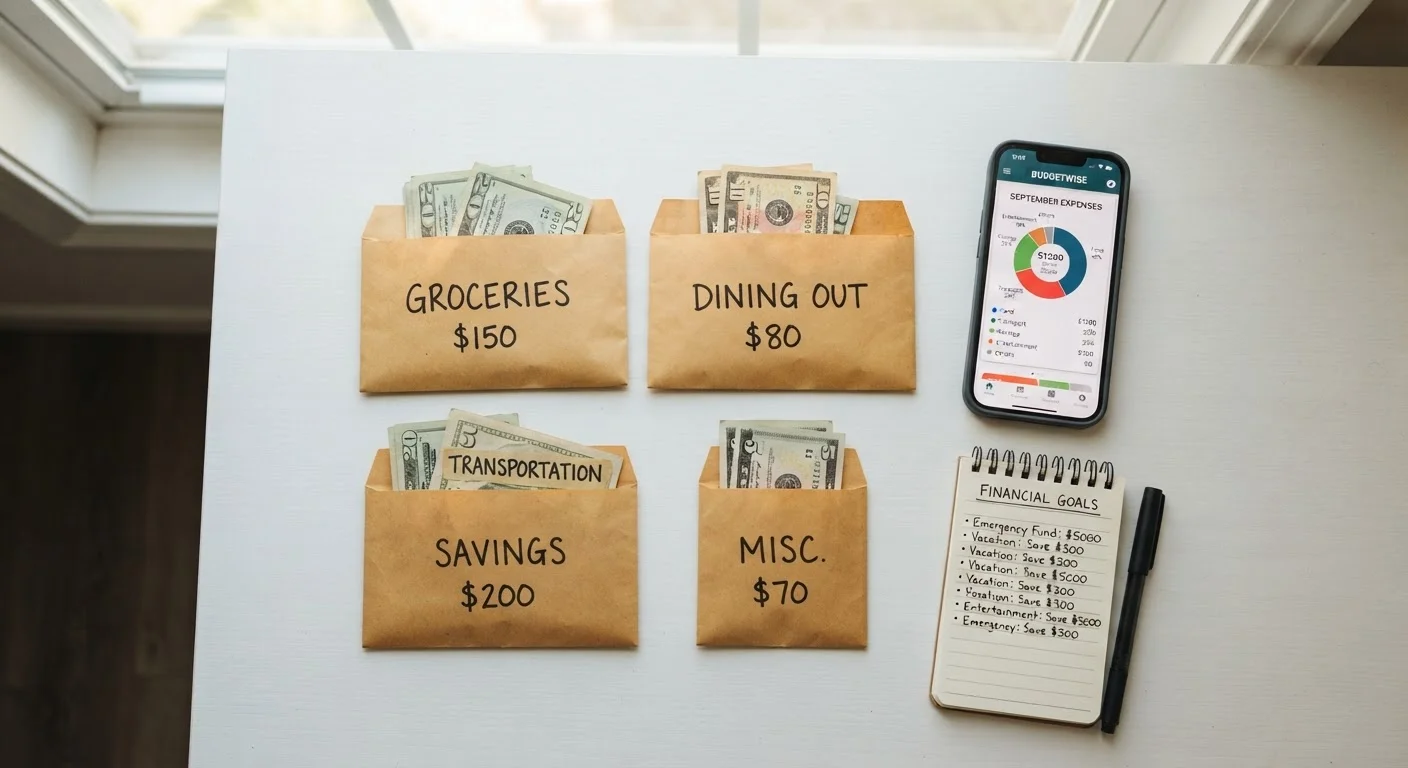
Envelope Budgeting
The tactile, cash-first approach to spending limits.
Best for: People who overspend digitally and want a physical barrier between themselves and their money.
Option B
Digital Spending Trackers
The automated, data-rich method for monitoring money in real time.
Best for: People who rely mostly on cards and want visibility across all accounts without manual cash handling.
How Each Method Actually Works
Envelope budgeting is exactly what it sounds like: at the start of each pay period, you withdraw cash and distribute it into physical envelopes labeled by spending category - groceries, gas, dining out, entertainment, and so on. When an envelope is empty, spending in that category stops until the next cycle. No transfers, no exceptions. The system draws on a simple psychological reality: handing over physical bills feels more concrete than tapping a card, which tends to make people more deliberate about each purchase.
Digital spending trackers take a different angle. Rather than pre-allocating cash, they connect to your existing bank accounts and credit cards, automatically importing and categorizing transactions. You set spending targets per category, and the app tracks progress in real time. Some tools send alerts when you're approaching a limit; others generate month-end summaries that show spending trends over time. The system requires no cash handling - but it does require you to actually review the data it collects.
Both approaches are compatible with zero-based budgeting principles, where every dollar of income gets assigned a purpose before the month begins. The difference is in the enforcement mechanism: physical cash versus digital logging.
Side-by-Side: Key Differences
Choosing between these two methods often comes down to how you spend, how you think about money, and how much friction you want built into your system. Here's a direct comparison across the dimensions that matter most.
| Criterion | Envelope Budgeting | Digital Spending Trackers |
|---|---|---|
| Payment method | Cash only | Cards, bank accounts, digital payments |
| Setup effort | Withdraw and sort cash each period | Link accounts, set category targets |
| Spending enforcement | Hard stop when envelope is empty | Soft alerts; overspending still possible |
| Record-keeping | Manual; no automatic log | Automatic transaction import and history |
| Overspending friction | High - physical cash runs out | Low - cards never "run out" |
| Convenience for online/travel spending | Low - cash impractical digitally | High - tracks all card activity |
| Cost | Free (envelopes and cash) | Free tiers available; some apps charge fees |
| Privacy | High - no data sharing required | Lower - accounts linked to third-party app |
Understanding fixed versus variable expenses is useful here: envelope budgeting tends to work best for variable categories (food, entertainment, clothing) where spending is discretionary and impulsive. Fixed expenses like rent or insurance are better tracked digitally regardless of your overall approach.
The Real Tradeoffs Worth Knowing
Envelope budgeting's biggest strength is its built-in friction. Physically handing over cash activates a more deliberate decision-making process than a contactless payment. Studies in behavioral economics have consistently found that cash payments tend to make the cost of a purchase feel more salient - often called the "pain of paying." That friction can prevent overspending in categories where people most commonly lose track.
The downsides are real, though. Carrying significant cash introduces safety and theft risk. Handling cash at grocery stores, gas stations, and restaurants is increasingly inconvenient. And the system offers no automatic record-keeping - if you lose an envelope or forget to log a transaction, your tracking is disrupted.
Digital trackers eliminate that friction - but that's also their weakness. When spending doesn't feel different from not spending, it's easy to ignore the budget numbers until it's too late in the month. The tool works only if you build a habit of reviewing it regularly. A monthly budget audit can help close that loop whether you use an app or envelopes.
The Hybrid Approach Many People Use
A common middle ground is to use cash envelopes for two or three high-risk spending categories - typically groceries, dining out, and entertainment - while using a digital tracker for fixed bills and overall account monitoring. This limits the inconvenience of full cash budgeting while preserving the friction where it matters most. If you're curious about broader tradeoffs of structured budgeting, this overview of strict budgeting tradeoffs covers the full picture.
For a broader look at how these methods compare to other frameworks, see budgeting approaches compared.
This article provides general financial education only and is not personalized financial advice. Consider consulting a licensed financial professional for guidance specific to your situation.
The content on this site is for informational purposes only and is not a substitute for professional advice. Always consult a qualified professional for guidance specific to your situation.