

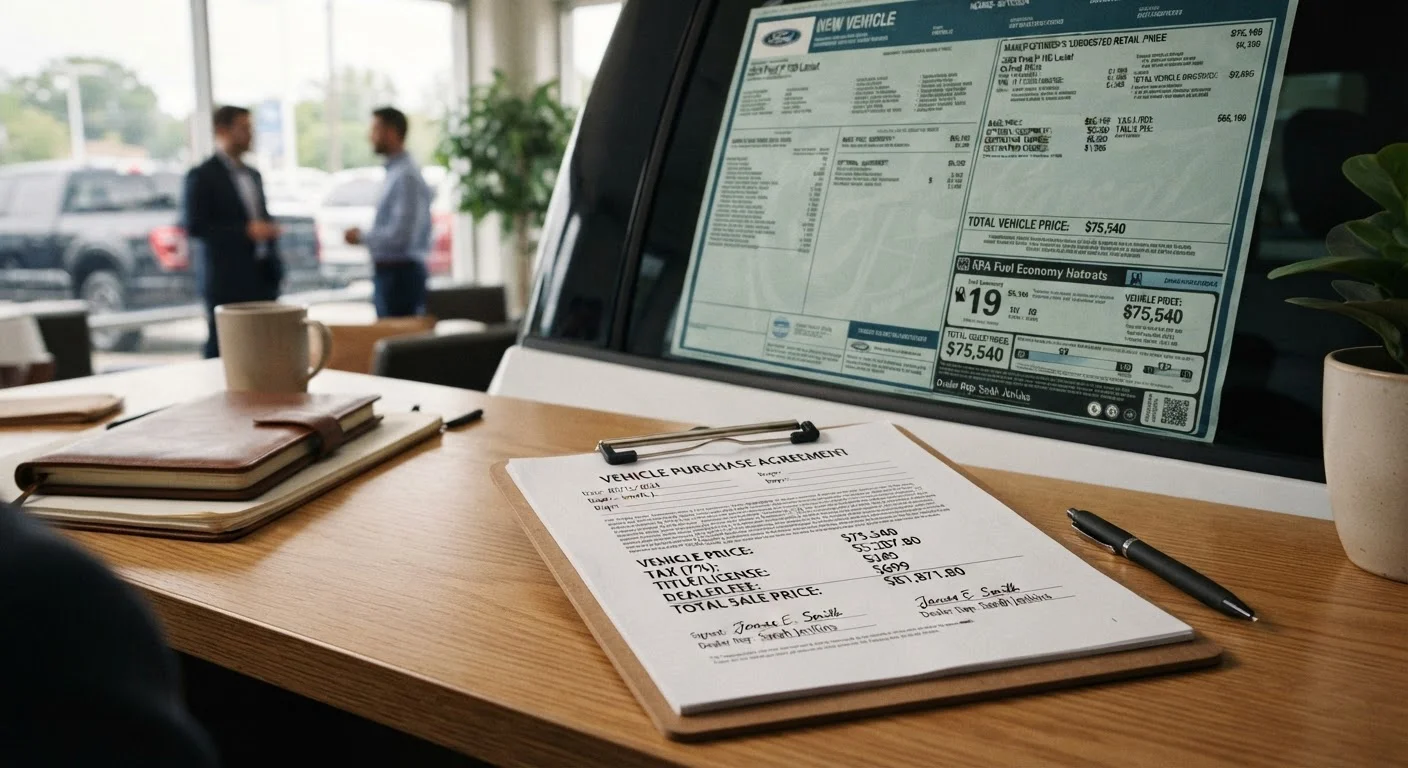
MSRP vs. Invoice: Two Numbers, One Car
Walk into any dealership and you'll see the MSRP - the Manufacturer's Suggested Retail Price - prominently displayed on the window sticker. That's the number dealerships want buyers focused on. But behind it sits a second number: the dealer invoice price, which is what the dealer actually paid the manufacturer for that vehicle.
The spread between these two figures is often called the gross margin. On a mainstream sedan, the gap might be a few hundred dollars. On a luxury SUV or a truck with a long options list, it can run into the thousands. Understanding that gap is the first step to negotiating from an informed position rather than an emotional one.
It's worth noting that MSRP is a suggestion, not a mandate. In high-demand markets or for popular models with short supply, dealers routinely sell above MSRP. In slower markets or for vehicles sitting on the lot, selling closer to invoice becomes more realistic. Neither extreme is guaranteed - conditions vary by region, model, and time of year.
What Invoice Price Doesn't Tell You
Here's the part that surprises most buyers: invoice price is not the dealer's true cost. Two industry mechanisms routinely push the dealer's actual expense below the invoice figure.
Holdback is a percentage of MSRP - typically around 2-3% - that the manufacturer pays back to the dealer after the vehicle is sold. On a $40,000 vehicle, that's potentially $800-$1,200 returned to the dealer's pocket after the deal closes. This exists in part to help dealers manage cash flow on their inventory.
Factory-to-dealer incentives are separate cash payments manufacturers offer to move specific models, trim levels, or colors. These aren't always publicly disclosed, which is why invoice price data from third-party research sites may not reflect every variable at play.
Invoice Data Has Limits
Third-party invoice figures are useful estimates, but they may not capture every regional incentive or special program a manufacturer is running at any given time. Use published invoice data as a directional guide, not as an absolute number. The actual deal will depend on local market conditions, the specific vehicle's availability, and what incentives are active at time of purchase.
Understanding these layers helps explain why a dealer can still make money on a sale at or even slightly below invoice. It also means that "we're selling it at invoice" isn't necessarily the dealer concession it sounds like.
How to Use Invoice Price When You're Negotiating
Armed with invoice data, you can shift the conversation from "how much off sticker?" to a more grounded discussion about actual vehicle cost. Research sites like Edmunds and Kelley Blue Book publish invoice figures for most new models, and pulling that number before your visit takes less than five minutes.
Use invoice price as a reference point, not a ceiling. On slow-moving models, competitive offers can come in below invoice - the dealer absorbs that through holdback and incentives. On vehicles with strong demand, expect to pay closer to MSRP regardless of what invoice says.
One practical tip: keep your trade-in negotiation separate from your purchase price discussion. Mixing the two makes it easier for the numbers to get blurred in ways that don't favor the buyer. For a fuller picture of everything that affects your final out-the-door cost, see our guide to dealership fees and add-ons, which breaks down charges like doc fees, dealer prep, and paint protection.
Look Up Invoice Before You Visit
Spend five minutes on an automotive research site before setting foot in a dealership. Having the invoice figure written down - not just memorized - gives you something concrete to reference during the conversation. Dealers expect informed buyers and will generally negotiate more straightforwardly when you demonstrate you've done your homework.
When you're ready to sit across from a salesperson, negotiating a car price effectively covers how to structure that conversation - including how to use invoice data as part of your overall strategy.
A Note on Invoice Pricing at Different Types of Sellers
Invoice price is a concept specific to new vehicles purchased through a franchised dealership network. If you're buying used - especially from a private seller - the dynamic changes entirely. There's no manufacturer invoice involved, and pricing is driven by market comparables, vehicle condition, and mileage. Buying from a private seller versus a dealership involves a different set of tradeoffs beyond just price.
Even at dealerships, certified pre-owned and used inventory doesn't carry a manufacturer invoice in the traditional sense. Dealers acquire used vehicles at auction or as trade-ins, so their cost basis is determined differently. For used purchases, focus on market value data rather than invoice comparisons.
Finally, keep in mind that the invoice price is just one layer of what shapes what you actually pay. Hidden costs that inflate the real purchase price are worth factoring in - from financing charges to extended warranties - before you sign anything.
Frequently Asked Questions
No. Invoice price is what the dealer is billed by the manufacturer, but the dealer's actual out-of-pocket cost is usually lower. Holdback payments and factory-to-dealer incentives reduce what the dealer truly spends on each vehicle.
Yes. Automotive research sites such as Edmunds and Kelley Blue Book publish invoice price data for most new vehicles. These figures may not reflect all regional incentives, but they give you a solid starting reference.
Invoice price is a useful negotiating anchor, not necessarily a target floor. Dealers can remain profitable at invoice due to holdback and incentives, so some models may realistically be negotiated to or even below invoice - others won't.
MSRP is the price the manufacturer suggests the car be sold for retail - it's the number on the window sticker. Invoice price is what the dealer paid the manufacturer. The difference between the two is roughly the dealer's gross margin before incentives.
Often yes - the invoice typically includes a destination and delivery charge, which is a fixed fee the manufacturer sets for shipping the vehicle to the dealership. This fee is generally non-negotiable and will appear on the window sticker as well.
The content on this site is for informational purposes only and is not a substitute for professional advice. Always consult a qualified professional for guidance specific to your situation.