

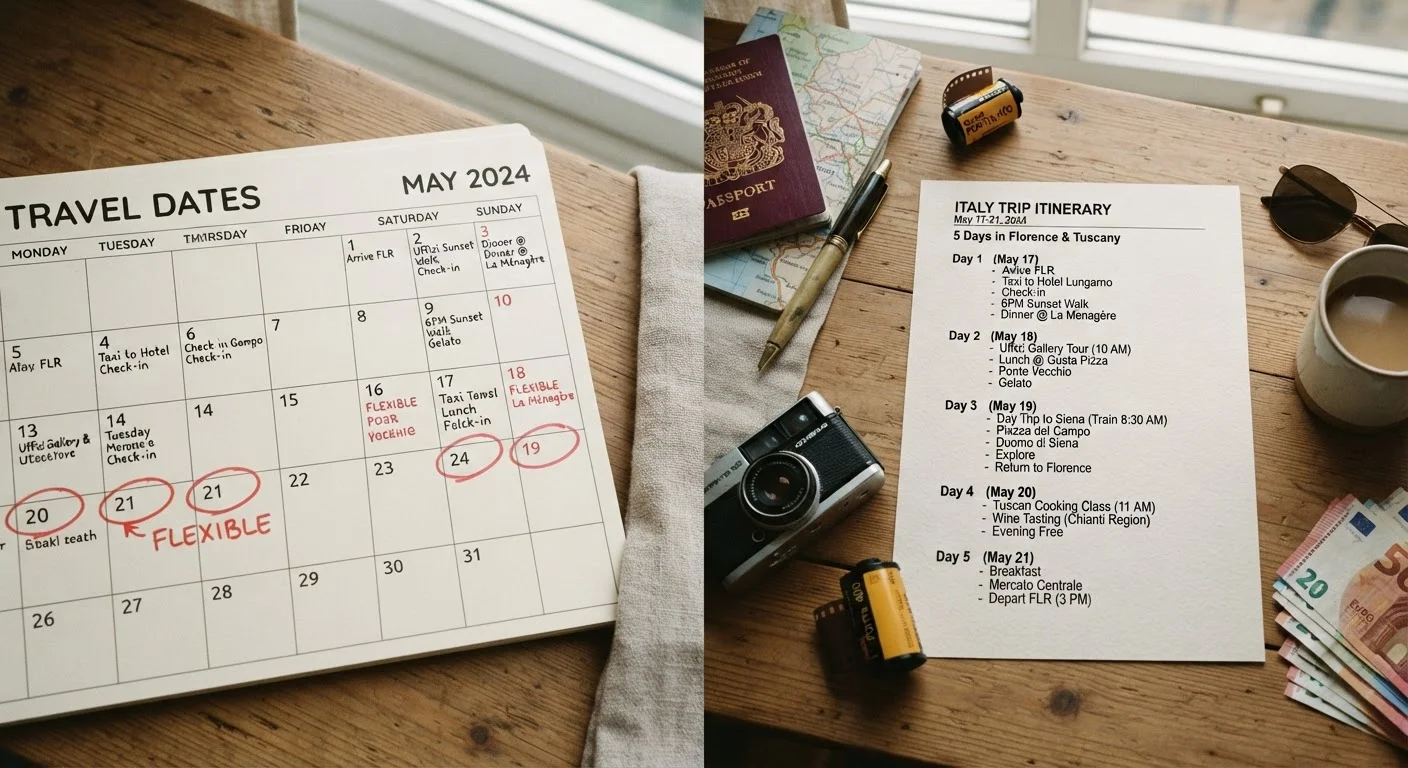
Our Verdict
Flexible dates tend to offer more opportunities to reduce transportation costs, especially for air travel, but they require real adaptability and aren't practical for everyone. Fixed itineraries trade potential savings for certainty, which is valuable for families, groups, and travelers with limited time off. The smartest approach for most cost-conscious travelers is to stay flexible on travel days while keeping lodging and activities planned in advance.
| Best for | Recommended |
|---|---|
| Solo or couple travelers with adaptable schedules | Flexible Dates |
| Families, groups, or those with non-negotiable time off | Fixed Itineraries |
| Travelers prioritizing budget over convenience | Flexible Dates |
| Travelers who value predictability and advance planning | Fixed Itineraries |
The Core Trade-Off: Savings vs. Certainty
When it comes to planning a US trip on a budget, the debate between flexible dates and fixed itineraries is less about which approach is objectively better and more about which fits your life. Flexible date travel works on the principle that airfares and some lodging rates fluctuate based on demand - shift your departure by even a day or two, and the price can change significantly. Fixed itineraries, on the other hand, lock in your plans early, which can protect you from price spikes closer to your travel window and remove the mental load of last-minute decisions.
The tension is real: flexibility demands genuine adaptability, while structure demands early commitment. Neither comes without trade-offs, and understanding those trade-offs is what separates a well-planned trip from a frustrating one. For more on how flexibility can be built into your booking strategy, see how experienced travelers use flexible booking.
| Flexible Dates | Fixed Itineraries | |
|---|---|---|
| Airfare potential | Often lower fares with date shifting | Rates locked at booking; may rise or drop |
| Lodging costs | Variable; harder to plan ahead | Early booking can secure better rates |
| Budget predictability | Lower; depends on what's available | Higher; costs known upfront |
| Suitability for groups | Difficult to coordinate | Well-suited for group coordination |
| Access to popular experiences | Risk of sold-out permits/tours | Advance booking secures access |
| Stress level | Higher; requires active monitoring | Lower once plans are confirmed |
| Best for | Solo or couple, adaptable schedules | Families, groups, fixed time off |
Where Flexible Dates Actually Help (and Where They Don't)
Flexible date strategies work best for flights. Most major airlines and booking tools now include fare calendars or flexible search features that show pricing across a range of dates - searching across a two-week window instead of a single date can surface meaningfully lower fares, especially on routes with frequent service. Midweek departures (typically Tuesday through Thursday) often show lower demand on domestic routes, though this varies and is never guaranteed.
Where flexibility helps less: popular national parks, resort areas, and event-driven destinations. If you're heading to Yellowstone in July or a coastal town over a holiday weekend, the price difference between a Monday and a Thursday arrival may be negligible because demand is uniformly high. In those cases, flexible dates don't give you much leverage. Timing your trip around shoulder season - the window between peak and off-peak travel - often matters more than day-of-week flexibility. Learn more about how that timing works in our guide to shoulder season travel in the US.
Use Flexible Search Tools Strategically
Most major flight search platforms include a flexible dates or fare calendar feature that shows prices across a range of days. Running a flexible search before committing to specific dates takes only a few extra minutes and can reveal lower-fare windows you wouldn't otherwise spot. If you find a cheaper window, verify that your lodging and any reservations can shift accordingly before you book the flight.
The Case for Fixed Itineraries
Fixed itineraries get a bad reputation in budget travel conversations, but the case for them is stronger than it appears. Booking flights and lodging well in advance - often 6 to 10 weeks out for domestic trips - can lock in rates before demand drives prices up. Hotels and vacation rentals frequently offer better per-night pricing for longer stays when booked early, and many popular attractions or experiences (guided tours, national park timed-entry permits, popular restaurant reservations) require advance booking regardless of your flexibility on dates.
For group travel or family vacations, fixed itineraries are practically essential. Coordinating schedules across multiple people makes spontaneous date changes logistically complex and potentially expensive. A locked-in plan also makes it easier to set and stick to a realistic trip budget. If you want a structured way to prepare, our pre-booking checklist for cost-conscious US trips walks through what to confirm before you finalize anything.
A Hybrid Approach Worth Considering
For many travelers, the most practical strategy isn't purely one or the other - it's a deliberate hybrid. Stay flexible on your travel dates and use fare comparison tools to identify the lowest-cost window to fly or drive. Once you've locked in your travel days, shift into fixed-itinerary mode: book lodging early, reserve time-sensitive activities in advance, and set a day-by-day budget. This gives you the fare advantages of flexibility without sacrificing the predictability that makes a trip actually enjoyable.
If your trip involves a choice between driving the whole route versus flying and renting a car at your destination, that decision also carries cost implications worth examining. Our comparison of road trips vs. fly-and-drive vacations breaks down how each approach affects both cost and experience. And if you're open to spending more time at a single destination - which can lower per-day costs considerably - extended stay travel is worth exploring as a complementary strategy.
Finally, it's worth double-checking the assumptions behind any money-saving approach you've heard about. Some popular travel savings beliefs don't hold up to scrutiny - our guide to budget travel myths covers which strategies are evidence-backed and which aren't.
The content on this site is for informational purposes only and is not a substitute for professional advice. Always consult a qualified professional for guidance specific to your situation.