

Why Meal Costs Catch Travelers Off Guard
Flights and hotels are easy to budget because you book them in advance. Food is different - it's paid in small, frequent increments, which makes it feel manageable right up until you check your card statement at home. Three meals a day for two people across five days adds up to thirty separate spending decisions, and on the road those decisions are often made when you're tired, hungry, and unfamiliar with the area.
Food is consistently one of the top unplanned expenses in travel budgets. If you're building a realistic travel budget, meals deserve their own dedicated line item - not a vague "spending money" category. The good news is that eating well on the road is genuinely achievable with a little preparation, and it doesn't require cooking elaborate meals or skipping the local food culture entirely.
What You'll Need Before You Leave
A bit of gear and a grocery run before departure will pay for themselves quickly. Here's what experienced road travelers rely on:
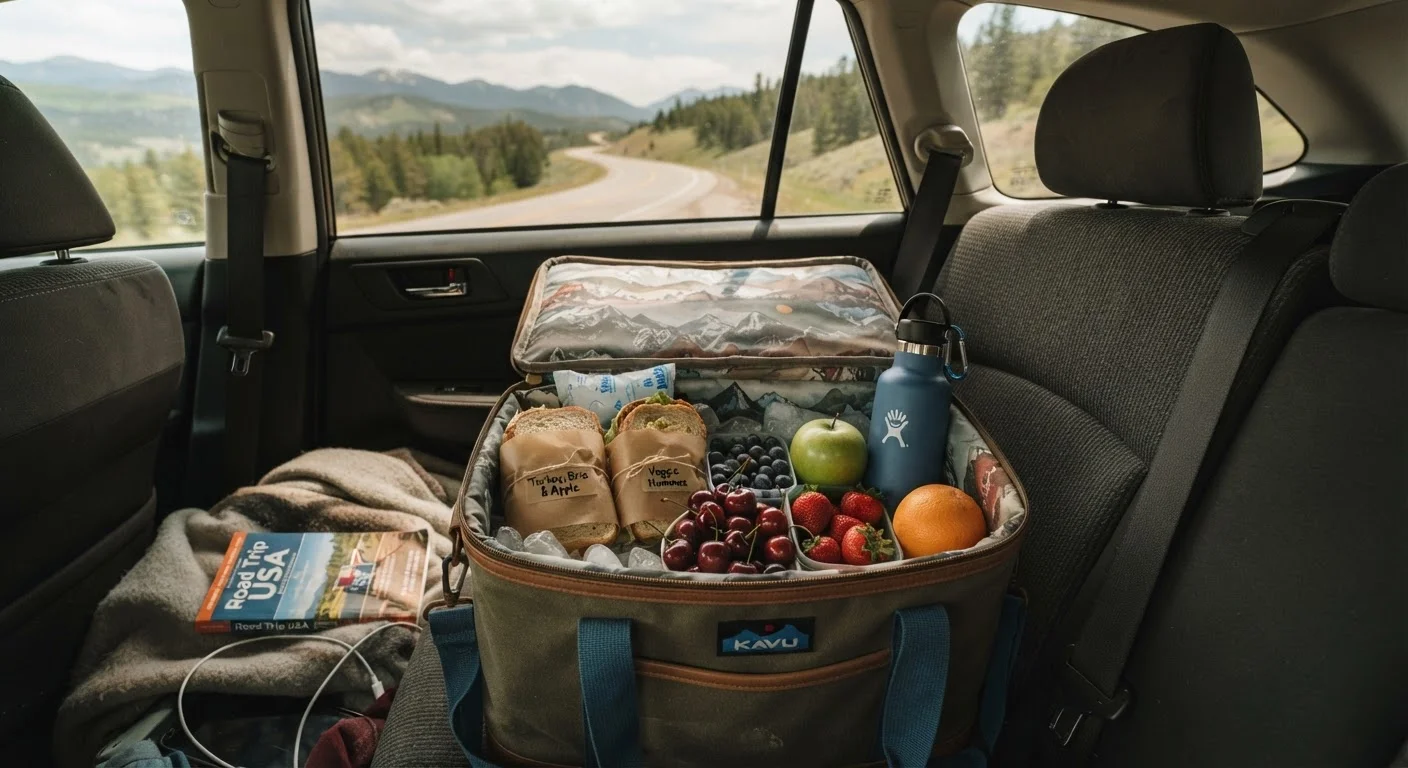
Soft-sided cooler or insulated bag
Keeps perishables like cheese, deli meats, yogurt, and fruit fresh for a full day of travel.
Reusable water bottle (insulated)
Eliminates repeated beverage purchases that quietly add several dollars per person per day.
Reusable utensils and a small cutting board
Lets you prep and eat grocery items without relying on disposable packaging or café service.
A grocery list app or notes app
Keeps your shopping focused so you buy what you'll actually use rather than impulse items.
Having these basics loaded in your vehicle or bag means you're not starting from zero at every stop. Even if your accommodation doesn't have a kitchen, a cooler and a few shelf-stable staples give you meaningful options.
What you will need
A Practical System for Eating Well Every Day
The most effective approach isn't strict calorie counting or obsessive meal prep - it's having a loose framework that guides decisions without requiring constant willpower. Follow these steps each day of your trip:
Self-cater breakfast every morning
Breakfast is the easiest and most cost-effective meal to handle yourself. Shelf-stable options like instant oatmeal, nut butter, whole-grain bread, and fresh fruit require no cooking and minimal prep. Many accommodations offer at least a microwave; even without one, these items work fine. Buying a small container of yogurt and a bag of granola at a local grocery store the evening before costs a fraction of a hotel continental breakfast or café visit.
Pack or purchase a portable lunch
Midday is another natural opportunity to eat well without spending much. A deli counter at a grocery store, a local farmers market stall, or items from your cooler - cheese, crackers, cut vegetables, hummus - make a satisfying and often genuinely tasty meal. If you're visiting a destination with a distinct food culture, this is also the right moment to pick up a regional specialty at a market rather than a full sit-down restaurant price point.
Choose one restaurant meal per day intentionally
Rather than defaulting to restaurants out of convenience three times a day, designate dinner as your one intentional sit-down meal. This is where you actually experience local food culture, try a dish you couldn't make at home, and take your time. Spending a bit more on one meaningful meal feels satisfying; spending a moderate amount on three forgettable ones doesn't. Look for spots with good local reviews, walk a few blocks off the main tourist drag, and check whether lunch menus offer the same dishes at lower prices if dinner costs give you pause.
Hydrate strategically to avoid impulse drink purchases
Beverages are a surprisingly large source of travel food spending. A bottle of water at a tourist attraction, a coffee from an airport kiosk, sodas with each meal - these add up fast. Carrying a filled reusable bottle, knowing where free water refill stations are (airports, parks, many visitor centers), and limiting purchased beverages to intentional choices rather than reflexive ones can noticeably reduce daily spending without any real sacrifice.
Restock at a local grocery store every one to two days
Rather than planning every meal down to the calorie, simply make a quick grocery run every day or two to refresh your supplies. This keeps food fresh, lets you adapt to what looks good locally, and gives you a window into everyday life in the destination - local grocery stores are often genuinely interesting to browse. Spending ten to twenty minutes in a store is far more efficient than spending thirty minutes deliberating over a restaurant menu when you're hungry and tired.
This system works especially well on longer trips. For weekend getaways, you might simplify further - see how other budget-savvy approaches stack up in our guide to stretching a weekend trip.
The 'One Good Meal' Rule Works
Many experienced travelers swear by a simple approach: eat cheap for two meals, eat well for one. It preserves the pleasure of dining out, keeps the budget intact, and prevents the full-restaurant-fatigue that sets in when every meal is a production. You'll often enjoy that one intentional meal far more when it's not the fifth restaurant in a row.
Avoiding the Traps That Inflate Food Spending
Even well-prepared travelers get caught by a few predictable pitfalls. Resort-area restaurants near major attractions often charge significantly more than spots a few blocks away - the same phenomenon that inflates other hidden travel costs. A quick search for where locals eat, or a walk away from the tourist corridor, frequently turns up far better value.
Hotel mini-bars and grab-and-go lobbies are almost always overpriced. Airport food courts before a departure leg can be unavoidable, but buying snacks at a grocery store the day before departure sidesteps the worst of that markup. And portion sizes at sit-down restaurants in the US are often large enough to split or save - don't feel obligated to order a full entrée for every person at every meal.
Finally, consider how your accommodation choice affects food options. Properties with in-room refrigerators or kitchenettes - a factor often highlighted when thinking about accommodation beyond the hotel room - can transform your meal flexibility. Even a small fridge lets you store leftovers and keep breakfast supplies on hand.
The content on this site is for informational purposes only and is not a substitute for professional advice. Always consult a qualified professional for guidance specific to your situation.