

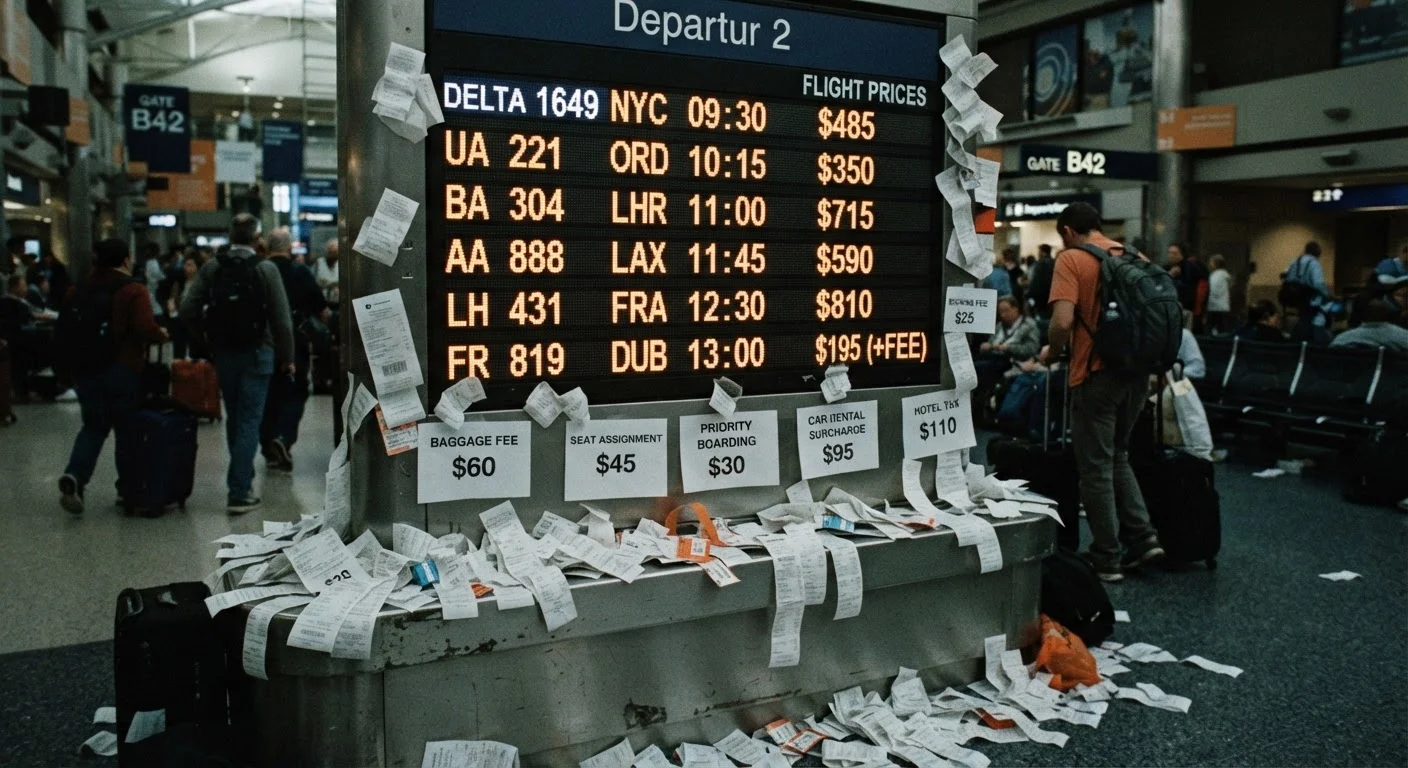
Why "Cheap" Trips Often Aren't
A flight that looks like a steal. A hotel rate that seems too good to pass up. A rental car listed at a fraction of what you expected. For cost-conscious travelers, these headline prices feel like a win - until the final receipt arrives. The gap between the advertised price and the total amount paid is where most travel budgets quietly fall apart.
Hidden and semi-hidden travel costs aren't new, but they've grown more widespread as the travel industry has shifted toward unbundled pricing - charging separately for things that once came standard. Understanding where these charges hide is the first step toward building a budget that actually reflects what your trip will cost. As our guide to travel budgets that actually hold explains, realistic planning starts with knowing which line items you're likely to miss.
Comparing only the advertised base price when evaluating flights or hotels.
Why it happens: Booking aggregators and travel search engines highlight the lowest possible starting price to attract clicks, often excluding taxes, mandatory fees, and service charges until later in the checkout flow.
Forgetting to budget for airport transportation, parking, or rideshares.
Why it happens: Travelers focus on the flight itself and overlook the cost of getting to and from the airport, which can be surprisingly steep - especially in major metro areas where parking garages charge $30-$50 per day.
Accepting a hotel's lowest posted rate without checking for mandatory resort or amenity fees.
Why it happens: Resort fees are a normalized industry practice that many travelers don't anticipate, and they are often disclosed only in fine print during the booking process or at check-in.
Underestimating food and drink costs while traveling.
Why it happens: Meal costs are easy to shrug off as minor or treat as fully flexible, but eating out three times a day in a tourist-heavy area - particularly in cities or national park gateway towns - adds up faster than most travelers expect.
Leaving activity and entertainment costs entirely out of the pre-trip budget.
Why it happens: People naturally focus on transportation and lodging as the "big" expenses, treating experiences as something to figure out once they arrive - by which point they're already committed to spending.
Building a More Honest Trip Budget
The fix isn't to become a suspicious, joyless traveler who second-guesses every booking. It's simply to build the habit of looking at total costs rather than base prices - and to account for the categories that most travelers leave blank until they're already at the destination.
Low Fares Often Exclude Baggage
Budget airline fares frequently cover only a personal item - not a carry-on or checked bag. Adding a single checked bag round-trip can increase your total flight cost by $60-$100 or more depending on the carrier and route. Always confirm exactly what a fare includes before treating it as an apples-to-apples comparison with a full-service ticket.
A practical approach: after you've identified your core trip options (flights, lodging, ground transport), run a quick audit of the mandatory fees you haven't yet accounted for. Add a buffer for meals and activities based on a realistic daily estimate for that specific destination. Travelers who want to explore lodging options beyond standard hotels - which sometimes carry fewer surprise fees - can find useful perspective in our look at accommodation options beyond the hotel room.
Resort Fees Are Rarely Optional
Many hotels - especially in Las Vegas, Miami, and popular resort destinations - charge mandatory "resort fees" or "amenity fees" that can run $30-$50 or more per night. These fees typically do not appear in the initial price shown on booking aggregators, but they will appear on your final bill. Always check a property's own website or call ahead to confirm any mandatory nightly charges before booking.
It's also worth recognizing that the tendency to focus on sticker price over total cost shows up in everyday spending too - not just travel. The same patterns explored in what hidden costs inflate what a purchase actually costs apply just as much to booking a vacation as buying a product. Awareness of where the real costs live is half the battle - and once you spot them, you're much better positioned to plan a trip whose budget doesn't collapse the moment you land.
This article is for general informational purposes only. Prices, fees, and travel conditions vary widely and change over time. Always verify costs directly with airlines, hotels, and service providers before booking, and consult official sources for the most current information.
The content on this site is for informational purposes only and is not a substitute for professional advice. Always consult a qualified professional for guidance specific to your situation.