

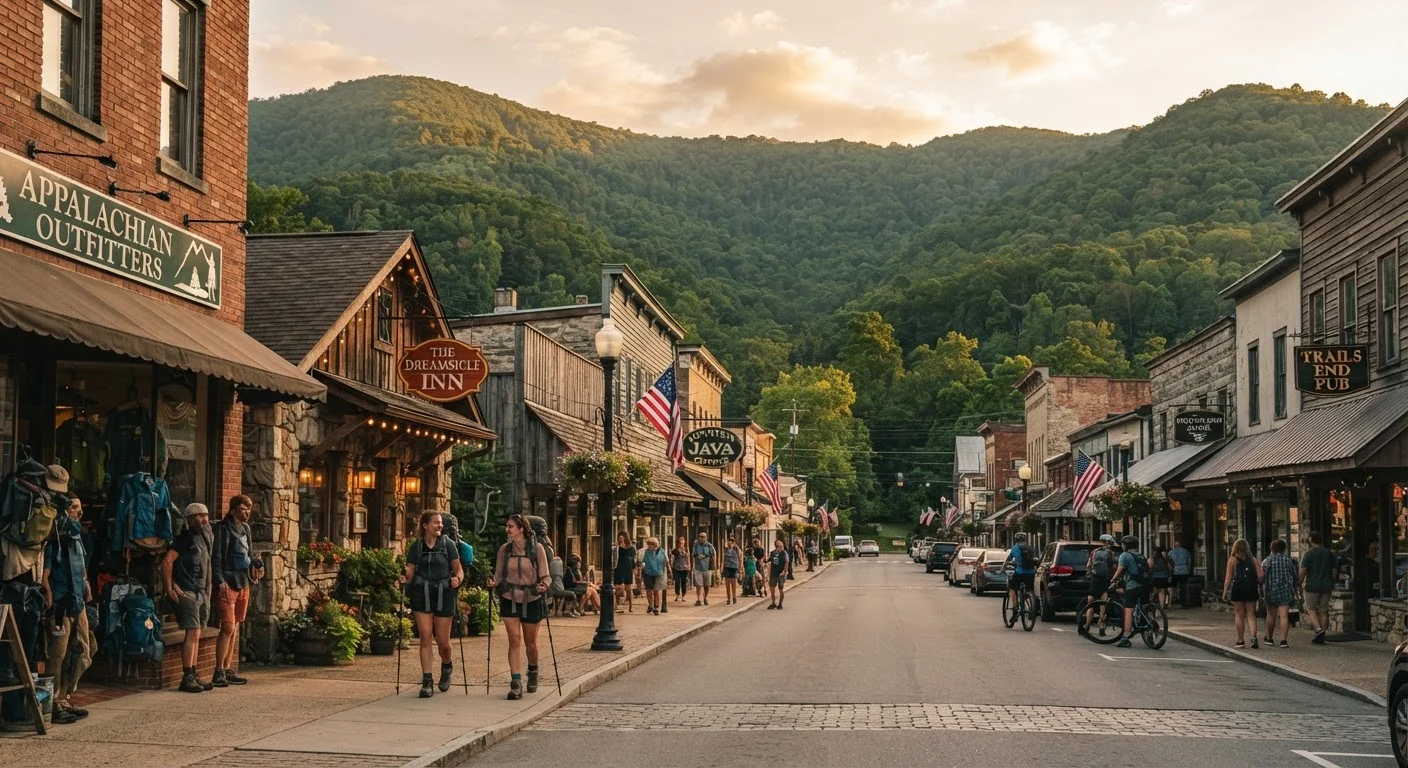
Why AT Towns Earn Their Own Following
The Appalachian Trail stretches roughly 2,190 miles from Springer Mountain in Georgia to Mount Katahdin in Maine, threading through 14 states and dozens of communities. For thru-hikers and section hikers alike, the towns that interrupt the wilderness aren't just pit stops - they become the emotional waypoints of the journey. A hot meal, a real bed, and a friendly face can transform how a hiker feels about the miles ahead.
But here's what surprises many first-time visitors: these towns hold up even without the hiking context. Their local restaurants, quirky shops, and community character have drawn repeat visitors - hikers and non-hikers - who keep returning simply because the towns are worth it. If you're planning any Appalachian region travel, understanding what makes mountain towns magnetic can help you choose the right home base for your trip.
Below, we've spotlighted a handful of AT gateway communities that consistently earn devoted fans - and what specifically makes each one stick in the memory.
Damascus, Virginia - Trail Town USA
Damascus has earned its unofficial nickname by embracing trail culture more fully than perhaps any other community on the AT. The trail runs directly down the main street, making it impossible to miss the town's identity. It serves as a crossroads for three major long-distance trails - the AT, the TransAmerica Bicycle Trail, and the Virginia Creeper Trail - giving it an outdoor recreation density that's unusual for a town its size.
The annual Trail Days festival draws thousands of hikers and outdoor enthusiasts each spring, creating a reunion atmosphere that former thru-hikers describe as genuinely moving. Lodging options include trail hostels with bunk-style accommodations designed for hikers on a budget, as well as a handful of independently operated inns for those seeking a bit more comfort. Local outfitters can resupply gear or help with shuttle logistics, while diners and cafes along the main drag cater to appetites sharpened by days in the backcountry.
Damascus sits at the intersection of three major trails, making it a true outdoor crossroads.
Hot Springs, North Carolina - Soaking in Southern Hospitality
Hot Springs is one of the few places on the AT where the trail literally runs through the center of town - and it happens to sit beside natural mineral hot springs that hikers have been soaking in for well over a century. The combination of trail immersion and thermal relaxation gives the town an almost spa-like reputation among long-distance walkers.
The town is small - under a thousand residents - but punches above its weight in warmth and character. A handful of rafting outfitters operate on the French Broad River nearby, making the area a draw for water-sports enthusiasts as well. Lodging includes historic inns, hostel-style facilities with hiker-friendly policies (laundry, mail holds, gear drying space), and small cabin rentals. The dining scene is modest but consistent, with locally run options serving hearty, filling food exactly suited to hungry trail travelers.
Natural mineral hot springs in the heart of town give Hot Springs a restorative quality hikers rarely forget.
Harpers Ferry, West Virginia - History Meets the Trail
Harpers Ferry occupies a dramatic position at the confluence of the Potomac and Shenandoah rivers, and its significance stretches well beyond the trail. The Appalachian Trail Conservancy's headquarters is located here, making it a symbolic midpoint for many hikers. The town's rich Civil War history draws a separate stream of visitors entirely, creating an unusually diverse crowd for such a compact community.
The historic district is well-preserved and walkable, with interpretive sites managed by the National Park Service. Lodging options include historic inns, bed-and-breakfasts with period character, and accommodations in nearby Bolivar. For hikers, it's a prime spot to reassess gear, pick up mail drops, and recharge before tackling the mid-Atlantic miles. The blend of natural scenery and documented history gives Harpers Ferry staying power that goes beyond trail logistics.
Harpers Ferry pairs a symbolic AT milestone with genuine Civil War history, drawing two distinct audiences.
Monson, Maine - The Last Town Before the Wilderness
Monson holds a specific emotional weight for northbound thru-hikers: it's the last resupply point before the famed 100-Mile Wilderness, a remote stretch with no easy bail-out options. That psychological gravity gives the town an intensity of community spirit that visitors often find unexpectedly moving. Hikers prepare meticulously here; the atmosphere combines focused purpose with the kind of camaraderie that builds when people share high stakes.
The town itself is quiet and small, a classic Maine outpost with a working-class sensibility that keeps things unpretentious. Shaw's Hiker Hostel has operated for decades as a beloved institution - a place where generations of thru-hikers have eaten their last big meal, repacked their bags, and steeled themselves for what's ahead. For southbound hikers finishing the wilderness, Monson signals the return of civilization in the most welcome way possible.
Monson's position at the edge of the 100-Mile Wilderness gives it an intensity of purpose unlike any other AT town.
Gatlinburg, Tennessee - Gateway to Great Smoky Mountains
Gatlinburg sits at the entrance to Great Smoky Mountains National Park, the most visited national park in the country, and the AT passes through the park in a spectacular high-ridge traverse. While Gatlinburg itself is considerably more commercial and tourist-oriented than the other towns on this list, it offers a lodging depth and service range that smaller trail towns simply can't match - important context if you're traveling with family members who want comfort alongside adventure.
Hundreds of cabin rentals, hotels, and motels line the surrounding area, covering every budget range. The town's restaurant variety is extensive. What draws hikers back specifically is the combination of immediate access to some of the AT's most scenic miles - through spruce-fir forests and across balds with sweeping views - and the convenience of a well-resourced base camp. It's a practical choice as much as a sentimental one, and it works.
Gatlinburg trades trail-town intimacy for sheer logistical depth - a useful trade-off for families and comfort-seekers.
Planning Your Time in Trail Towns
Whether you're a seasoned long-distance hiker or a day-tripper looking to dip into the Appalachian experience, building time into your itinerary for these communities pays off. Most AT towns are small, meaning crowds are rarely overwhelming outside peak summer weekends - but lodging can fill quickly during trail season (roughly March through October depending on the region), so planning ahead is worthwhile.
Book Lodging Early During Trail Season
Smaller AT towns have limited lodging inventory, and hiker-friendly hostels often fill weeks in advance during peak spring and fall seasons. If you're targeting a specific town during a popular window, reaching out to accommodations directly - rather than relying solely on booking platforms - can help you understand policies around early check-in, gear storage, and resupply package holds that matter to trail travelers.
Accessibility varies by town. Some, like Damascus and Hot Springs, sit directly on the trail; others require a short drive from the nearest trailhead. Always verify current trail conditions, local business hours, and any area-specific permit requirements through official sources before you go, as details change with seasons and circumstances.
The content on this site is for informational purposes only and is not a substitute for professional advice. Always consult a qualified professional for guidance specific to your situation.