

Our Verdict
Durability and longevity are related but distinct quality dimensions. Durability matters most when a product faces physical stress, harsh environments, or rough handling. Longevity matters most when reliable performance over a multi-year period is the priority. Evaluating both - rather than treating them as one concept - gives you a clearer picture of what you're actually buying.
| Best for | Recommended |
|---|---|
| High-stress or outdoor environments | Prioritize durability signals |
| Everyday household or office use over many years | Prioritize longevity signals |
| Demanding use that combines both factors | Evaluate both dimensions independently |
Why These Two Words Get Conflated
When shoppers describe a product as "well-made," they often mean it will last - but lasting through what, exactly? That's where durability and longevity part ways, and where most product evaluations go sideways.
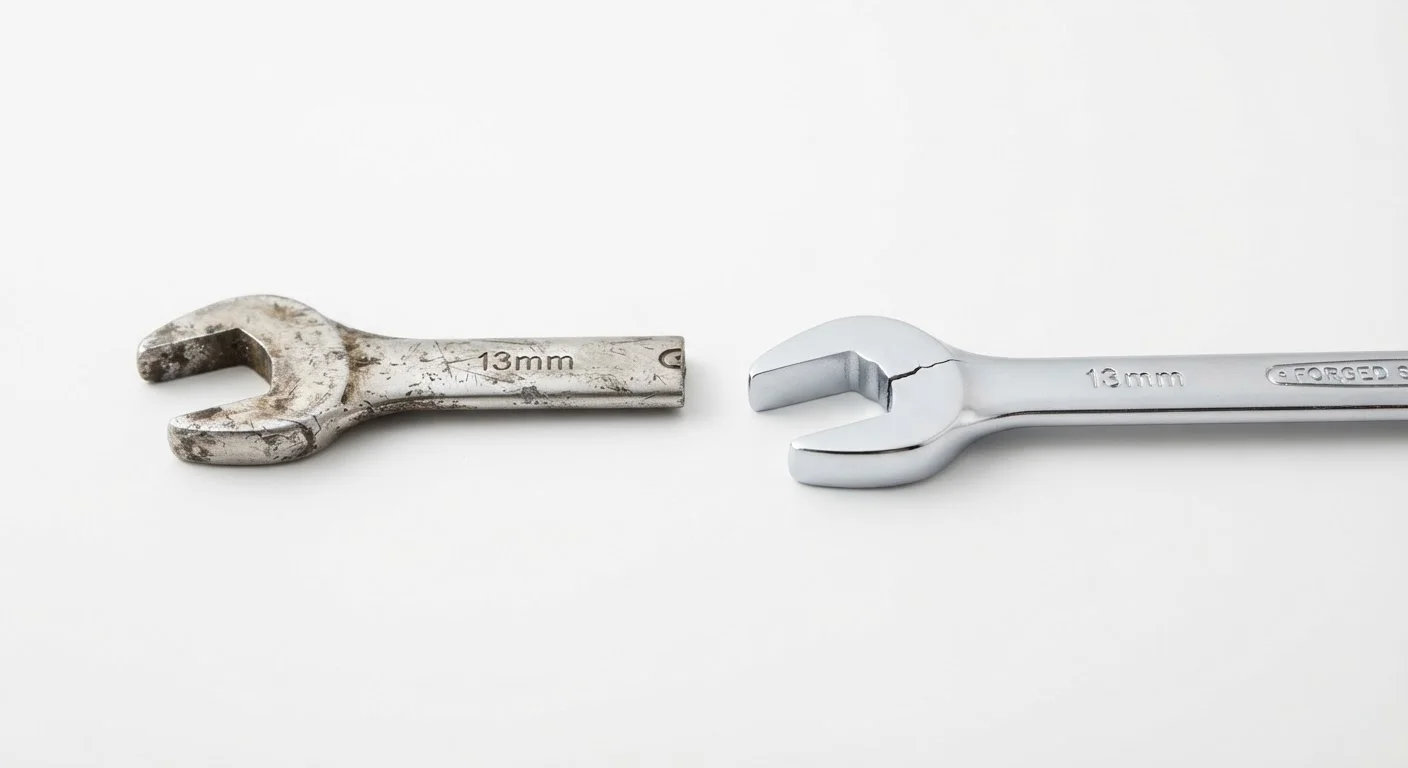
Durability describes how well a product withstands stress: impacts, pressure, moisture, temperature extremes, or repeated mechanical strain. It's a measure of resilience under challenge. Longevity, by contrast, describes how long a product keeps functioning correctly under its intended, everyday conditions - even without any particular abuse.
A cast-iron pan is highly durable - it won't warp under high heat or chip easily - but its longevity depends heavily on whether you maintain it properly. A precision mechanical watch may have impressive longevity if serviced correctly, but it's not especially durable if dropped or exposed to water. These aren't the same quality axis, and conflating them leads to mismatched expectations. See our guide to evaluating product quality for a broader foundation on reading these signals.
How to Identify Durability Signals
Durability evidence tends to live in materials specifications and third-party testing. Look for:
- Materials ratings: Tensile strength, hardness scales (like Rockwell for metals), IP (Ingress Protection) ratings for electronics, and abrasion resistance figures all speak directly to durability.
- Industry certifications: Standards from bodies like ASTM International, UL, or MIL-SPEC (military specifications) require products to survive defined stress tests - drop tests, humidity chambers, load-bearing thresholds.
- Construction method: Welded joints vs. adhesive bonds, reinforced stitching vs. single-needle seams, solid versus hollow components - construction details often predict durability better than materials alone.
One caution: marketing language like "rugged" or "heavy-duty" carries no standardized meaning. Anchor your assessment to documented specs or verified test results rather than descriptive copy. A consistent evaluation framework helps you apply these checks across different product categories without starting from scratch each time.
Check the Spec Sheet, Not Just the Marketing
Product pages that cite actual test standards - an IP67 rating, a specific ASTM drop-test number, a tensile strength figure - give you something concrete to evaluate. Pages that rely on adjectives like "rugged" or "built to last" without backing data are providing marketing copy, not quality evidence. When specs are absent, that absence is itself information worth noting.
How to Identify Longevity Signals
Longevity is harder to confirm before purchase because it unfolds over time. The most reliable indicators are:
- Long-term owner reviews: Filter reviews by date and look for accounts from people who have owned the product for two or more years. Short-term reviews tell you about first impressions; multi-year reviews reveal wear patterns, component failure rates, and performance drift.
- Replacement parts availability: Products supported by a supply of replacement parts - filters, gaskets, blades, batteries - tend to have longer functional lifespans because wear components can be swapped rather than requiring full replacement.
- Brand service history: A manufacturer with a track record of honoring warranties, providing support, and issuing firmware or component updates signals an intent to support the product lifecycle. This matters especially for electronics and appliances.
- Warranty structure: A warranty's duration and what it actually covers are meaningful data points, though they aren't guarantees of product quality on their own. Our article on the difference between a warranty and a quality guarantee explains what each type of coverage actually protects.
| Durability | Longevity | |
|---|---|---|
| Core question | Can it withstand stress and physical challenge? | Will it keep working reliably over time? |
| Primary signals | Materials specs, stress-test certifications, construction method | Long-term reviews, parts availability, warranty structure |
| Key certifications | IP ratings, MIL-SPEC, ASTM impact standards | UL reliability listings, ENERGY STAR longevity data |
| Typical failure mode | Cracking, tearing, deforming under load | Gradual wear, component fatigue, performance drift |
| Use-case priority | Outdoor, industrial, high-impact environments | Home, office, regular everyday-use scenarios |
| Where to research | Manufacturer spec sheets, independent lab tests | Multi-year owner reviews, brand support history |
Applying Both Dimensions to Your Decision
The practical question is: which dimension matters more for your specific use case - and by how much?
If you're buying work boots for a construction environment, durability is the dominant concern: abrasion resistance, toe protection rating, and sole bond strength matter more than whether the boot looks good in year five. If you're buying a refrigerator, longevity is the primary dimension: you need reliable compressor performance over a decade, not resistance to being dropped.
Many purchases require both. A hiking backpack needs to resist abrasion and stress on the trail (durability) while also holding up through years of trips without zipper or seam failure (longevity). In these cases, evaluate each dimension separately rather than collapsing them into a single impression of "quality."
Keep in mind that price alone won't reliably tell you where a product falls on either axis. Price and quality correlate less than most people assume, and premium pricing can mask average performance on both durability and longevity. When shopping online without the ability to handle products, use the signals above - specs, certifications, long-term reviews - as your primary inputs. Evaluating quality remotely requires a slightly different approach but the same underlying framework.
The content on this site is for informational purposes only and is not a substitute for professional advice. Always consult a qualified professional for guidance specific to your situation.