

Our Verdict
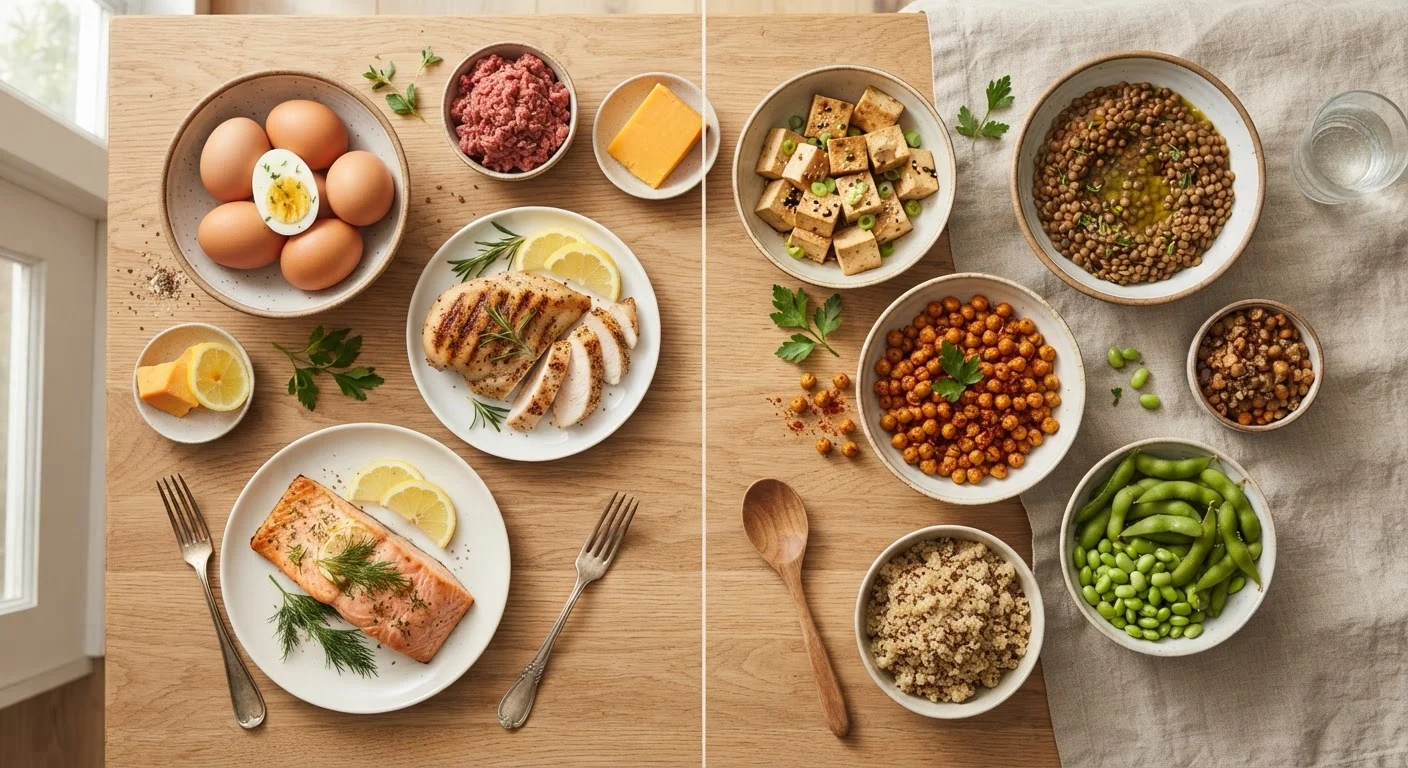
Animal and plant proteins each offer genuine nutritional value, and the research does not support labeling either category as universally superior. Animal sources deliver complete amino acid profiles and higher bioavailability, while plant sources contribute fiber, phytonutrients, and dietary variety. Most nutrition guidelines support including a mix of both, tailored to individual health goals, cultural preferences, and any guidance from a healthcare provider.
| Best for | Recommended |
|---|---|
| Those prioritizing complete amino acid profiles with minimal dietary planning | Animal-based proteins |
| Those seeking protein alongside fiber and phytonutrients | Plant-based proteins |
| Most everyday consumers aiming for dietary variety | A combination of both |
What Makes a Protein Source 'Complete'?
Proteins are built from amino acids - 20 in total, nine of which the body cannot synthesize on its own. These nine are called essential amino acids, and they must come from food. A protein source is labeled complete when it provides all nine in adequate proportions.
Animal-based foods - including meat, poultry, fish, eggs, and dairy - are consistently complete proteins. This is one of their most cited nutritional advantages. Plant proteins, by contrast, are often described as incomplete, though this term requires nuance. Soy and quinoa are notable plant exceptions that supply all nine essential amino acids. Other plant sources - legumes, grains, nuts, seeds - typically fall short in one or two, most commonly lysine or methionine.
The traditional concept of "protein combining" (deliberately pairing foods at each meal to cover all amino acids) has largely been updated by nutrition research. Consuming a varied range of plant proteins throughout the day appears sufficient for most healthy adults to meet amino acid needs. See our guide to balanced plate principles for more on food variety in practice.
Combining Plant Proteins Throughout the Day
You don't need to engineer perfectly combined meals at each sitting. Eating a variety of plant proteins - legumes, whole grains, nuts, seeds - across the day naturally covers your essential amino acid needs. Focus on overall variety rather than precise per-meal pairing.
Bioavailability: How Much Protein Does Your Body Actually Use?
The quantity of protein listed on a nutrition label does not tell the whole story. Bioavailability refers to how efficiently the digestive system can break down and absorb the protein consumed. One widely used measure is the PDCAAS, and a newer metric called DIAAS, both of which score proteins on amino acid completeness and digestibility.
Animal proteins - particularly eggs, dairy, and lean meats - consistently score at or near the top of these scales. Plant proteins generally score lower, partly because plant cell walls and certain compounds (like phytates and tannins) can reduce digestibility. Cooking, soaking, fermenting, or sprouting plant foods can meaningfully improve their digestibility scores.
| Animal-Based Proteins | Plant-Based Proteins | |
|---|---|---|
| Amino acid completeness | Complete (all 9 essential AAs) | Often incomplete; soy/quinoa exceptions |
| Bioavailability (DIAAS/PDCAAS) | Generally high | Moderate; improved by cooking/soaking |
| Dietary fiber | None | Present in most sources |
| Saturated fat (common sources) | Variable; some sources higher | Generally low |
| Key micronutrients | B12, heme iron, choline, zinc | Fiber, folate, phytonutrients |
| Iron type | Heme iron (higher absorption) | Non-heme iron (lower absorption) |
| Vitamin B12 | Naturally present | Absent; supplementation may be needed |
| Examples | Chicken, eggs, fish, dairy, beef | Lentils, tofu, quinoa, chickpeas, nuts |
It's worth noting that bioavailability differences, while real, are modest in the context of a varied diet that includes adequate total protein. Isolated bioavailability scores matter most when protein intake is at the lower end of needs or when food variety is limited.
What Comes Along with the Protein?
Protein sources rarely deliver protein alone - the surrounding nutritional package matters. Animal proteins vary considerably in their fat and micronutrient content. Fatty fish contributes omega-3 fatty acids; red meat provides heme iron and vitamin B12; eggs supply choline. Some animal sources, particularly processed meats, also carry higher amounts of sodium and saturated fat, which is relevant context for overall dietary patterns.
Plant proteins bring their own nutritional companions. Legumes and whole grains are rich in dietary fiber and a range of phytonutrients - compounds associated in research with various health outcomes. However, plant sources also provide non-heme iron and calcium in forms that are generally less readily absorbed than their animal counterparts, though consuming vitamin C alongside non-heme iron sources is understood to improve uptake.
Understanding this fuller picture reflects the same principles explored in our article on whole foods versus processed foods - nutrient density and food context are inseparable from any single nutrient discussion.
Practical Considerations for Everyday Eating
For most Americans, protein intake is not a binary choice between animal and plant foods. Major dietary guidelines generally encourage including a variety of protein sources - including seafood, lean meats, eggs, legumes, nuts, and seeds - rather than favoring one category exclusively.
People following vegetarian or vegan diets can meet protein and amino acid needs through thoughtful food selection, though some nutrients more concentrated in animal products (vitamin B12, omega-3 fatty acids, zinc, and iron) may warrant additional attention. Anyone significantly restructuring their diet, particularly for health or medical reasons, should consult a registered dietitian or healthcare provider for personalized guidance.
Those who consume both animal and plant proteins have flexibility to emphasize different sources based on preference, cultural background, cooking habits, and overall dietary goals. No single protein source is necessary for a nutritious diet, and none is sufficient on its own to define dietary quality.
This article is for general informational and educational purposes only. It is not a substitute for professional medical or dietary advice. Always consult a qualified healthcare provider or registered dietitian before making significant changes to your diet, especially if you have a medical condition or specific health concern.
The content on this site is for informational purposes only and is not a substitute for professional advice. Always consult a qualified professional for guidance specific to your situation.